01
Consultation
Technical needs assessment


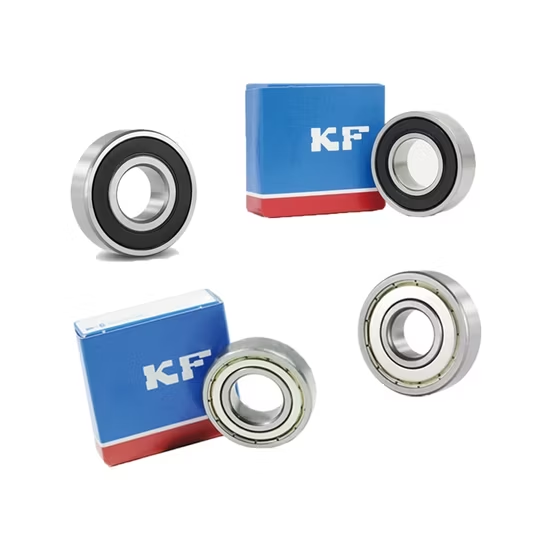


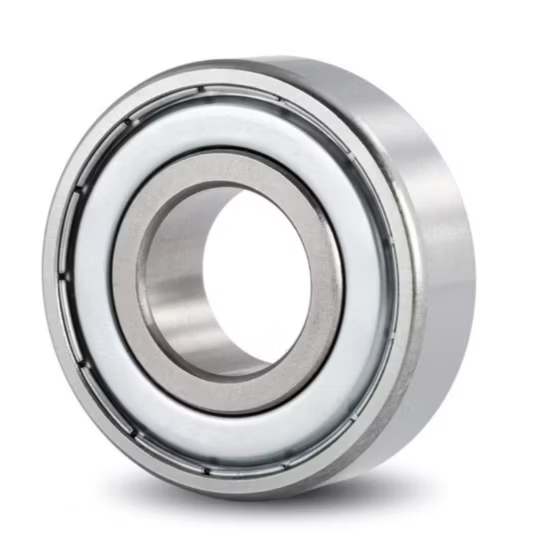
6200 6201 6202 6203 6204 6205 6206 Zz RS Deep Groove Ball Bearing P0-P2 — manufactured from GCr15 bearing steel for consistent performance.
Cross-Reference Triad Alignment — We verify base number, internal clearance, and precision suffixes simultaneously to prevent thermal binding in high-speed motors.
| Parameter | Value |
|---|---|
| Designation | 6200 6201 6202 6203 6204 6205 6206 Zz RS |
| Bearing Type | Deep Groove Ball Bearing |
| Number of Rows | Single Row |
| Material | GCr15 Bearing Steel |
| Seal or Shield Type | ZZ, 2RS, Open |
| Precision Class | P0, P6, P5, P4, P2 |
| Customization | Available |
| Origin | Shanghai |
| Industry | Typical Applications |
|---|---|
| Electric Motors | Rotor shaft support, cooling fan assemblies |
| Industrial Gearboxes | High-speed input shafts, intermediate gear support |
| Pumps & Conveyors | Impeller shaft bearings, idler roller journals |
| General MRO | Household appliance motors, manufacturing plant line shafts |
Matching the base number without verifying clearance and seal suffixes is the primary cause of premature thermal failure in electric motors.
Procurement teams frequently source replacements based solely on the basic designation, overlooking critical internal variations. When a standard clearance unit is installed in an application requiring thermal expansion compensation, the internal gap vanishes as operating temperatures rise. This leads to excessive friction, cage deformation, and eventual seizure. Such cross-reference errors account for a significant share of unplanned downtime in continuous-duty motor applications .
Selecting the correct sealing arrangement for the 6200 6201 6202 6203 6204 6205 6206 deep groove ball bearing series dictates both lubrication retention and contamination exclusion. Non-contact steel shields provide minimal friction, making them ideal for high-speed motor shafts where heat generation must be strictly controlled. Conversely, contact rubber seals offer superior protection against moisture and particulate ingress, which is essential for pumps or conveyors operating in harsh environments. Our technical review ensures the selected seal type aligns precisely with your specific operational constraints.
Electric motors generate substantial internal heat during continuous operation, causing the inner ring to expand more rapidly than the outer ring. If a standard clearance class is utilized where a larger internal gap is required, this differential expansion eliminates the operational clearance entirely. The resulting preload creates immense friction, rapidly degrading the lubricant and causing catastrophic thermal binding. Proper clearance selection is mandatory to accommodate these thermal gradients and maintain a stable hydrodynamic oil film .
The suffix designations dictate the physical boundaries of the bearing. The Zz configuration indicates double steel shields, which maintain a small, non-contact gap with the inner ring to minimize friction while keeping large contaminants out. The RS variant, typically supplied as 2RS, features contact rubber seals that wipe the inner ring surface, providing robust sealing at the cost of slightly higher rotational resistance. Furthermore, precision classes ranging from P0 up to P2 define the dimensional and running accuracy tolerances, where higher precision grades are strictly required for machine tool spindles or high-speed gearboxes to suppress vibration and acoustic noise.
Installing a mismatched unit leads to rapid degradation of the entire drive system. A standard precision part used in a high-speed spindle generates unacceptable vibration, accelerating fatigue in adjacent components. Similarly, deploying open bearings in dusty environments without external sealing results in abrasive wear that drastically shortens service life. These specification failures routinely result in catastrophic damage to the housing and shaft, voiding equipment warranties and forcing expensive emergency repairs .
Our distribution model eliminates the risk of receiving counterfeit or mislabeled inventory by enforcing strict batch traceability for every shipment. We actively prevent the common error of supplying standard clearance when C3 is required for thermal expansion in motor applications. Every cross-reference check verifies the cage material and precision suffix, not just the base number, ensuring exact functional equivalence. Furthermore, we provide application-based selection reviews covering load, speed, and temperature parameters to guarantee the chosen configuration survives the actual operating environment.
To ensure optimal performance, provide your specific radial and axial load profiles, operational speeds, and expected temperature ranges. Sharing the exact OEM equipment number allows our engineering team to perform a comprehensive cross-reference check, verifying that the internal clearance and precision suffixes match the original design intent. This technical validation guarantees the selected configuration will deliver reliable service life under your exact operating conditions.
Q: How do I verify the authenticity of the received inventory?
A: Every shipment includes batch traceability documentation and unique QR codes. You can scan these codes directly through the official brand applications to instantly verify the manufacturing origin and authenticity, ensuring you receive genuine products rather than counterfeits with cloned markings or substandard metallurgy.
Q: Why is it critical to align clearance and precision suffixes during cross-referencing?
A: Matching only the base number ignores vital internal design parameters. Installing a standard clearance unit in a high-temperature motor application eliminates the internal gap during operation, causing thermal binding. Verifying all suffixes ensures the replacement handles the exact thermal and mechanical stresses of the application.
Q: What are the operational differences between standard and enlarged clearance classes in electric motors?
A: Standard clearance is suitable for normal temperature environments. However, electric motors generate significant heat, causing the inner ring to expand. Enlarged clearance classes provide the necessary internal gap to compensate for this thermal expansion, preventing the rolling elements from binding and ensuring smooth, low-noise operation at elevated temperatures.
Q: How should I choose between steel shields and rubber contact seals?
A: Steel shields offer low-friction protection ideal for high-speed applications where heat generation must be minimized. Rubber contact seals provide superior exclusion of dust and moisture, making them necessary for harsh environments, though they introduce slightly higher rotational friction. The choice depends on your specific speed and contamination constraints.
Q: What defines the selection boundaries for different precision classes?
A: Standard precision is adequate for general industrial gearboxes and conveyors. Higher precision classes are mandatory for applications requiring strict dimensional accuracy and minimal vibration, such as machine tool spindles or high-speed electric motors, where running accuracy directly impacts the final product quality and acoustic noise levels.
Our 5-step process ensures every order is engineered, validated, and supported for optimal performance.
Technical needs assessment
Custom specifications
Free samples for $50k+
Pre-shipment inspection
On-site & predictive
Our certified engineers respond within 24 hours with detailed technical specifications, pricing, and lead time information.