01
Consultation
Technical needs assessment

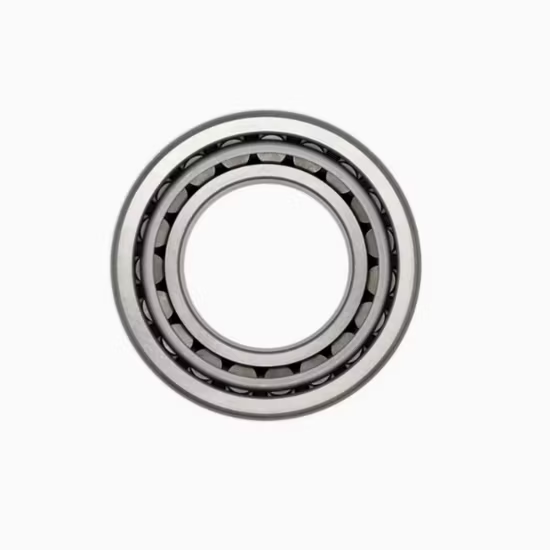

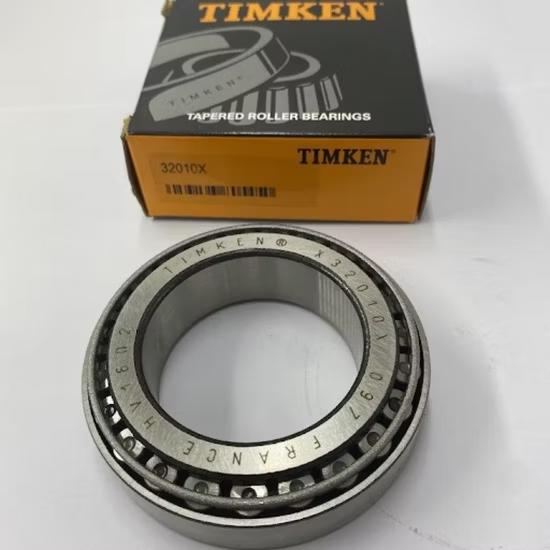


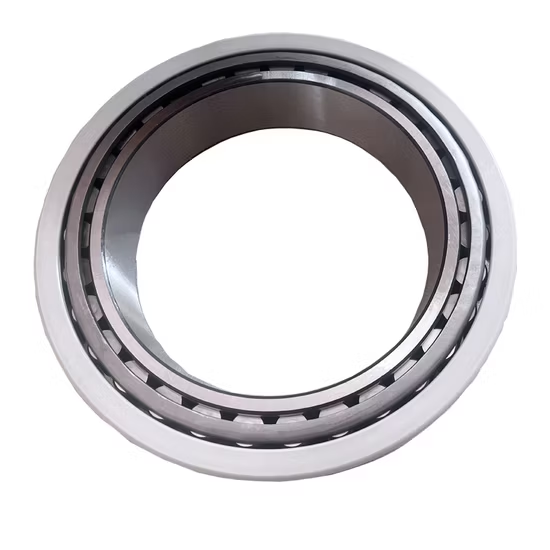
32208 32209 Tapered Roller Bearing P4 — Single row tapered roller bearings machined from GCr15 steel, delivering P4 precision for tighter running accuracy in gearboxes and wheel hubs.
Every shipment includes material test reports and dimensional inspection documents to verify genuine P4 accuracy.
Verified via official apps — Every 32208 32209 tapered roller bearing ships with scannable QR traceability to confirm genuine manufacturer origin.
| Parameter | Value |
|---|---|
| Designation | 32208 32209 |
| Bearing Type | Single Row Tapered Roller Bearing |
| Precision Class | P4 |
| Material | Available in GCr15 high-carbon chromium steel |
| Cage Material Options | Nylon, Brass, or Iron |
| Standards | ISO 492 / DIN 620 |
| Industry | Typical Applications |
|---|---|
| Automotive & Heavy Transport | Wheel hub assemblies and truck axle differentials |
| Industrial Power Transmission | Heavy-duty gearbox shaft support and reduction gears |
| Construction & Mining | Building material processing mills and crusher drives |
Matching the basic dimension is never enough to survive thermal expansion under heavy loads.
Sourcing components for Latin American mining fleets or heavy transport networks often reveals a frustrating pattern. Procurement teams secure the correct base designation, yet the equipment still suffers from catastrophic thermal binding within weeks. Overlooking internal clearance requirements or cage material compatibility turns a standard replacement into a critical failure point . When a standard clearance unit is forced into a high-temperature gearbox application, the thermal expansion eliminates the internal play, leading to rapid seizure and unplanned downtime.
Selecting the right 32208 32209 tapered roller bearing requires looking past the catalog number to evaluate the actual operating environment. Our technical team reviews your specific radial and axial load profiles alongside operating temperatures to recommend the optimal internal geometry. This application-based selection ensures the component handles the combined loads of truck axles or industrial gearboxes without premature fatigue.
Heavy transport and material processing environments subject drivetrains to severe shock loads and fluctuating thermal cycles. In these conditions, lubrication breakdown and cage fatigue become primary failure modes. High operating temperatures demand appropriate internal clearance to accommodate thermal expansion of the shaft and housing. Furthermore, heavy shock loads require cage materials that resist deformation, while contaminated environments necessitate robust sealing solutions to protect the rolling elements from abrasive dust .
The P4 precision class dictates tighter dimensional and running accuracy tolerances compared to standard grades, which is critical for minimizing vibration in high-speed gearbox shafts. The GCr15 high-carbon chromium steel provides the necessary hardenability and wear resistance for demanding contact stresses. Cage selection fundamentally alters performance boundaries: nylon cages offer low friction and quiet operation for moderate temperatures, brass cages deliver superior durability under heavy vibration and shock loads, and iron cages provide a cost-effective balance for standard industrial applications.
Relying solely on basic dimensional cross-references without verifying internal design parameters routinely leads to catastrophic damage. A mismatched internal clearance or incompatible cage material accelerates wear, resulting in premature failure that voids equipment warranties. According to failure analysis frameworks, a significant share of early breakdowns stems from these subtle specification mismatches rather than manufacturing defects . The resulting unplanned downtime and secondary damage to adjacent shafts or housings far exceed the initial component cost.
We maintain authorized distribution channels across major international brands, allowing mixed-brand orders to be fulfilled with consistent quality. Our cross-referencing process strictly aligns internal clearance, cage material, and precision grades, preventing the dangerous assumption that identical base numbers guarantee identical performance. We provide full batch traceability to the manufacturer, ensuring every unit can be verified. Furthermore, our technical support extends beyond the sale, offering mounting guidance and failure analysis to optimize long-term equipment reliability.
To ensure optimal performance, please provide detailed operating parameters including radial and axial loads, rotational speeds, and expected thermal ranges. Sharing specific OEM equipment numbers allows our engineering team to execute precise cross-reference verification and L10 life calculations. This technical review guarantees the selected configuration aligns perfectly with your application's mechanical and environmental demands.
Q: How do I verify the authenticity of the supplied components?
A: Every unit includes a unique QR code that can be scanned using the manufacturer's official mobile application. This digital verification confirms the genuine origin, production batch, and specific factory location, protecting your operation from counterfeit products with compromised metallurgy or soft inner rings that fail under load.
Q: Why is internal clearance critical during cross-referencing?
A: Matching the base designation without verifying internal clearance often leads to thermal binding in high-temperature applications. Standard clearance units installed in hot environments lose their internal play as the shaft expands, causing excessive friction, rapid heat generation, and eventual seizure of the assembly.
Q: How do I choose between nylon, brass, and iron cages?
A: Nylon cages minimize friction and noise in clean, moderate-temperature environments. Brass cages offer superior structural integrity and shock resistance for heavy-duty mining or crushing applications. Iron cages provide a reliable, cost-effective solution for general manufacturing equipment where extreme vibration is not a primary concern.
Q: What does the P4 precision class indicate for this application?
A: The P4 classification signifies tighter dimensional and running accuracy tolerances compared to standard grades. This enhanced precision reduces vibration and heat generation, making it essential for high-speed industrial gearboxes and applications where shaft running accuracy directly impacts overall machine performance.
Our 5-step process ensures every order is engineered, validated, and supported for optimal performance.
Technical needs assessment
Custom specifications
Free samples for $50k+
Pre-shipment inspection
On-site & predictive
Our certified engineers respond within 24 hours with detailed technical specifications, pricing, and lead time information.