01
Consultation
Technical needs assessment


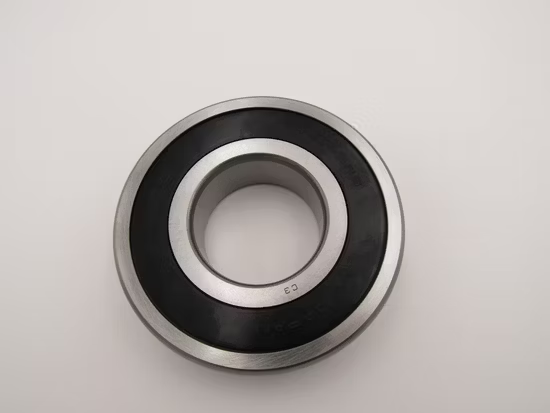

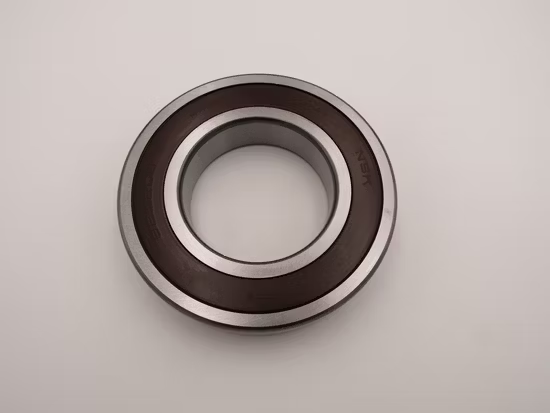


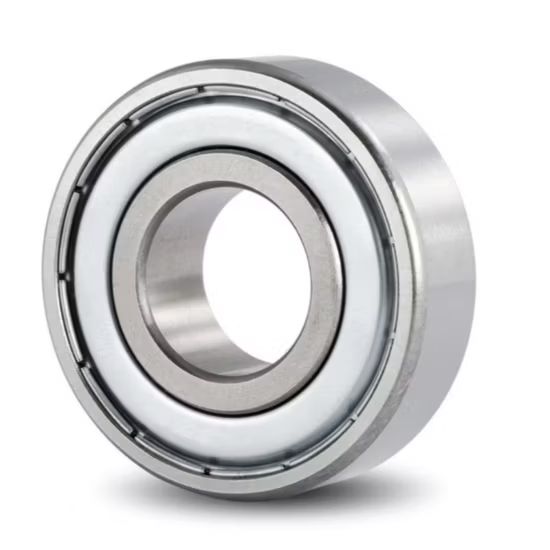
6205 2RS Deep Groove Ball Bearing — double-sided contact rubber seals ensure maintenance-free operation and reliable contamination protection.
Cross-reference triple alignment — matching the base number, rubber seal suffix, and internal clearance to prevent thermal binding in mixed-brand orders.
| Parameter | Value |
|---|---|
| Designation | 6205 2RS |
| Bearing Type | Deep Groove Ball Bearing |
| Seal Type | Double-sided contact rubber seal |
| Noise and Vibration Level | Z1V1, Z2V2, Z3V3, Z4V4 options |
| Material | High-carbon chromium bearing steel |
| Customization | Open, rubber-sealed, or iron-shielded variants |
| Industry | Typical Applications |
|---|---|
| Electric Motors | Rotor shaft support requiring low noise and sealed lubrication |
| Industrial Gearboxes | Input shaft sealing against gear oil ingress and particulate contamination |
| Material Handling | Conveyor roller drive assemblies exposed to ambient dust and moisture |
Overlooking internal clearance while matching the outer dimensions leads to catastrophic thermal expansion failures.
I have torn down motors in the Yangtze River Delta where a standard clearance variant was forced into a high-temperature winding environment. The inner ring exhibited blue brittleness and the grease was completely carbonized, locking the shaft solid. Procurement teams often approve a 6205 2RS deep groove ball bearing simply because the base designation fits the bore and housing, entirely missing the thermal expansion requirements . This oversight turns a routine replacement into an unplanned production halt.
Selecting the correct 6205 2RS deep groove ball bearing requires balancing contamination exclusion against friction heat generation. The double-sided contact rubber seal provides excellent protection against dust and moisture, which is critical for conveyor drives and agricultural machinery. However, in high-speed electric motor applications, the sliding friction of the rubber lip generates internal heat. We review the specific operating speed and ambient temperature to ensure the seal type does not push the internal grease beyond its thermal limit, offering iron-shielded or open variants when non-contact sealing is more appropriate for the工况.
Deep groove ball bearings primarily handle radial loads, but the internal geometry must accommodate the thermal growth of the shaft. In electric motors and industrial gearboxes, the rotor or gear shaft expands as it reaches operating temperature. If the internal clearance is too tight, this expansion eliminates the operational gap, causing the rolling elements to skid and the cage to fail. Proper selection involves calculating the interference fit and the expected temperature gradient to ensure the bearing maintains a positive operational clearance under full load .
The 2RS suffix specifically denotes double-sided contact rubber seals, which retain factory-applied grease and exclude contaminants without requiring external re-lubrication. This makes the component maintenance-free for its operational life. Furthermore, the Z1V1 through Z4V4 noise and vibration classifications dictate the internal geometric precision and surface finish of the raceways. A Z3V3 or Z4V4 grade is essential for precision electric motors to prevent resonance and acoustic noise, whereas a standard Z1V1 grade suffices for heavy-duty conveyor rollers where structural vibration masks bearing noise.
Installing a bearing with the wrong clearance or seal type inevitably leads to premature failure modes classified under ISO 15243. A standard clearance bearing in a hot environment will experience thermal binding, resulting in severe raceway smearing and eventual cage disintegration. Conversely, using a loose clearance in a precision spindle causes excessive vibration and accelerated fatigue. These failures rarely occur during initial testing; they manifest weeks later as catastrophic damage to the surrounding housing and shaft, voiding equipment warranties and triggering extensive downtime .
We eliminate the risk of receiving counterfeit units with soft inner rings by providing authorized multi-brand coverage with strict batch traceability. When cross-referencing a 6205 2RS deep groove ball bearing, we verify that the replacement matches not just the base number, but the exact internal clearance and cage design required by your OEM equipment. Every shipment includes documentation that allows you to verify the origin and material properties, ensuring that the component you install performs exactly as the original engineering specification intended.
To ensure the selected unit matches your exact operational demands, please provide the radial and axial load profiles, operating speeds, and expected temperature ranges. Sharing the specific OEM equipment number or the original manufacturer's designation allows our engineering team to perform a precise cross-reference check. This technical review guarantees that the internal clearance, seal friction, and vibration grade align perfectly with your application parameters.
Q: What is the operational difference between 2RS rubber seals and 2Z iron shields?
A: The 2RS rubber seal provides superior exclusion of fine dust and moisture due to its lip contact, making it ideal for dirty environments. However, this contact generates slightly more friction heat. The 2Z iron shield offers lower friction for higher-speed applications but provides less protection against liquid ingress.
Q: Why must internal clearance be verified during a 6205 cross-reference?
A: Matching the base number is insufficient because internal clearance dictates how the bearing handles thermal expansion. Installing a standard clearance unit in a high-temperature motor causes thermal binding and seizure, while a loose clearance in a precision application causes excessive vibration and reduced fatigue life.
Q: How do Z1V1 to Z4V4 grades affect electric motor performance?
A: These grades measure the acoustic noise and vibration levels of the bearing. Higher grades like Z3V3 or Z4V4 feature tighter geometric tolerances and smoother raceway finishes, which are critical for preventing resonance and ensuring quiet operation in precision electric motors and household appliances.
Q: How can I verify the authenticity of the supplied bearings?
A: Every unit is supplied with batch traceability documentation and a unique QR code. You can scan this code using the manufacturer's official mobile application to verify the production origin and reject counterfeit products that often feature cloned codes and soft, improperly heat-treated inner rings.
Our 5-step process ensures every order is engineered, validated, and supported for optimal performance.
Technical needs assessment
Custom specifications
Free samples for $50k+
Pre-shipment inspection
On-site & predictive
Our certified engineers respond within 24 hours with detailed technical specifications, pricing, and lead time information.