01
Consultation
Technical needs assessment


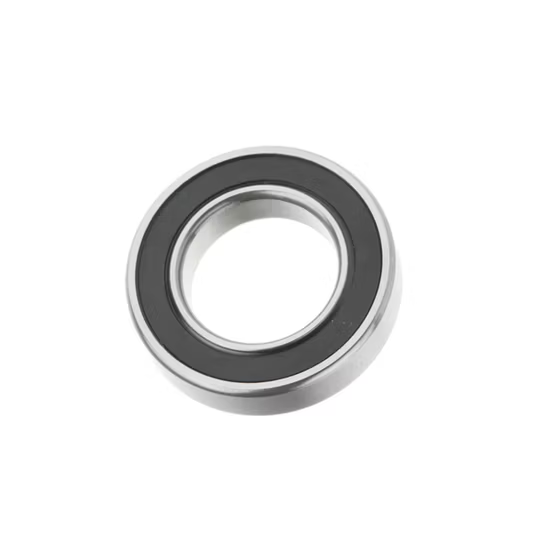


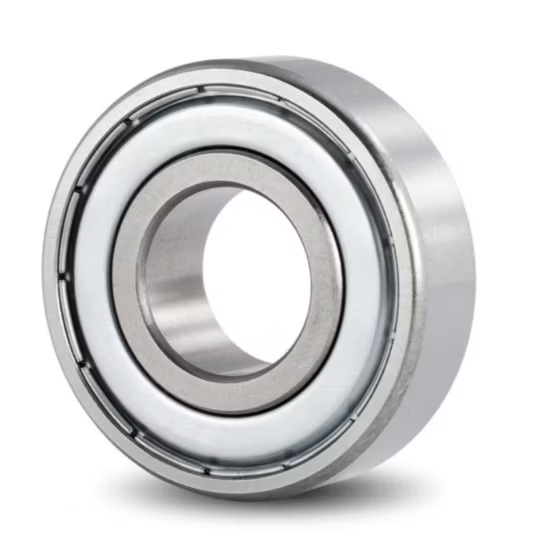
6700 6701 6702 6703 6704 6705 Deep Groove Ball Bearing — offered in open, rubber-sealed, and iron-shielded variants with Z1V1 to Z4V4 vibration grades to match specific electric motor and hub requirements.
Full Brand Authorization Coverage — Sourcing the 6700 6701 6702 6703 6704 6705 deep groove ball bearing from multiple origins is consolidated under verified distribution channels, eliminating the need to coordinate with fragmented suppliers.
| Parameter | Value |
|---|---|
| Designation | 6700 6701 6702 6703 6704 6705 |
| Bearing Type | Deep Groove Ball Bearing |
| Seal or Shield Type | Open, Rubber Seals, Iron Seals |
| Noise and Vibration Level | Z1V1, Z2V2, Z3V3, Z4V4 |
| Origin | Germany, Japan, Sweden, Malaysia, China |
| Industry | Typical Applications |
|---|---|
| Electric Motors | Rotor shaft support in high-speed induction motors |
| Household Appliances | Washing machine drum rotation and air conditioner fan motors |
| Pumps and Conveyors | Impeller shaft stabilization and idler roller alignment |
| Hub Applications | Light-duty wheel hub assemblies and agricultural cart axles |
Matching the basic designation without verifying seal friction and vibration grades leads to rapid thermal failure.
In the Pearl River Delta manufacturing hub, I have seen entire batches of electric motors seize because procurement teams swapped a required rubber-sealed variant for an open or iron-shielded version, assuming the base numbers were interchangeable. The 6700 6701 6702 6703 6704 6705 deep groove ball bearing series features thin cross-sections, making them highly sensitive to internal heat generation. When a high-friction seal is installed in a high-speed application, or when a Z1V1 vibration grade is used in a noise-sensitive appliance, the resulting thermal binding destroys the cage . True cross-referencing demands exact alignment of sealing configurations and acoustic tolerances, not just the outer dimensions.
Selecting the correct configuration for the 6700 6701 6702 6703 6704 6705 deep groove ball bearing requires balancing environmental protection with operational speed. Our technical review process ensures that the chosen seal type and vibration class align perfectly with your specific motor or appliance requirements, preventing premature wear.
Thin-section bearings operate in confined spaces where heat dissipation is severely restricted. High rotational speeds in electric motors demand low-friction iron shields or non-contact seals to prevent temperature spikes, while harsh environments like agricultural conveyors necessitate robust rubber seals to block abrasive dust. Vibration levels directly impact the structural integrity of lightweight household appliance housings; deploying a lower Z-grade in a precision fan motor introduces resonant frequencies that degrade the surrounding assembly . Lubrication retention is equally critical, as these compact designs often rely on lifetime grease fills that must withstand the thermal limits of standard bearing steel.
The distinction between rubber seals and iron shields dictates the thermal and contamination boundary of the bearing. Rubber seals provide superior exclusion of moisture and fine particulates but introduce rotational drag that limits maximum speed capabilities. Conversely, iron shields offer minimal friction for high-speed motor applications but only guard against larger debris ingress. The Z1V1 through Z4V4 acoustic classifications define the strictness of manufacturing tolerances regarding surface waviness and rolling element sphericity. Higher ZV grades ensure exceptionally smooth operation, which is mandatory for eliminating audible hum in precision household appliances and sensitive medical equipment.
Substituting an open bearing for a sealed variant in a dusty pump environment leads to rapid raceway abrasion and catastrophic seizure. Utilizing a standard vibration grade in a high-speed appliance motor generates excessive noise and accelerates cage fatigue, resulting in unplanned downtime and voided equipment warranties. These failures trace directly back to procurement decisions that ignored the exact sealing and acoustic suffixes during the cross-reference phase.
We enforce strict cross-reference alignment on seal types and ZV grades, ensuring a replacement matches the original equipment manufacturer's exact friction and noise profile. Our multi-origin supply chain provides authentic documentation for every batch, securing global procurement compliance without compromising on traceability. By verifying clearance and internal geometry alongside the base designation, we eliminate the thermal binding risks that plague generic substitutions. Every shipment includes batch-level traceability, allowing your quality team to validate the exact manufacturing origin and material certificates.
To ensure optimal performance, provide our engineering team with your operational parameters, including radial and axial loads, rotational speeds, and operating temperatures. Sharing the specific OEM equipment numbers allows us to perform a comprehensive cross-reference check, verifying that the selected seal type and vibration grade perfectly match your application's acoustic and thermal requirements.
Q: How do I verify the authenticity of these thin-section bearings?
A: Authenticity is confirmed by scanning the QR code on the packaging using the manufacturer's official mobile application. This digital check validates the batch number, production date, and specific configuration against the factory database, ensuring you receive genuine products with full traceability.
Q: Why is matching the exact seal type critical during cross-referencing?
A: Thin-section bearings have limited heat dissipation capacity. Installing a high-friction rubber seal in an application designed for a low-friction iron shield generates excessive internal heat, leading to grease degradation, thermal expansion, and eventual cage failure under high-speed operation.
Q: What is the operational difference between Z1V1 and Z4V4 vibration levels?
A: The ZV classification indicates the strictness of acoustic and vibration tolerances. Z4V4 represents the highest precision, ensuring ultra-smooth rotation essential for noise-sensitive appliances and precision motors, whereas Z1V1 is suitable for general-purpose applications where strict acoustic control is not required.
Q: How should I handle open-type bearings before installation?
A: Open-type bearings lack integral seals and rely on external housing seals or regular relubrication. They must remain in their original, moisture-barrier packaging until the exact moment of installation to prevent ambient humidity and airborne particulates from contaminating the internal raceways and factory grease.
Our 5-step process ensures every order is engineered, validated, and supported for optimal performance.
Technical needs assessment
Custom specifications
Free samples for $50k+
Pre-shipment inspection
On-site & predictive
Our certified engineers respond within 24 hours with detailed technical specifications, pricing, and lead time information.