01
Consultation
Technical needs assessment

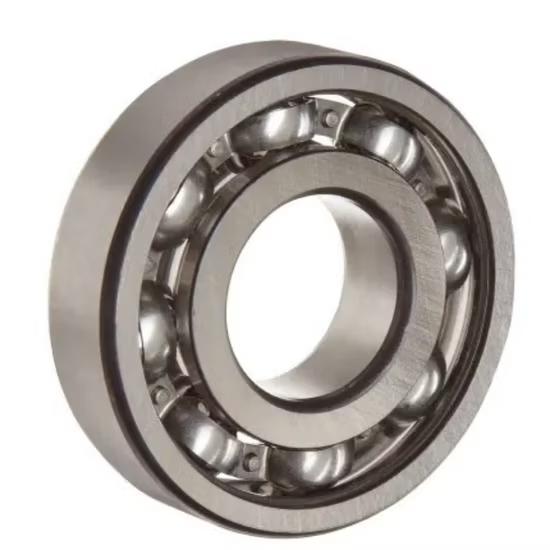
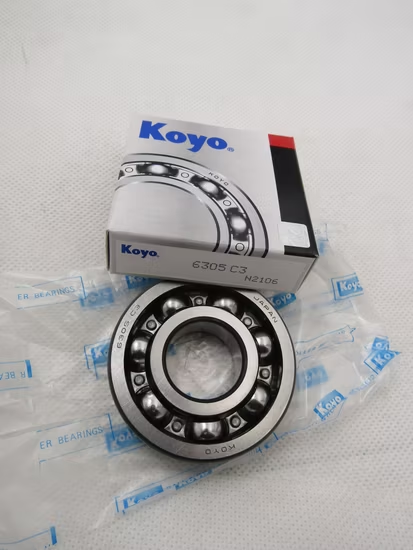
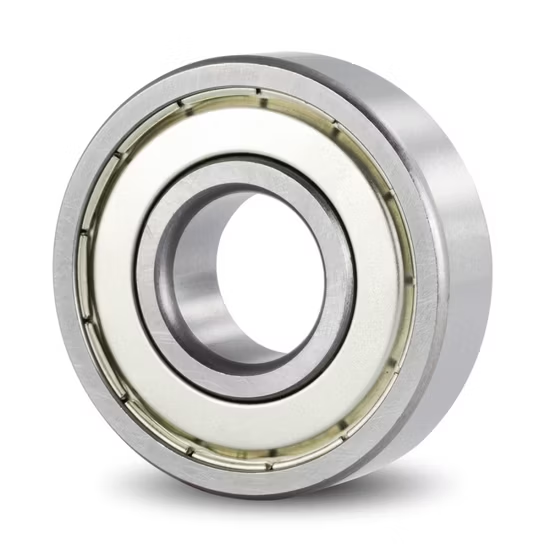


6312 Deep Groove Ball Bearing — Chrome steel construction available in open, ZZ shielded, and 2RS sealed configurations.
Multi-brand authorized sourcing — One consolidated order secures fully traceable units across all major international manufacturers without coordinating multiple vendors.
| Parameter | Value |
|---|---|
| Designation | 6312 |
| Bearing Type | Deep Groove Ball Bearing |
| Material | Chrome steel (stainless variants available for specific environments) |
| Seal or Shield Type | Open, ZZ (double iron shields), 2RS (double rubber contact seals) |
| Precision Class | P4, P5, P6 |
| Noise and Vibration Level | Z1V1, Z2V2, Z3V3, Z4V4 |
| Origin | Germany, Japan, Sweden, Malaysia, or China (brand dependent) |
Note: The P4, P5, and P6 designations are treated here as an unverified suffix grouping; exact availability requires manufacturer catalog confirmation for the specific brand requested.
| Industry | Typical Applications |
|---|---|
| Automotive Manufacturing | Alternator shaft supports and transmission input bearings |
| Industrial Automation | Conveyor drive rollers and centrifugal pump impeller supports |
| Power Transmission | Electric motor rotors and industrial gearbox intermediate shafts |
Matching the base number without verifying the internal clearance suffix guarantees thermal binding in continuous duty cycles.
I have seen countless 6312 units seize in electric motor applications because procurement teams ordered standard CN clearance instead of the required C3. When the rotor heats up during operation, the inner ring expands faster than the housing. Without that extra internal clearance to absorb the thermal growth, the rolling elements bind against the raceway, generating massive friction that destroys the cage within hours . Relying solely on the base designation ignores the operational reality of the equipment.
Selecting the correct 6312 deep groove ball bearing requires looking past the basic four digits to evaluate the exact seal and clearance combination. For high-speed electric motors, a non-contact ZZ shield configuration minimizes friction while keeping out ambient dust, whereas heavy-duty gearboxes exposed to moisture demand the tight sealing lip of a 2RS variant. We review your specific load and speed parameters to ensure the chosen suffix combination actually survives the intended operating environment, rather than just fitting the physical envelope.
Electric motor shafts operate at elevated temperatures where standard grease can degrade and internal clearances can close up entirely. If the ambient environment contains fine metallic dust or moisture, open bearings will suffer from rapid raceway abrasion. Conversely, using contact rubber seals in high-speed applications introduces unacceptable friction heat, accelerating lubricant breakdown. Balancing these thermal and contamination factors dictates whether you need a C3 clearance upgrade and which sealing arrangement provides the optimal friction-to-protection ratio .
While P6 is standard for general industrial use, demanding applications like precision gearboxes or high-speed automotive alternators often require P5 or P4 tolerances to minimize runout. The Z1V1 through Z4V4 vibration classifications directly correlate to how smoothly the bearing operates at high RPMs. A Z3V3 or Z4V4 grade ensures the internal geometry and surface finishes are optimized to reduce acoustic noise and prevent micro-pitting on the raceways, which is critical when the equipment operates near sensitive instrumentation or requires exceptionally quiet performance.
Ignoring the specific clearance and precision suffixes leads directly to unplanned downtime and catastrophic damage to surrounding shaft components. When a bearing seizes due to thermal binding, it often scores the shaft and destroys the housing bore, turning a simple maintenance swap into a major mechanical rebuild. These premature failures void equipment warranties and halt production lines, costing far more in lost output than the price difference of a correctly specified, application-matched component .
We maintain authorized distribution channels across all major brands, allowing you to source mixed-brand requirements in a single shipment. Every batch is fully traceable to the manufacturer, eliminating the risk of counterfeit rings with soft inner cores. Our cross-reference process strictly aligns the base number, clearance class, and cage material, preventing the common error of shipping a standard unit when a thermal expansion variant is required. Furthermore, we provide application-based selection reviews that evaluate your exact speed and temperature conditions to guarantee the chosen configuration will perform reliably.
To ensure the selected configuration matches your exact machinery requirements, please provide your operational parameters including radial and axial loads, continuous operating speeds, and expected temperature ranges. Supplying the original OEM equipment number allows our engineering team to perform a precise cross-reference check, verifying that the clearance, seal type, and precision class align perfectly with the factory design. This technical review guarantees you receive a component engineered for your specific application rather than a generic substitute.
Q: How do I verify the authenticity of the delivered units?
A: Every unit we supply features a unique QR code that links directly to the manufacturer's official verification application. Scanning this code confirms the batch origin and production date, ensuring the chrome steel metallurgy and internal geometry meet genuine factory standards. This process completely eliminates the risk of installing counterfeit components with cloned labels and substandard, soft inner rings that fail prematurely under load.
Q: Why is cross-referencing more than just matching the base number?
A: Matching only the base number ignores critical internal design variations like clearance class and cage material. A standard unit might physically fit the shaft, but if the application generates significant heat, it requires a C3 clearance to prevent thermal binding. We verify every suffix to ensure the internal geometry and sealing arrangement perfectly match the specific speed, temperature, and contamination challenges of your equipment.
Q: How do precision classes affect high-speed electric motor applications?
A: Higher precision classes like P5 or P4 feature tighter tolerances on inner and outer ring dimensions, which significantly reduces radial runout and vibration at high rotational speeds. This geometric accuracy ensures smoother operation, lowers acoustic noise, and prevents uneven load distribution across the rolling elements. Selecting the appropriate grade is essential for extending service life in demanding automotive and industrial motor applications.
Q: Which sealing option is best for a dusty gearbox environment?
A: For environments with heavy dust or moisture ingress, the 2RS double rubber contact seal provides the most effective barrier by maintaining a physical lip against the inner ring. However, if the gearbox operates at very high speeds, the friction from contact seals can generate excess heat. In those high-speed, moderately contaminated cases, the non-contact ZZ iron shields offer a better balance of protection and thermal management.
Q: What mounting practices prevent damage to high-precision variants?
A: Installing high-precision units requires strict adherence to shaft and housing tolerance limits to avoid distorting the rings. We recommend using induction heating for the inner ring rather than mechanical pressing, which can brinell the raceways. Additionally, applying the correct mounting force exclusively to the ring being pressed prevents transferring destructive loads through the rolling elements and delicate cage assemblies.
Our 5-step process ensures every order is engineered, validated, and supported for optimal performance.
Technical needs assessment
Custom specifications
Free samples for $50k+
Pre-shipment inspection
On-site & predictive
Our certified engineers respond within 24 hours with detailed technical specifications, pricing, and lead time information.