01
Consultation
Technical needs assessment

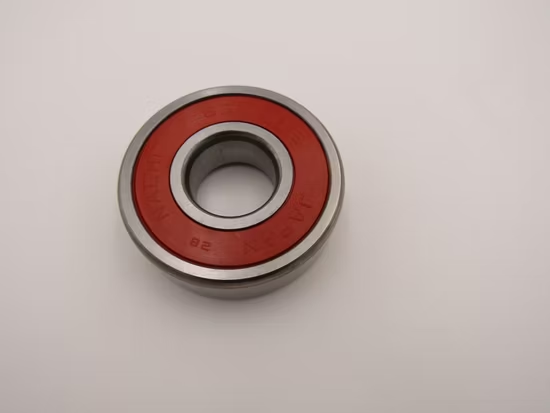

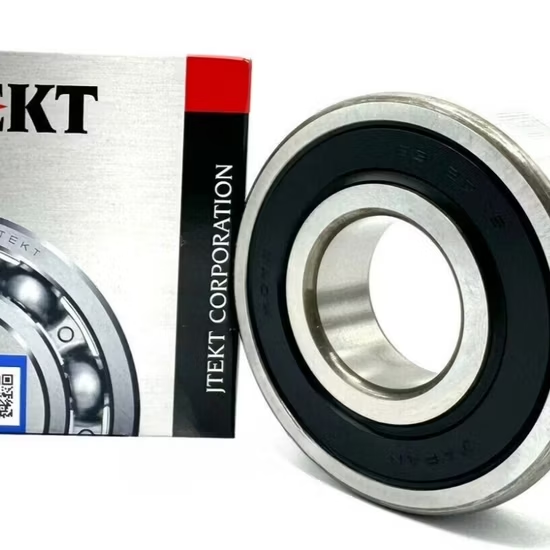


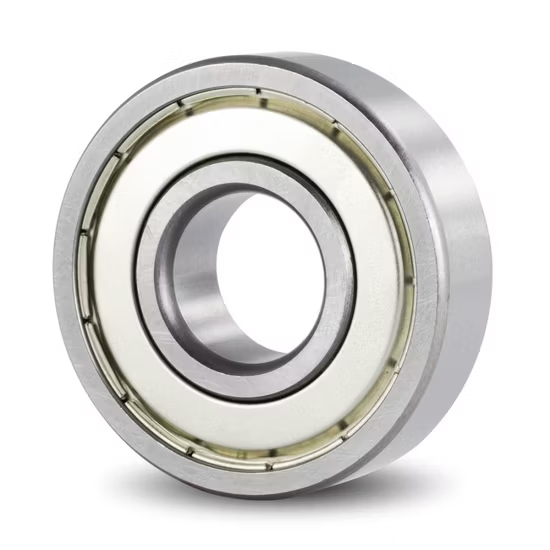
6301 Deep Groove Ball Bearing 12×37×12 mm — designed for high-speed radial load applications, ensuring reliable performance in electric motors and industrial gearboxes.
Multi-brand authorized coverage — sourcing SKF, FAG, and NSK equivalents for your 12mm bore applications under a single purchase order eliminates multi-vendor coordination delays.
| Parameter | Value |
|---|---|
| Designation | 6301 |
| Bearing Type | Deep Groove Ball Bearing |
| Bore Diameter (d) | 12 mm |
| Outside Diameter (D) | 37 mm |
| Width (B) | 12 mm |
| Seal or Shield Type | Open, Rubber Seals, Iron Seals |
| Quality Level | Z1V1, Z2V2, Z3V3, Z4V4 |
| Origin | Germany / Japan / Sweden / Malaysia / China |
Note: Trade suffixes like 2RS and 2zz are unverified shorthand; standard manufacturer catalogs specify 2RS1/2RSH for rubber seals and 2Z for iron shields.
| Industry | Typical Applications |
|---|---|
| Electric Motors | Small to medium motor shafts, cooling fan assemblies |
| Industrial Gearboxes | Input/output shaft supports, light-load transmission stages |
| Material Handling | Conveyor roller idlers, light-duty pulley bearings |
| Household Appliances | Washing machine drum supports, appliance drive mechanisms |
Matching the seal type to the actual environmental contamination level prevents premature motor burnout.
In the Pearl River Delta trading hubs, I have witnessed countless small motor failures traced back to a single procurement oversight. Purchasing teams often treat shielding designations as interchangeable, swapping rubber-sealed units for iron-shielded ones to save fractions of a cent. When a 6301 deep groove ball bearing intended for a dusty conveyor environment is fitted with non-contact metal shields instead of tight rubber seals, fine particulate matter bypasses the gap. This triggers abrasive wear on the raceways long before the lubricant degrades, leading to unplanned downtime that dwarfs the initial component cost .
Selecting the correct enclosure for a 6301 deep groove ball bearing requires evaluating the specific contamination risk of the equipment. Open variants suit enclosed gearboxes where the housing provides primary defense and external oil circulation is present. Iron shields offer low-friction protection against large debris in clean indoor assemblies, while rubber seals deliver the contact sealing necessary for agricultural or material handling motors exposed to fine dust and moisture.
The choice between contacting rubber seals and non-contact iron shields directly impacts the thermal profile of the assembly. Rubber seals generate higher friction torque, which restricts the limiting speed and demands careful attention to grease degradation at elevated temperatures. Conversely, shielded or open designs allow for higher rotational speeds but require strict adherence to regreasing intervals and external contamination barriers to maintain the L10 life expectancy .
For precision electric motors, the Z1V1 through Z4V4 quality levels dictate the acceptable thresholds for vibration and acoustic emissions. Higher grades like Z3V3 or Z4V4 are mandatory for household appliances and high-speed spindle applications where operational noise is a critical failure metric. Furthermore, while standard CN clearance fits general purposes, thermal expansion in continuously running motors may necessitate specific internal geometries to prevent radial binding during peak operational temperatures.
Installing a bearing with mismatched internal clearance or inappropriate sealing leads to catastrophic operational consequences. A shielded bearing operating in a heavily contaminated zone will suffer rapid raceway scoring, resulting in excessive vibration and eventual cage fracture. Conversely, using a high-friction rubber seal in a high-speed, low-contamination application causes thermal runaway, breaking down the grease matrix and causing premature seizure, ultimately voiding equipment warranties and triggering costly production halts .
Our cross-brand interchange protocol verifies that the replacement unit matches the original equipment manufacturer's exact clearance and seal specifications, not just the base 12x37x12mm dimensions. We provide full batch traceability for every authorized brand, ensuring the metallurgical integrity of the rings avoids the soft inner ring failures common in counterfeit batches. Our application-based selection review actively flags scenarios where standard CN clearance might thermally bind, recommending the precise suffix combination required for your specific motor or gearbox load profile.
To ensure accurate cross-referencing and L10 life validation, please provide the specific radial and axial loads, operational RPM, and ambient temperature ranges of your application. Supplying the original equipment manufacturer's part number or the exact machinery model allows our engineering team to verify the required internal clearance and sealing suffix. This technical data enables us to confirm the optimal quality grade and brand equivalent for your specific motor or gearbox assembly.
Q: How do you ensure cross-reference accuracy beyond the basic 12x37x12mm dimensions?
A: We analyze the original equipment's operational parameters to match the exact internal clearance, cage material, and sealing suffix. A base dimension match is insufficient; our technical review prevents field failures caused by installing standard clearance where thermal expansion demands specific internal geometries, ensuring the replacement integrates flawlessly into your existing motor or gearbox assembly.
Q: What is the practical difference between rubber seals and iron shields for this size?
A: Rubber seals provide contact sealing that blocks fine dust and moisture, making them ideal for harsh environments, though they generate slightly more friction. Iron shields offer non-contact protection suitable for clean, high-speed applications where minimizing friction torque and heat generation is critical. Selecting the wrong type leads to either contamination ingress or thermal degradation of the lubricant.
Q: How do the Z1V1 to Z4V4 quality levels affect electric motor performance?
A: These designations classify the bearing's vibration and acoustic emission limits. Lower grades like Z1V1 are acceptable for general industrial conveyors, while Z3V3 and Z4V4 are strictly required for household appliances and precision motors where operational noise and high-frequency vibration must be minimized to prevent resonance and ensure smooth, quiet rotation.
Q: Can I verify the authenticity of the supplied bearings upon delivery?
A: Yes, every unit we supply features batch traceability and QR codes that can be scanned using the official applications provided by the respective manufacturers. This allows your receiving department to instantly verify the production lot, origin, and authenticity, completely eliminating the risk of installing counterfeit components with soft inner rings into your critical machinery.
Our 5-step process ensures every order is engineered, validated, and supported for optimal performance.
Technical needs assessment
Custom specifications
Free samples for $50k+
Pre-shipment inspection
On-site & predictive
Our certified engineers respond within 24 hours with detailed technical specifications, pricing, and lead time information.