01
Consultation
Technical needs assessment


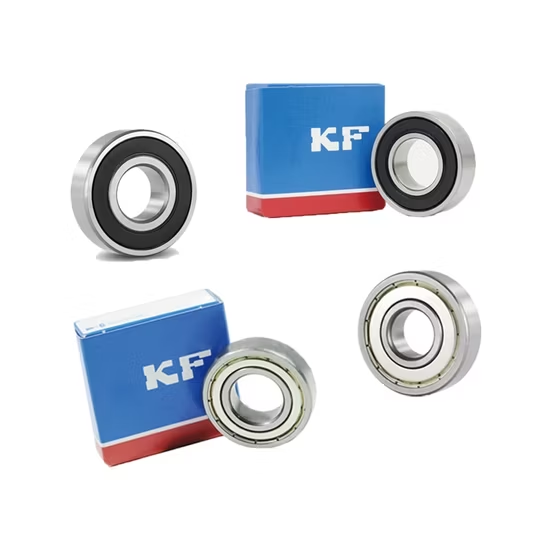
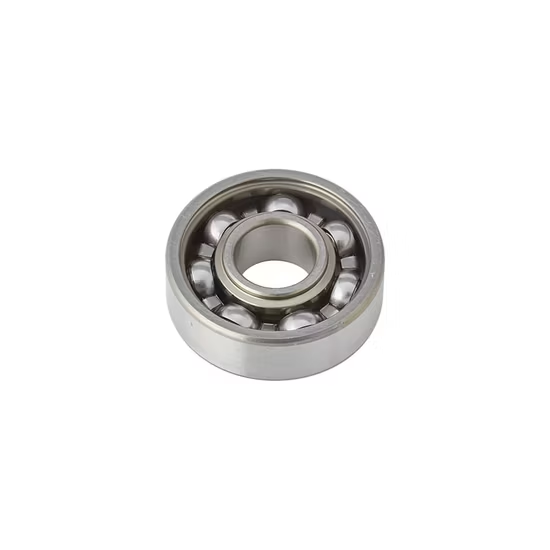


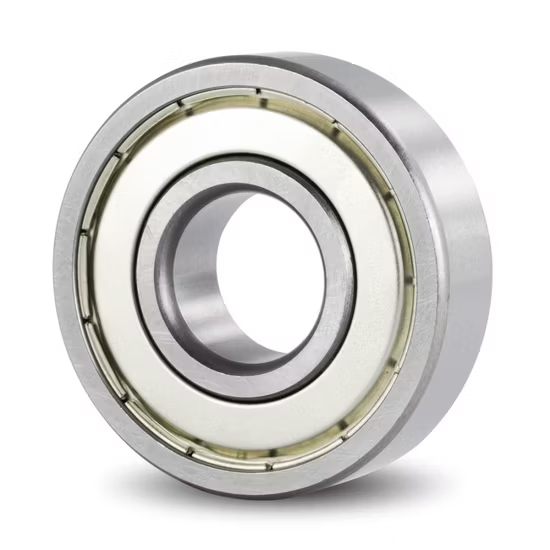
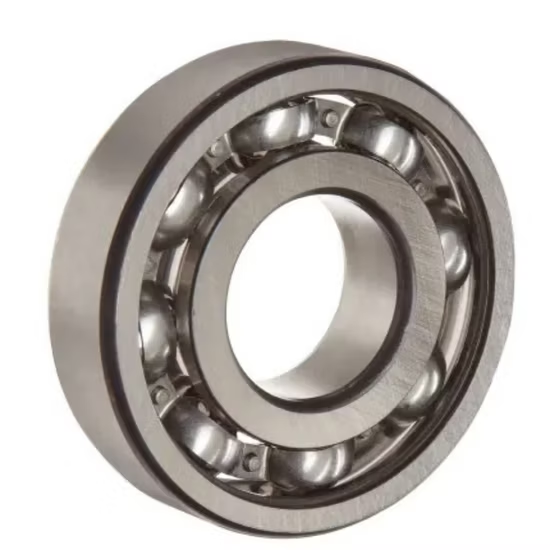
6201 Zz 2RS P4p5p6 Deep Groove Ball Bearing 12×32×10 mm — equipped with 2RS double-sided contact rubber seals providing maintenance-free operation and reliable contamination protection for printing press components.
Verified QR Traceability — Every batch of this 6201 deep groove ball bearing ships with scannable QR codes linked directly to the manufacturer's official authentication app, eliminating the risk of cloned markings.
| Parameter | Value |
|---|---|
| Designation | 6201 Zz 2RS P4p5p6 |
| Bearing Type | Deep Groove Ball Bearing |
| Bore Diameter (d) | 12 mm |
| Outside Diameter (D) | 32 mm |
| Width (B) | 10 mm |
| Material | Chrome Steel |
| Seal or Shield Type | Open, Rubber Seals (2RS), Iron Shields |
Note: The "Zz" and "P4p5p6" designations are unverified SEO strings; standard industry equivalents are typically 2Z/ZZ for double iron shields and discrete P4, P5, or P6 precision classes.
| Industry | Typical Applications |
|---|---|
| Printing & Packaging | Printing press impression cylinder supports, paper feed roller guides |
| Industrial Motors | Small to medium electric motor rotor shaft supports, cooling fan assemblies |
| Material Handling | Conveyor belt idler pulleys, light-duty gear reducer input shafts |
A matching base number does not guarantee operational survival in high-temperature environments. Procurement teams often approve replacements based solely on the "6201" prefix, overlooking the vital clearance and precision suffixes that dictate thermal expansion behavior and running accuracy. In desert climates where ambient temperatures routinely push equipment beyond standard limits, installing a standard clearance unit where a C3 was specified leads to rapid thermal binding and catastrophic cage failure . We verify every cross-reference against the exact operational parameters to prevent these costly mismatches.
Printing machinery demands a careful balance between contamination exclusion and rotational friction. Selecting the correct 6201 deep groove ball bearing variant depends entirely on the specific station within the press. Open bearings suit splash-lubricated gearboxes, while 2RS rubber seals provide superior protection against paper dust and ink mist in exposed roller positions, albeit with slightly higher friction limits. Iron shields offer a middle ground for high-speed feed rollers where minimal torque is critical but basic debris exclusion is still required.
Electric motors and printing presses subject small-bore bearings to continuous radial loads combined with high rotational speeds. Under these conditions, internal friction generates significant heat, which compounds with external ambient temperatures to reduce internal clearance. If the thermal expansion of the shaft and housing is not accommodated by the correct internal geometry, the rolling elements will skid rather than roll . Furthermore, exposure to abrasive paper dust or metallic particulates accelerates raceway wear, making the integrity of the sealing lips paramount for retaining factory-filled lubricants.
The 12 mm bore, 32 mm outside diameter, and 10 mm width define a compact footprint optimized for light to moderate radial loads. While chrome steel is the standard material providing high hardness and fatigue resistance, stainless steel variants are available for applications involving moisture or corrosive cleaning agents in food-grade packaging lines. The precision class dictates the running accuracy; higher precision grades minimize vibration and noise, which is essential for maintaining print registration and preventing chatter marks on the final product. Proper alignment during installation ensures the load is distributed evenly across the raceway, maximizing the L10 fatigue life.
Sourcing from unverified channels often results in bearings with soft inner rings and out-of-round raceways that pass superficial visual checks but fail under load. When a bearing lacks the specified dimensional accuracy, it induces excessive vibration that transfers through the shaft, damaging adjacent components and voiding equipment warranties. According to failure analysis frameworks like ISO 15243, premature fatigue and smearing are frequently traced back to substandard manufacturing tolerances rather than application overload . This leads to unplanned downtime and cascading mechanical repairs.
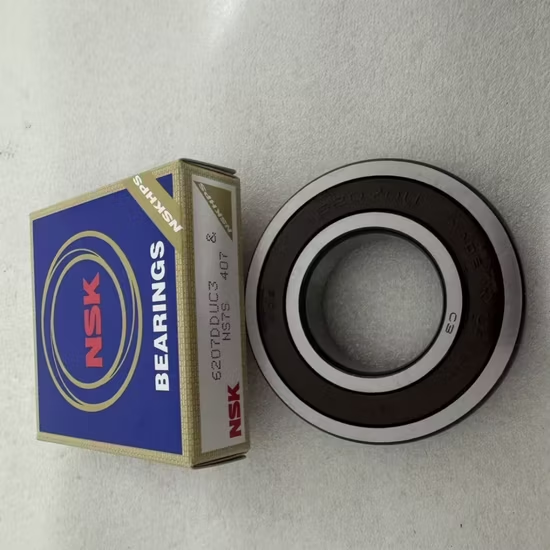
Our approach to supplying this compact bearing series focuses on rigorous incoming inspection rather than blind drop-shipping. We conduct dimensional and running accuracy checks on every batch to ensure the 12 mm bore and 32 mm OD meet strict tolerances, preventing the loose fits that cause outer ring creep. We actively correct cross-reference errors where buyers request standard clearance for high-speed motor applications, recommending the appropriate thermal expansion allowances. Furthermore, our multi-brand authorization allows us to consolidate mixed-brand MRO orders into a single shipment, complete with full batch traceability for your quality management system.
To ensure optimal performance, please provide the specific radial and axial loads, operating speeds, and ambient temperature ranges for your application. Sharing the OEM equipment number or the exact housing dimensions allows our engineering team to perform a precise cross-reference check and calculate the expected L10 life. If the environment involves excessive moisture or chemical exposure, specify these conditions so we can evaluate stainless steel alternatives. This technical review guarantees that the selected configuration aligns perfectly with your operational demands.
Q: Why is it critical to verify the exact suffix when replacing a 6201 deep groove ball bearing?
A: Base numbers only define the physical dimensions. Suffixes dictate internal clearance, precision, and sealing. Installing a standard clearance bearing in a high-temperature motor instead of a C3 variant causes thermal binding. We verify all suffixes against your specific operating conditions to prevent premature failure and ensure the replacement matches the original equipment requirements perfectly.
Q: How do 2RS rubber seals differ from iron shields in printing press applications?
A: Rubber seals provide a tight contact barrier that effectively excludes fine paper dust and ink mist, making them ideal for exposed roller positions. Iron shields offer non-contact protection, reducing rotational friction and heat generation, which is better suited for high-speed feed mechanisms where minimal torque and basic debris exclusion are the primary operational requirements.
Q: What does the unverified "P4p5p6" string in the listing title actually mean?
A: This is an aggregated SEO string rather than a valid single designation. In reality, bearings are manufactured to discrete precision classes such as P6, P5, or P4. Higher precision classes offer tighter dimensional tolerances and better running accuracy, which reduces vibration and noise, a critical factor for maintaining print quality in sensitive press applications.
Q: How can I confirm the authenticity of the bearings before installation?
A: Every shipment includes a unique QR code linked to the manufacturer's official authentication app. Scanning this code verifies the batch origin and confirms the materials used. We also provide dimensional inspection reports and Certificates of Conformity, ensuring the components meet the required metallurgical and geometric specifications before they enter your maintenance inventory.
Our 5-step process ensures every order is engineered, validated, and supported for optimal performance.
Technical needs assessment
Custom specifications
Free samples for $50k+
Pre-shipment inspection
On-site & predictive
Our certified engineers respond within 24 hours with detailed technical specifications, pricing, and lead time information.