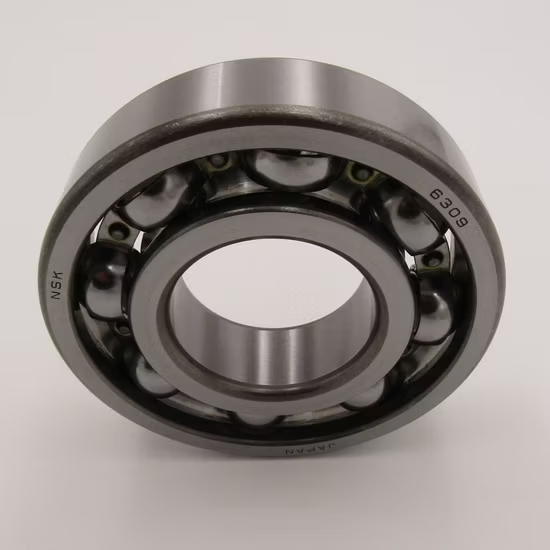
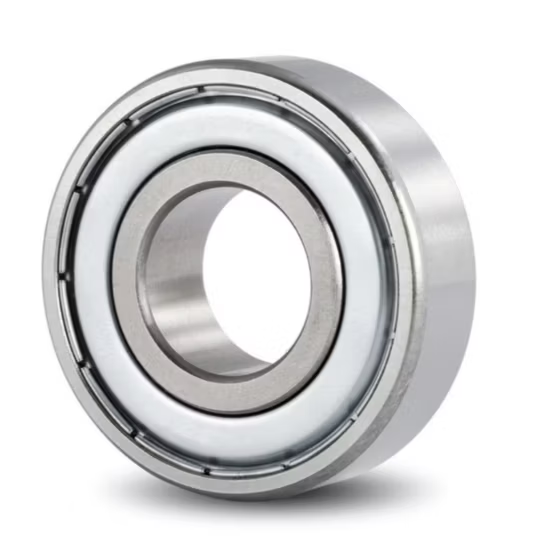
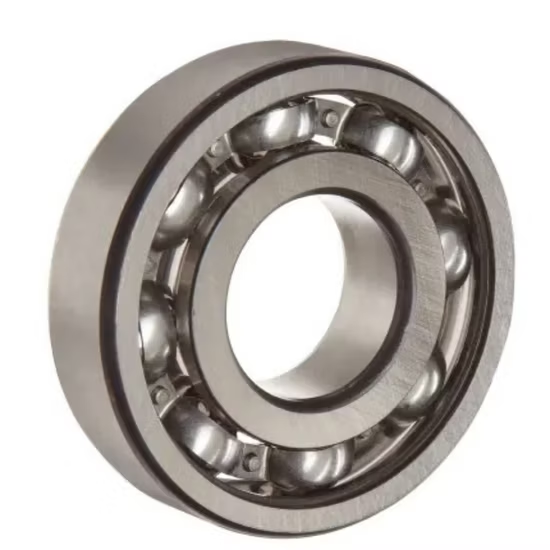
01
Consultation
Technical needs assessment

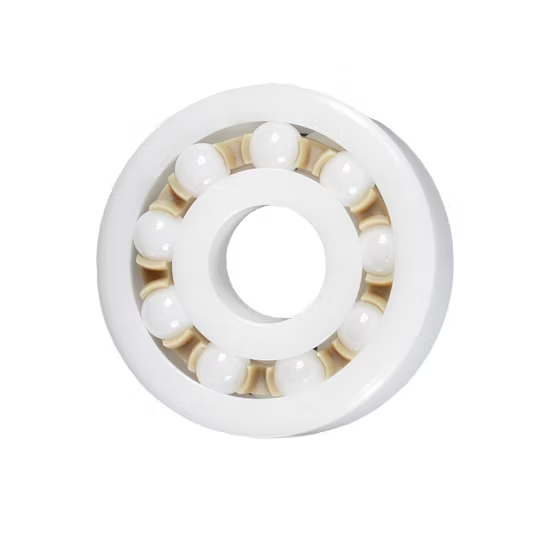

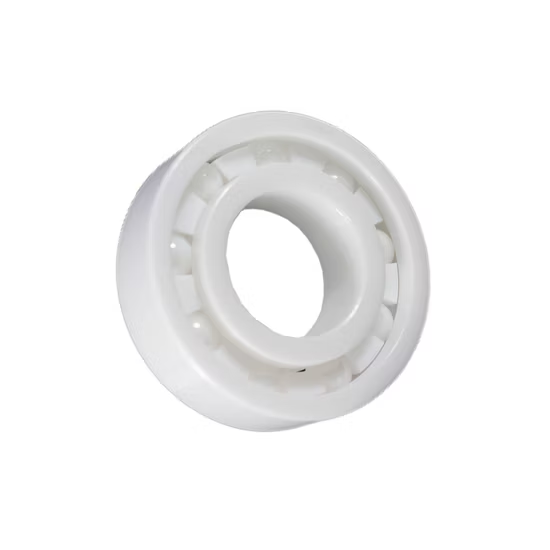


6200CE 6201CE Zirconia Ceramic Deep Groove Ball Bearing — engineered for extreme thermal and corrosive environments where standard steel fails.
Exact Suffix Cross-Reference Alignment — We verify base numbers, internal clearances, and specific ceramic material suffixes to prevent thermal binding in electric motor applications.
| Parameter | Value |
|---|---|
| Designation | 6200CE 6201CE |
| Bearing Type | Deep Groove Ball Bearing |
| Material | Zirconia Ceramic |
| Seal or Shield Type | Open, Rubber Seals, Iron Seals |
| Noise and Vibration Level | Z1V1, Z2V2, Z3V3, Z4V4 |
| Origin | Germany, Japan, Sweden, Malaysia, China |
| HS Code | 848210 |
Note: The 'CE' suffix is currently an unverified designation and requires specific manufacturer catalog confirmation before finalizing cross-references.
| Industry | Typical Applications |
|---|---|
| Electric Motors | Insulated rotor shafts preventing electrical erosion in variable frequency drives |
| Pumps | Chemical dosing units requiring non-conductive and corrosion-resistant components |
| Conveyors | Food processing lines demanding non-magnetic and washdown-compatible rollers |
| Gearboxes | High-speed auxiliary drives where standard steel bearings suffer from stray currents |
Electrical insulation prevents the microscopic arcing that turns standard bearing grease into abrasive carbon dust within weeks.
In humid tropical workshops, variable frequency drives constantly leak stray shaft currents into standard steel bearings. I have dismantled motors after just two weeks of operation to find the cage completely pulverized by electrical discharge machining. The fluting damage occurs long before thermal limits are tested, rendering standard replacements useless. Procuring an authentic 6200CE 6201CE zirconia ceramic deep groove ball bearing stops this current path entirely, yet the market is flooded with counterfeits featuring soft inner rings that fail under identical electrical stress .
Selecting the right insulation goes beyond simply avoiding steel. The zirconia construction inherent to this 6200CE 6201CE zirconia ceramic deep groove ball bearing provides complete electrical isolation, protecting both the bearing internals and the surrounding motor windings from stray current damage. Our technical review ensures the selected variant aligns perfectly with your specific voltage exposure and thermal expansion requirements.
Motor environments introduce complex thermal gradients that dictate clearance selection and seal friction. Rubber seals offer excellent protection against conductive dust ingress but generate higher friction heat at elevated speeds, whereas iron shields provide a non-contact barrier suitable for higher RPMs. Open configurations allow for specialized dielectric grease packing, which is critical when operating beyond the thermal limits of standard factory lubricants. Mismatching these sealing options to the actual cooling airflow often leads to premature cage degradation .
The shift from bearing steel to zirconia ceramic fundamentally alters the load capacity and thermal behavior of the assembly. Ceramic rolling elements are noticeably lighter and possess considerably less thermal expansion than steel, allowing for tighter initial clearances without risking thermal binding during continuous duty cycles. The available noise and vibration grading, ranging from Z1V1 to Z4V4, ensures the rotating assembly meets the strict acoustic requirements of precision spindle motors or quiet household appliances. Selecting the correct seal type—whether rubber for washdown pumps or iron for dry gearboxes—finalizes the contamination defense strategy.
Installing a counterfeit ceramic bearing with a cloned QR code might pass a casual visual inspection, but the soft inner ring will quickly deform under radial loads. This misalignment accelerates wear and leads to catastrophic rotor grounding, voiding the entire motor warranty. According to failure analysis frameworks, substituting materials without verifying the exact suffix and internal geometry accounts for a significant share of premature field failures in critical drive systems .
We eliminate the risk of soft-ring counterfeits by sourcing exclusively through authorized channels, guaranteeing the material authenticity of every zirconia component. Our cross-reference process verifies not just the base number, but the exact sealing and clearance suffixes required for your specific motor design. Every shipment includes batch traceability, allowing your receiving team to confirm the origin and material certifications before the components ever reach the assembly floor.
To ensure the selected configuration survives your specific operating environment, please provide the continuous radial and axial loads, maximum operating speeds, and expected thermal gradients. Sharing the original equipment manufacturer part numbers allows our engineering team to perform a precise cross-reference check, verifying that the internal geometry and sealing arrangements perfectly match your machinery's design parameters.
Q: How can we verify the authenticity of these ceramic bearings upon delivery?
A: Every shipment includes batch traceability documentation and official QR codes. Your receiving team can scan these codes using the manufacturer's official mobile application to instantly verify the production origin, material composition, and authenticity, effectively ruling out any counterfeit products with cloned packaging.
Q: Why is suffix matching critical when cross-referencing ceramic bearings?
A: Matching only the base designation often overlooks crucial internal clearances and seal types. A standard clearance installed in a high-temperature motor will cause thermal binding, while an incorrect seal will fail under specific contamination levels. We verify all suffix combinations to ensure exact functional equivalence.
Q: What are the application boundaries for zirconia ceramic versus standard steel?
A: Zirconia ceramic excels in environments requiring electrical insulation, non-magnetic properties, or high corrosion resistance. However, it has lower impact toughness than standard bearing steel. We evaluate your specific shock load and vibration profiles to determine if ceramic or a hybrid configuration is the safer choice.
Q: How do we select between rubber seals and iron shields for our motors?
A: Rubber seals provide superior protection against conductive dust and moisture ingress but generate higher friction at elevated speeds. Iron shields offer a non-contact labyrinth effect suitable for higher RPM applications where heat generation must be minimized. We review your speed and contamination data to recommend the optimal seal.
Q: What documentation proves the electrical insulation properties of the material?
A: We provide comprehensive material test reports alongside the Certificate of Conformity. These documents explicitly verify the zirconia composition and its non-conductive characteristics, ensuring the bearings meet the strict electrical isolation requirements for variable frequency drive applications and preventing stray current damage.
Our 5-step process ensures every order is engineered, validated, and supported for optimal performance.
Technical needs assessment
Custom specifications
Free samples for $50k+
Pre-shipment inspection
On-site & predictive
Our certified engineers respond within 24 hours with detailed technical specifications, pricing, and lead time information.