01
Consultation
Technical needs assessment



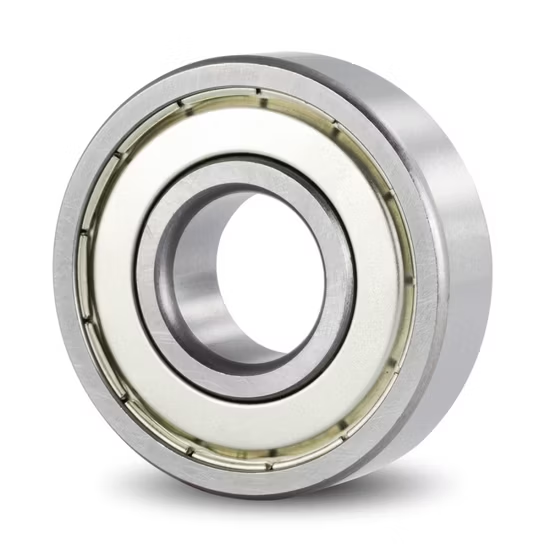
6008 6009 6010 6011 6012 P4p5p6 Deep Groove Ball Bearing — Chrome steel construction ensures reliable load capacity for printing press parts and precision equipment.
Full Brand Coverage — sourcing mixed-brand printing press spares in a single order eliminates multi-vendor coordination delays.
| Parameter | Value |
|---|---|
| Designation | 6008 6009 6010 6011 6012 P4p5p6 |
| Bearing Type | Deep Groove Ball Bearing |
| Material | Chrome Steel |
| Precision Class | P4, P5, P6 |
| Seal or Shield Type | Open, Rubber Seals, Iron Seals |
| Vibration and Noise Level | Z1V1, Z2V2, Z3V3, Z4V4 |
| Origin | Germany, Japan, Sweden, Malaysia, China |
Note: The suffix string p5p6 appears in source documentation as an unverified typographical variant; always confirm exact P5 or P6 class requirements with the OEM manual.
| Industry | Typical Applications |
|---|---|
| Printing Machinery | Printing press cylinder journals, impression roller supports, ink ductor shafts |
| Precision Equipment | Machine tool spindle rear supports, high-speed router shafts |
| Industrial Drive | Electric motor rotors, precision gearbox input shafts, conveyor drive pulleys |
A matching base designation does not guarantee running accuracy if the precision suffix is ignored.
Procurement teams frequently order replacements based solely on the base number, only to face severe print registration drift upon installation. When a standard tolerance component is installed in a high-speed impression cylinder, the resulting radial runout causes visible ghosting on the printed substrate. Sourcing channels often overlook these critical suffixes, leading to catastrophic downtime on the press floor . Transitioning from logistics documentation to technical sales revealed how easily a P0 grade part can slip into a P5 requirement on commercial invoices, creating severe operational bottlenecks.
Selecting the correct 6008 6009 6010 6011 12 P4p5p6 deep groove ball bearing requires aligning the precision class with the specific rotational speed of the press section. P4 grades are strictly reserved for high-speed impression cylinders where micron-level runout directly impacts print quality. P5 and P6 classes serve auxiliary drive shafts and ink transfer rollers where slight radial play is tolerable. Our technical review process verifies the exact precision suffix against the OEM equipment manual before release.
High-speed printing generates substantial friction heat at the cylinder journals, demanding careful consideration of internal clearance and seal friction. Rubber seals provide excellent protection against ink mist and paper dust but introduce higher rotational friction, potentially causing thermal binding if internal clearance is not appropriately upgraded. Iron shields offer a non-contact alternative that reduces friction heat while maintaining basic contamination exclusion. Proper lubrication intervals must also be calculated based on the specific Z-level vibration grade to prevent grease degradation .
The precision classes P4, P5, and P6 dictate the allowable dimensional and running accuracy deviations, directly influencing the vibration profile of the rotating assembly. A P4 component ensures the tightest geometric tolerances, minimizing harmonic vibration that transfers to the printing substrate. The Z1V1 through Z4V4 vibration and noise classifications further refine this performance; higher ZV classes indicate stricter factory sorting for surface waviness and rolling element dimensional consistency. Selecting a higher ZV grade is essential for impression rollers where micro-vibrations cause banding defects on the final print.
Installing an incorrect precision grade or vibration class leads to unplanned downtime and scrapped print runs. According to ISO 15243 frameworks, premature fatigue and smearing often originate from improper internal clearance selection under thermal load. A component that lacks the required running accuracy will induce excessive vibration, accelerating cage wear and ultimately causing sudden seizure on the press floor. The financial impact extends far beyond the replacement part, encompassing lost production hours, wasted substrate, and missed delivery deadlines .
Our procurement strategy focuses on eliminating the specific documentation errors that plague the printing machinery aftermarket. We cross-reference the exact precision and vibration suffixes against manufacturer catalogs, preventing the common trap of receiving standard clearance parts when thermal expansion requires C3. Every shipment includes verifiable batch traceability, ensuring that the physical components match the commercial invoice. This rigorous validation process protects your maintenance budget from the hidden costs of counterfeit or mislabeled inventory.
To ensure optimal performance, provide the specific rotational speed, radial load, and operating temperature of the target press cylinder. Sharing the exact OEM equipment number allows our engineering team to perform a comprehensive cross-reference check, verifying that the precision class, seal type, and internal clearance perfectly align with the original design parameters. This technical validation prevents costly installation errors and ensures reliable operation.
Q: How do I verify the exact precision class of the replacement component?
A: Always request the manufacturer's inspection report detailing the specific P4, P5, or P6 tolerance measurements. Visual inspection cannot differentiate these grades. We provide official QR verification and batch traceability documents that confirm the exact precision suffix matches your printing press OEM requirements, eliminating the risk of receiving mislabeled standard tolerance parts.
Q: Why is the vibration grade critical for impression cylinders?
A: Higher vibration grades like Z3V3 or Z4V4 indicate stricter sorting for surface waviness and rolling element consistency. In high-speed printing applications, micro-vibrations from lower-grade components transfer directly to the substrate, causing visible banding or ghosting defects. Selecting the appropriate ZV classification ensures smooth rotation and maintains strict print registration accuracy.
Q: Should I choose rubber seals or iron shields for paper dust environments?
A: Rubber seals provide superior exclusion of fine paper dust and ink mist but generate higher rotational friction, which can cause thermal binding at high speeds. Iron shields offer non-contact protection with lower friction but allow fine particulate ingress over time. The correct choice depends on the specific rotational speed and the required maintenance interval for the press section.
Q: What causes print ghosting even when the base number is correct?
A: Print ghosting often results from installing a component with incorrect internal clearance or a lower precision grade than specified. If a standard tolerance part is used instead of a P4 or P5 grade, the excessive radial runout induces vibration that blurs the printed image. Always verify the complete designation, including precision and clearance suffixes, before installation.
Our 5-step process ensures every order is engineered, validated, and supported for optimal performance.
Technical needs assessment
Custom specifications
Free samples for $50k+
Pre-shipment inspection
On-site & predictive
Our certified engineers respond within 24 hours with detailed technical specifications, pricing, and lead time information.