01
Consultation
Technical needs assessment



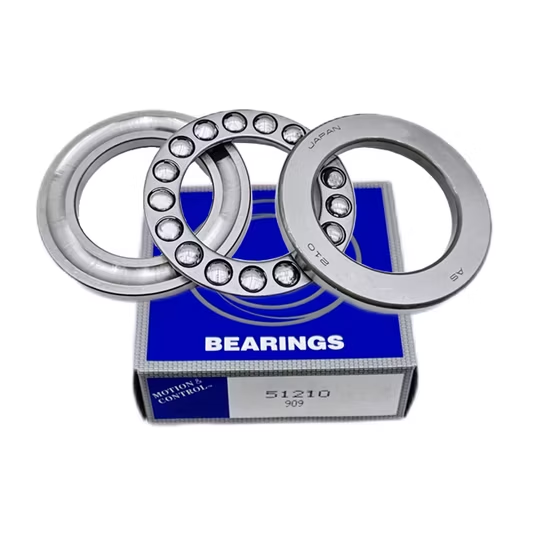
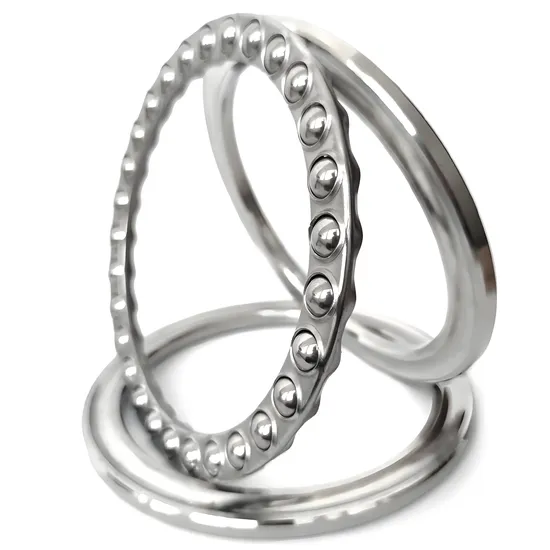
51101 Single Direction Thrust Ball Bearing 12 mm bore — engineered to sustain heavy unidirectional axial loads in vertical water pumps and crane hooks.
Traceable Factory Batches — Every 51101 single direction thrust ball bearing we supply comes with unbroken manufacturer lot documentation to eliminate counterfeit risks in critical vertical applications.
| Parameter | Value |
|---|---|
| Designation | 51101 |
| Bearing Type | Single Direction Thrust Ball Bearing |
| Bore Diameter (d) | 12 mm |
| Outside Diameter (D) | 26 mm |
| Width (B) | 9 mm |
| Cage Material | Pressed steel or machined brass options |
| Precision Class | Standard P0, with higher precision variants available |
| Origin | Sourced from authorized manufacturer facilities |
| Industry | Typical Applications |
|---|---|
| Material Handling | Crane hook swivels and hoist drum thrust supports |
| Fluid Management | Vertical water pump impeller shaft axial定位 |
| Machine Tools | Vertical spindle lower thrust supports |
| Automotive & Heavy Vehicles | Steering column thrust washers and clutch release mechanisms |
Matching the base designation without verifying internal geometry invites rapid axial play degradation.
Running factory audits across Southeast Asia, I have seen countless vertical pump shafts and crane hooks fail prematurely. Maintenance crews often treat basic thrust washers as universal spares, ignoring that a standard 51101 single direction thrust ball bearing might lack the specific cage design required for high-speed vertical rotation. When procurement relies solely on cross-referencing the base number, they frequently receive units with pressed steel cages that vibrate excessively under dynamic axial loads, leading to rapid raceway spalling . True reliability demands matching the exact internal clearance and cage material to the specific rotational dynamics of the equipment.
Selecting the correct 51101 single direction thrust ball bearing requires looking beyond the 12mm bore diameter. We evaluate the specific axial load profile and rotational speed of your vertical equipment to recommend the optimal cage material and precision class. Our engineering review ensures the selected variant maintains stable axial positioning without generating excessive friction heat, leveraging our multi-brand authorization to source the exact OEM specification your machinery demands.
Vertical applications subject thrust bearings to continuous unidirectional axial loads, often compounded by minor radial misalignments that cause uneven stress distribution across the rolling elements. In environments like vertical water pumps, inadequate lubrication flow to the upper raceway can lead to localized thermal expansion, altering the internal clearance and causing the bearing to bind. Furthermore, exposure to moisture or airborne contaminants in crane hook mechanisms accelerates raceway corrosion, making proper sealing or external environmental protection critical for maintaining operational lifespan .
The internal architecture of a thrust ball bearing dictates its operational ceiling. Pressed steel cages offer low inertia and are suitable for moderate-speed, steady-load applications, minimizing friction. Conversely, machined brass cages provide superior structural rigidity, damping vibrations and maintaining ball spacing under heavy, fluctuating axial loads or higher rotational speeds. Precision class selection is equally vital; while standard P0 tolerance suffices for basic crane hooks, machine tool spindles require tighter P6 or P5 tolerances to prevent axial runout, which directly impacts the machining accuracy of the final product.
Installing an under-specified thrust bearing in a heavy-duty vertical application inevitably leads to unplanned downtime. When the cage material cannot withstand the operational vibration, ball skidding occurs, rapidly destroying the raceway finish and generating metallic debris that contaminates the entire lubrication system. This cascading failure not only destroys the bearing but can cause catastrophic damage to the surrounding shaft and housing, resulting in extensive repair costs and voided equipment warranties .
We eliminate the guesswork from multi-brand sourcing by verifying every cross-reference against internal clearance and cage specifications, not just the base number. Our authorization across major international brands allows us to fulfill mixed-brand requirements in a single shipment, maintaining strict batch traceability for every unit. We actively prevent the installation of counterfeit components with soft inner rings by providing official verification tools. Furthermore, our technical team reviews your specific load and speed parameters to ensure the selected thrust bearing matches the exact OEM engineering intent, preventing costly field failures.
To ensure the selected thrust bearing perfectly aligns with your operational requirements, please provide the specific axial load magnitude, rotational speed, and operating temperature of your application. Supplying the original OEM equipment number or existing shaft dimensions allows our engineering team to perform a precise cross-reference check and calculate the expected L10 service life. Detail any environmental exposure, such as moisture or heavy dust, so we can recommend the appropriate protective measures or alternative material options.
Q: How do I verify the authenticity of the 51101 single direction thrust ball bearing upon delivery?
A: Every unit we supply features a unique QR code on the packaging that links directly to the manufacturer's official verification application. Scanning this code confirms the production batch, origin, and authenticity, effectively eliminating the risk of installing counterfeit bearings with substandard raceway hardness that frequently cause premature axial failures in vertical applications.
Q: Why is it critical to match the cage material when cross-referencing thrust bearings?
A: Base number cross-referencing often overlooks internal cage variations. A pressed steel cage might suffice for slow-speed crane hooks, but high-speed vertical pumps require machined brass cages to dampen vibration and maintain ball spacing. Installing the wrong cage type leads to excessive friction, thermal expansion, and rapid raceway degradation under dynamic axial loads.
Q: What installation precautions are necessary for single direction thrust ball bearings?
A: Unlike radial bearings, thrust bearings must be mounted with precise axial alignment. The shaft washer must be pressed squarely against the shaft shoulder, and the housing washer must sit perfectly flat. Any angular misalignment causes uneven load distribution across the rolling elements, leading to localized stress, premature spalling, and catastrophic axial play.
Q: Can I use a standard 51101 bearing in a high-temperature vertical gearbox?
A: Standard bearing steel and cage materials have thermal limits. For elevated temperature environments, we must evaluate the specific operating heat to recommend appropriate internal clearance adjustments or specialized high-temperature lubricants. Providing your exact thermal profile allows us to source variants designed to resist dimensional instability and prevent thermal binding during continuous operation.
Our 5-step process ensures every order is engineered, validated, and supported for optimal performance.
Technical needs assessment
Custom specifications
Free samples for $50k+
Pre-shipment inspection
On-site & predictive
Our certified engineers respond within 24 hours with detailed technical specifications, pricing, and lead time information.