01
Consultation
Technical needs assessment

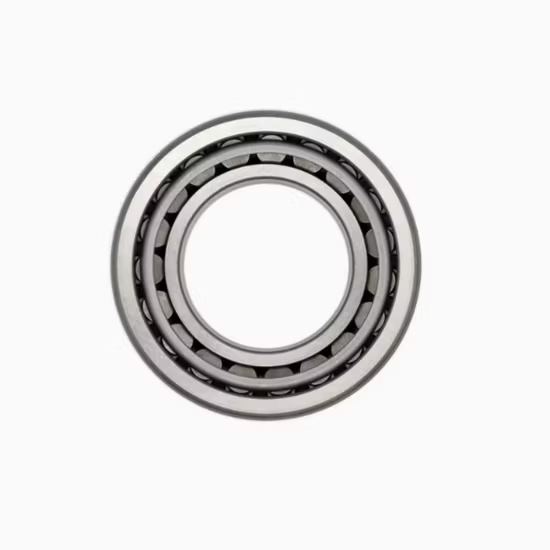
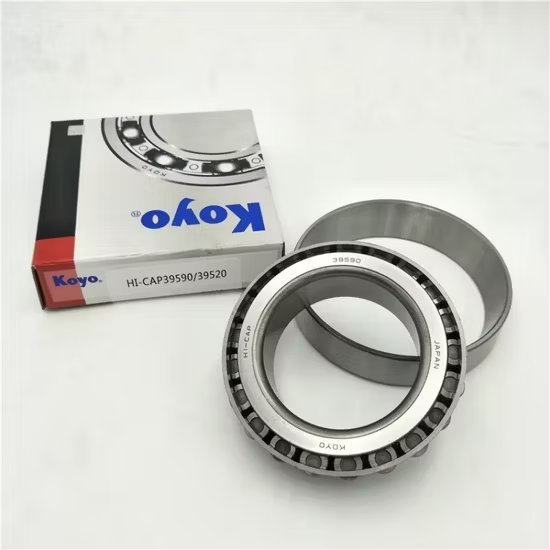


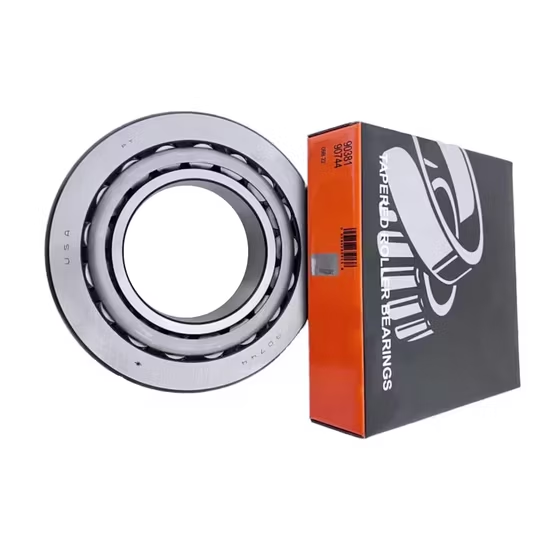
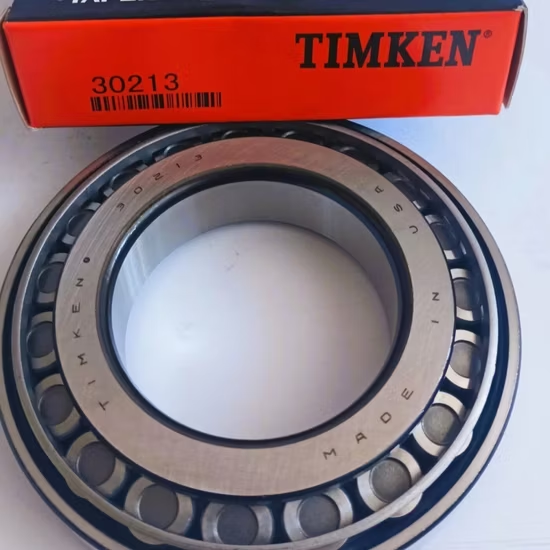
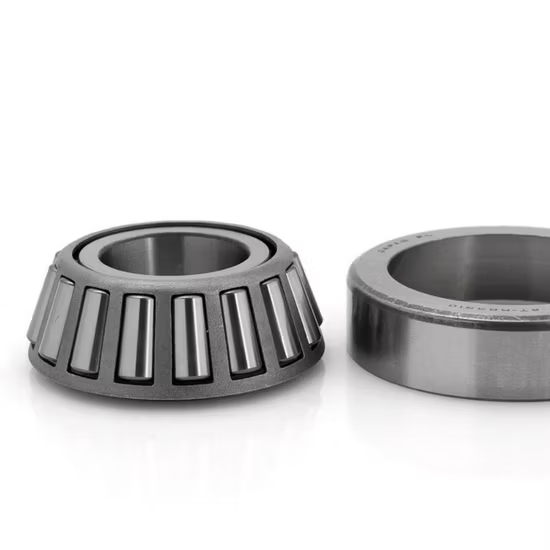
33211 Single Row Tapered Roller Bearing P4 — Engineered with P4 precision for tighter dimensional and running accuracy in demanding machinery.
Verifiable Production Lots — Every 33211 unit ships with traceable manufacturer batch records, eliminating the risk of installing counterfeit components in critical drive systems.
| Parameter | Value |
|---|---|
| Designation | 33211 |
| Bearing Type | Single Row Tapered Roller Bearing |
| Precision Class | P4 |
| Cage Material | Available in pressed steel, machined brass, or polymer variants |
| Material | GCr15 High Carbon Chromium Bearing Steel |
| Origin | Sourced from authorized facilities in Germany, Japan, Sweden, Malaysia, or China |
| Structure | Taper |
| Industry | Typical Applications |
|---|---|
| Industrial Gearboxes | Helical and bevel gear reduction units, conveyor drive assemblies |
| Automotive & Heavy Vehicles | Commercial truck wheel hubs, heavy-duty axle pinion shafts |
| Manufacturing Plants | Machine tool indexing tables, automated material handling transfer cars |
| Marine Drives | Propulsion shaft support housings, winch drum bearing blocks |
Matching the digits does not guarantee the internal geometry fits your operational reality.
I have inspected numerous failed assemblies across Latin American mining and transport sectors where the installed component carried the correct base identifier, yet the internal construction was entirely wrong for the application. When sourcing a 33211 single row tapered roller bearing, buyers frequently assume that matching the five digits is sufficient. However, ignoring the cage material or precision class leads to rapid thermal binding under heavy radial and axial loads. A stamped steel cage might survive standard operations but will fracture under the high-vibration conditions of a heavy-duty axle, while an incorrect precision grade introduces excessive noise and heat in machine tool spindles .
Selecting the right 33211 single row tapered roller bearing requires looking past the basic designation to evaluate how the internal components handle your specific load profile. Tapered roller bearings are engineered to manage combined radial and axial loads simultaneously, but the exact contact angle and roller profile must match the equipment's thrust-to-radial load ratio. By reviewing your application parameters, we ensure the selected variant provides the optimal load distribution across the raceways, preventing localized stress concentrations that lead to premature spalling.
In heavy machinery and automotive hubs, operating temperatures fluctuate wildly, directly impacting the internal clearance of the assembly. If the thermal expansion of the shaft and housing is not accounted for during selection, the bearing can lose its necessary internal clearance, resulting in severe overheating and eventual seizure. Furthermore, environments with high particulate contamination demand careful consideration of sealing arrangements and lubrication intervals. While the base component handles the mechanical loads, the surrounding sealing interface and lubricant type dictate its survival against abrasive ingress and moisture .
The designation 33211 identifies the standard dimension series, but the P4 precision class elevates its performance significantly beyond standard commercial grades. P4 tolerance ensures exceptionally tight dimensional and running accuracy, which is critical for minimizing vibration and noise in high-speed gearboxes or machine tool applications. This tighter control over the inner and outer ring tolerances guarantees a more uniform load share among the rolling elements. Additionally, the availability of different cage materials—ranging from robust machined brass for high-vibration environments to lightweight polymer cages for high-speed, low-friction requirements—allows the assembly to be precisely tuned to the operational speed and temperature limits of your machinery.
Installing a component that merely matches the base number while ignoring internal design specifics inevitably triggers a cascade of mechanical failures. Misaligned internal clearances or incompatible cage materials lead to unplanned downtime, catastrophic damage to adjacent shafts and housings, and immediate warranty voidance by the equipment manufacturer. The true cost is never just the replacement part; it encompasses the lost production hours and the secondary machining required to repair damaged seating surfaces. Relying on comprehensive technical verification prevents these compounding financial losses and ensures operational continuity.
Our approach to supplying the 33211 single row tapered roller bearing focuses on eliminating the cross-reference errors that plague standard procurement channels. We verify that the cage material and precision class align perfectly with your equipment's original engineering requirements, rather than just shipping a generic base number. Every order is backed by authorized distribution credentials, ensuring you receive genuine components with full batch traceability. We provide application-based selection reviews that account for your specific load, speed, and temperature conditions, transforming a simple parts purchase into a reliability upgrade for your machinery.
To ensure the selected configuration meets your exact operational demands, please provide detailed application parameters including radial and axial load values, operating speeds, and expected temperature ranges. Sharing the original equipment manufacturer part numbers or housing dimensions allows our engineering team to perform a comprehensive cross-reference verification. This data enables us to confirm the optimal cage material and internal clearance setup, guaranteeing that the supplied components deliver maximum service life in your specific environment.
Q: How do I verify the authenticity of the received components?
A: Every unit includes verifiable batch traceability documentation and QR codes that can be scanned using the official applications of the respective manufacturing brands. This direct digital link to the factory database confirms the genuine origin of the materials and the specific production lot, effectively eliminating the risk of installing counterfeit parts that compromise heavy-duty machinery reliability.
Q: Why is matching the cage material just as critical as the base number?
A: The base number only defines the outer dimensions, while the cage material dictates how the assembly handles vibration, speed, and temperature. Installing a standard pressed steel cage in a high-vibration environment where a machined brass cage was specified will lead to rapid fatigue and cage fracture. We cross-reference the exact internal construction to ensure the cage material matches your operational reality.
Q: What operational benefits does the P4 precision class provide over standard grades?
A: The P4 classification guarantees significantly tighter dimensional and running accuracy compared to standard commercial grades. This enhanced precision reduces operational vibration and acoustic noise, ensuring smoother rotation and more uniform load distribution across the rolling elements. It is particularly vital for applications like machine tool spindles or high-speed gearboxes where minimal runout is strictly required.
Q: How should I determine the correct internal clearance for my application?
A: Internal clearance must be selected based on the thermal expansion characteristics of your shaft and housing, alongside the operating temperature range. If the equipment runs hot, a clearance that accounts for thermal expansion is necessary to prevent the assembly from binding under load. Providing your specific operating temperature and mounting arrangement allows us to recommend the precise clearance class.
Q: What mounting practices are recommended to preserve the bearing's precision?
A: Mounting should always utilize controlled induction heating for the inner ring rather than open flames or uneven mechanical pressing, which can distort the precision-ground raceways. Furthermore, ensuring the housing and shaft seating surfaces are clean and machined to the correct tolerances prevents misalignment, allowing the component to achieve its designed service life and low-noise performance.
Our 5-step process ensures every order is engineered, validated, and supported for optimal performance.
Technical needs assessment
Custom specifications
Free samples for $50k+
Pre-shipment inspection
On-site & predictive
Our certified engineers respond within 24 hours with detailed technical specifications, pricing, and lead time information.