01
Consultation
Technical needs assessment

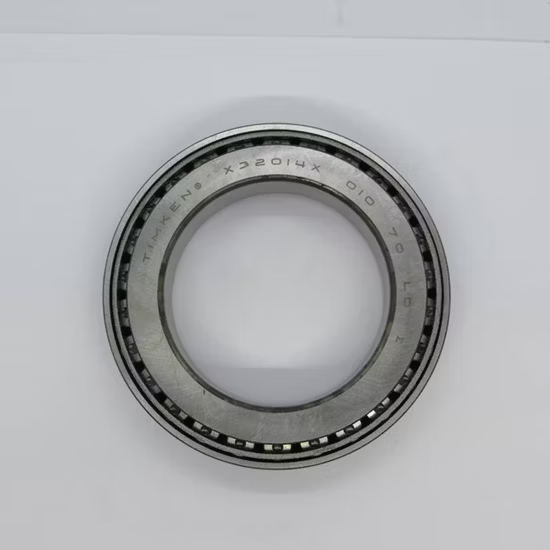
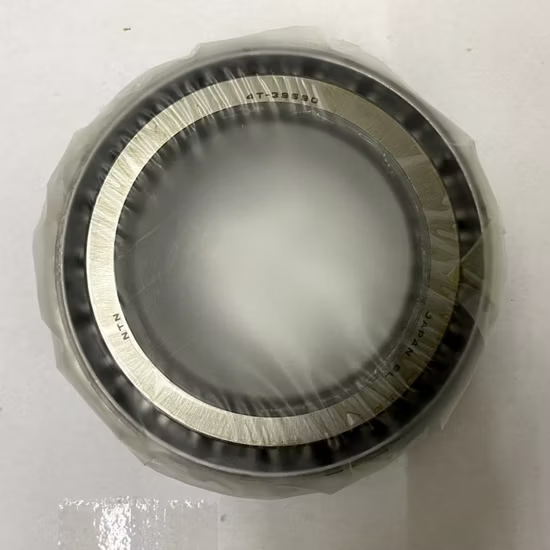
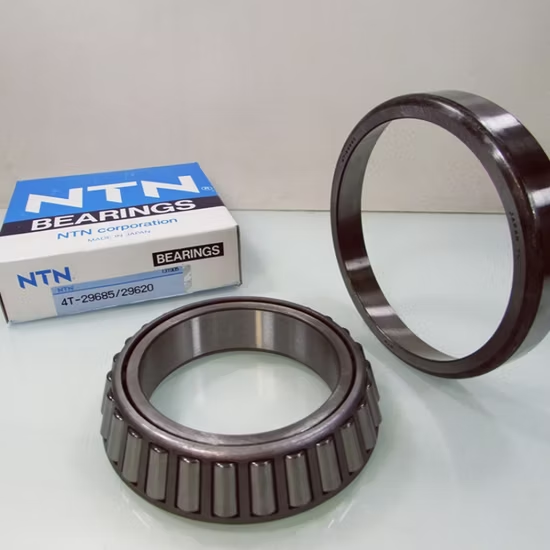
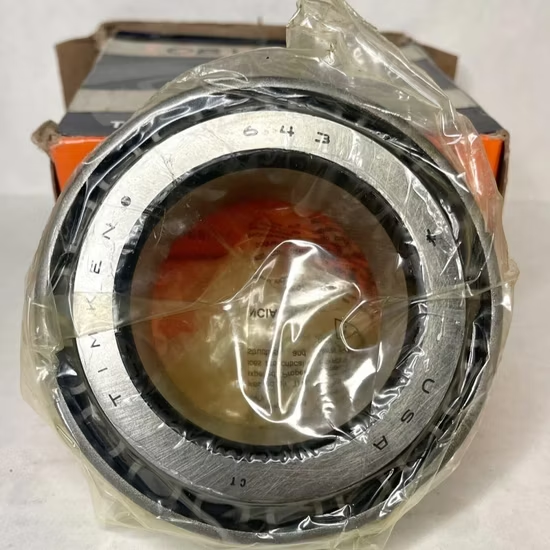
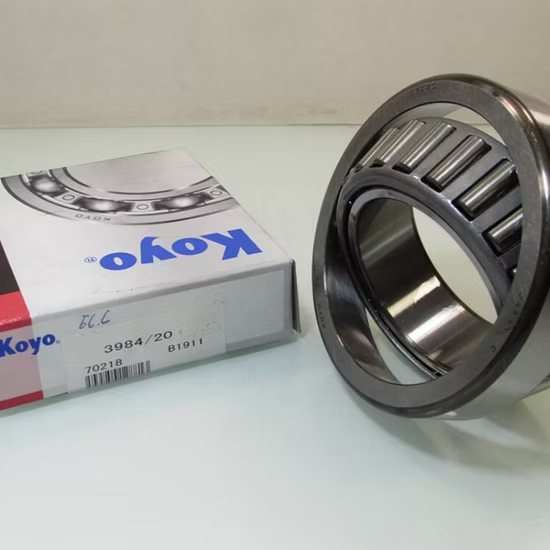
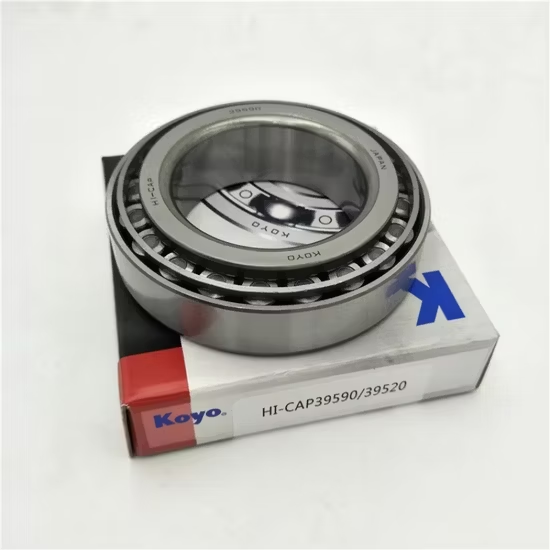
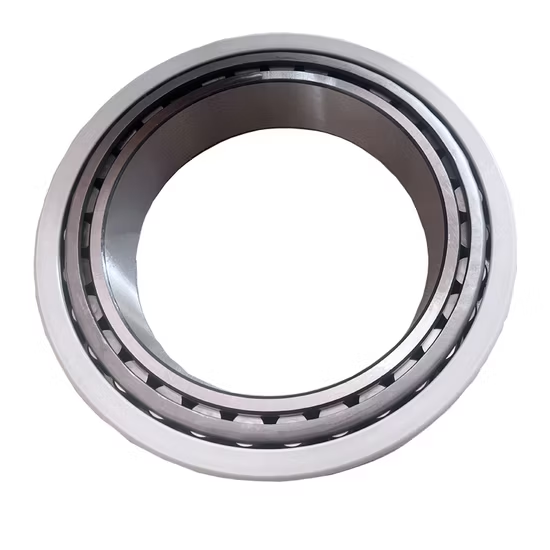
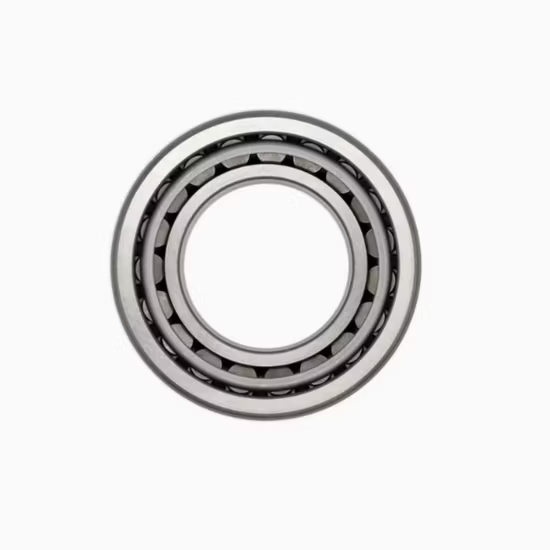
32004/P5 Single Row Tapered Roller Bearing — manufactured from GCr15 chrome steel to handle combined radial and axial loads. The /P5 suffix indicates ISO Class 5 precision, delivering tighter dimensional and running accuracy for medium-precision applications.
Unified Multi-Brand Sourcing — Procure the 32004/P5 alongside SKF, FAG, or NSK equivalents in a single consolidated shipment without coordinating multiple vendors.
| Parameter | Value |
|---|---|
| Designation | 32004/P5 |
| Bearing Type | Tapered Roller Bearing |
| Number of Rows | Single Row |
| Precision Class | P5 (ISO Class 5) |
| Material | GCr15 Chrome Steel |
| Cage Material | Unverified (stamped steel, machined brass, or polyamide variants available) |
| Seal or Shield Type | Unverified (open design standard, custom seals available) |
| Origin | Shanghai |
| Industry | Typical Applications |
|---|---|
| Machine Tool Manufacturing | High-speed spindle support and precision rotary indexing tables |
| Automotive & Heavy Vehicles | Wheel hub assemblies and differential pinion shafts |
| Industrial Power Transmission | Helical and bevel gearboxes requiring combined load capacity |
| Material Handling | Conveyor drive pulleys and crane hoist drum shafts |
Precision class dictates thermal stability under combined loading.
I have seen too many machine tool spindles in Latin America shut down from excessive vibration because a standard P0 grade was installed where a P5 was specified. The base number might match the OEM manual, but ignoring the precision suffix leads to dimensional deviations that cause thermal binding at high speeds. When the internal clearance shifts unpredictably due to loose tolerances, the entire machining process suffers from chatter marks and scrapped parts .
Selecting the right 32004/P5 tapered roller bearing requires looking beyond the basic load ratings. For machine tool spindles and high-speed gearboxes, the P5 precision class ensures that the inner and outer rings maintain strict geometric tolerances during operation. Our technical team reviews your specific radial and axial load profiles to confirm that this single-row taper structure provides the necessary rigidity without generating excessive friction heat.
Tapered roller bearings excel at handling simultaneous radial and axial forces, but they are highly sensitive to mounting conditions and thermal expansion. In gearboxes or wheel hubs, inadequate lubrication or incorrect preload during assembly can rapidly degrade the raceway surfaces. Elevated operating temperatures demand careful consideration of the internal clearance and cage material to prevent the rollers from skewing or the lubricant from breaking down .
The /P5 suffix indicates ISO Class 5 precision, which mandates significantly tighter tolerances for bore diameter, outside diameter, and running accuracy compared to standard grades. This level of precision is non-negotiable for applications requiring smooth rotation and minimal runout. The GCr15 chrome steel construction provides high wear resistance, while the cage material can be selected from stamped steel, machined brass, or polyamide variants depending on the operating speed and vibration characteristics of your specific machinery.
Installing a standard precision bearing in a high-speed spindle often results in unplanned downtime and catastrophic damage to adjacent seals and housings. According to ISO 281 frameworks, even minor deviations in running accuracy accelerate fatigue spalling on the raceways. This premature failure not only voids equipment warranties but also forces emergency procurement of replacement parts, disrupting production schedules and inflating maintenance budgets far beyond the initial component savings .
We specialize in catching cross-reference errors before they reach your facility. While many suppliers only match the base 32004 number, we verify that the /P5 precision suffix and internal design align perfectly with your OEM requirements. Our authorized distribution network ensures full batch traceability, and we provide cross-brand interchange support for 32005/P5 and 32006/P5 equivalents. Every shipment includes dimensional inspection reports confirming the P5 tolerances, eliminating the risk of receiving counterfeit parts with soft inner rings.
To ensure the 32004/P5 is the optimal choice for your equipment, please share your operational parameters including radial and axial loads, rotational speed, and operating temperature. Providing the OEM equipment number or housing dimensions allows our engineering team to perform a precise cross-reference check and L10 life calculation. We will confirm the correct clearance class and cage material to match your specific application environment.
Q: How do I verify the authenticity of the 32004/P5 via QR codes?
A: Each authentic bearing features a unique QR code linked to the manufacturer's official database. By scanning this code with the brand's official mobile application, you can instantly verify the production batch, material specifications, and origin. This digital traceability protects your operation from counterfeit bearings that utilize cloned visual markers but fail under operational loads.
Q: Why must the /P5 suffix be matched exactly during cross-referencing?
A: The /P5 suffix defines the ISO Class 5 precision tolerances for dimensional and running accuracy. Substituting a standard P0 grade might fit the housing, but the looser tolerances will cause excessive vibration, thermal binding, and premature spindle failure. Exact suffix alignment ensures the bearing maintains the geometric stability required for high-speed or precision machining applications.
Q: What is the practical difference between P5 and P4 precision classes?
A: While both are high-precision grades, P4 (ISO Class 4) mandates even tighter tolerances for bore, outside diameter, and axial runout than P5. P4 is typically reserved for ultra-high-speed machine tool spindles where microscopic runout affects surface finish. For most industrial gearboxes and standard precision spindles, the P5 class provides the necessary accuracy and rigidity without the premium cost of P4.
Q: How do I select the right cage material for high-speed gearboxes?
A: Cage selection depends on the operating speed, load, and lubrication method. Machined brass cages offer excellent durability and heat dissipation for heavy loads and moderate speeds. Polyamide cages are lighter and quieter, making them suitable for higher speeds with lower friction. Stamped steel cages provide a cost-effective balance for standard industrial applications with adequate lubrication.
Our 5-step process ensures every order is engineered, validated, and supported for optimal performance.
Technical needs assessment
Custom specifications
Free samples for $50k+
Pre-shipment inspection
On-site & predictive
Our certified engineers respond within 24 hours with detailed technical specifications, pricing, and lead time information.