01
Consultation
Technical needs assessment


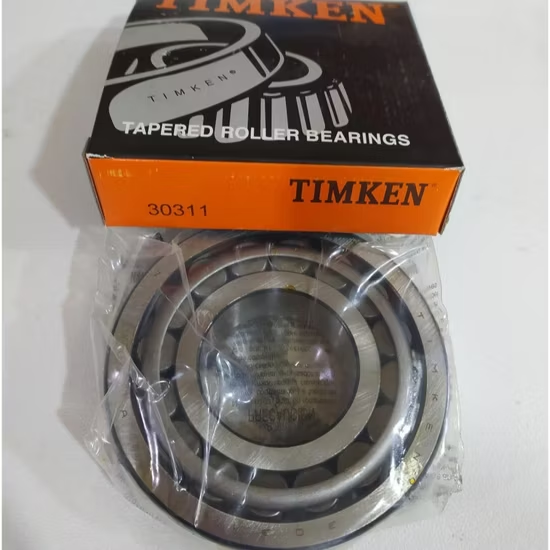
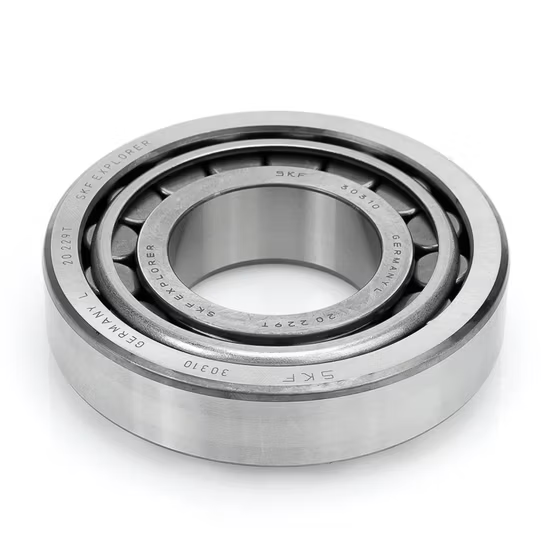
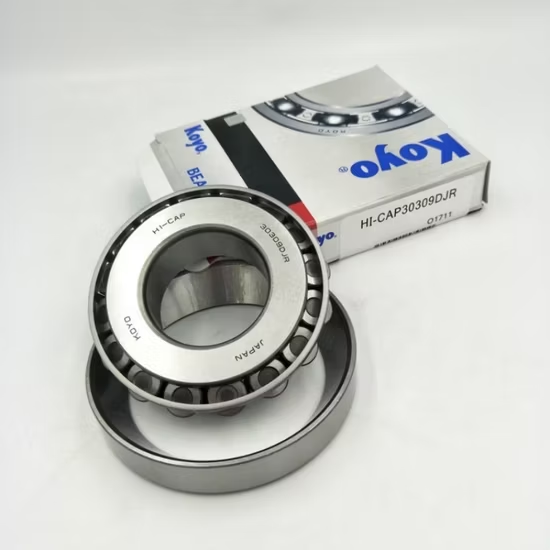
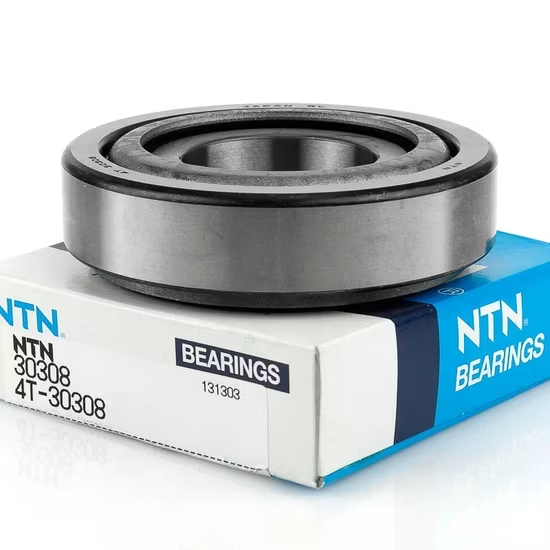
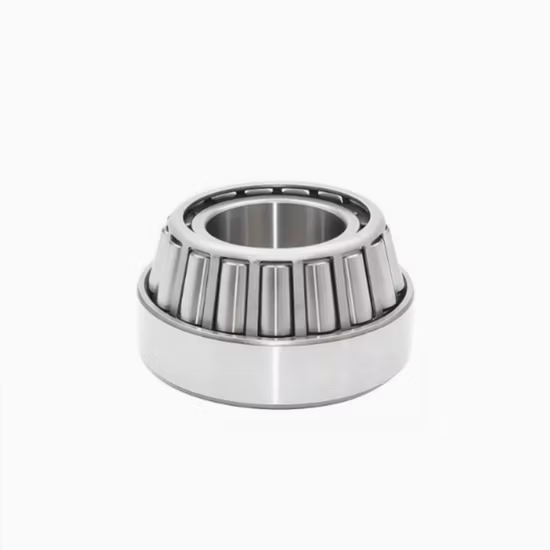
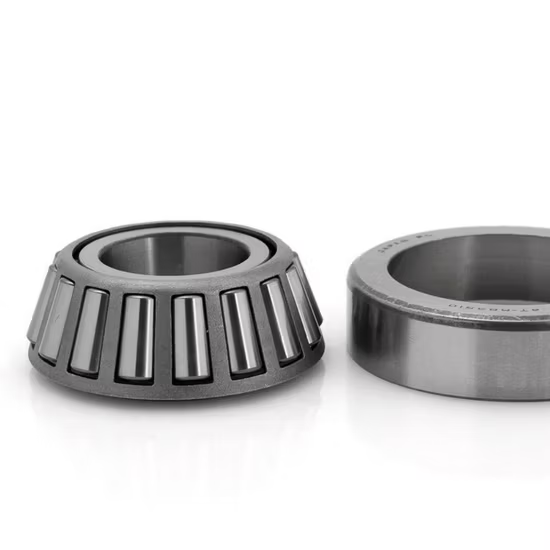
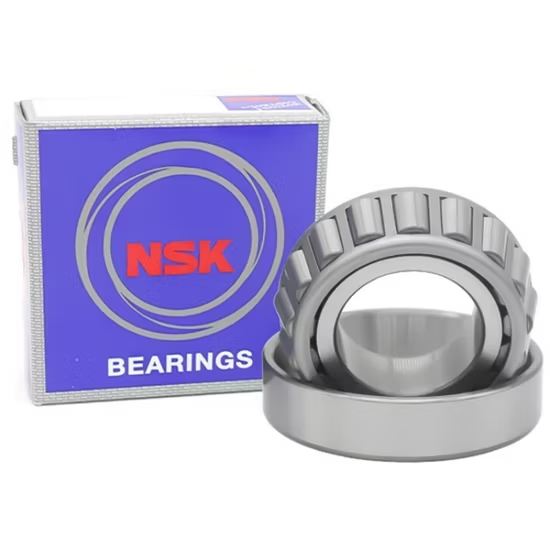
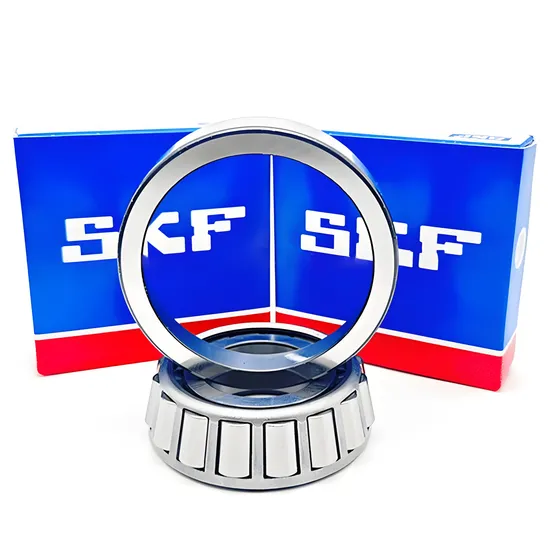
30311D Single Row Tapered Roller Bearing P4 Precision — engineered to handle combined radial and axial loads in heavy machinery applications.
Official App QR Verification — Every 30311D tapered roller bearing ships with scannable batch codes linked directly to the manufacturer's authenticity database.
| Parameter | Value |
|---|---|
| Designation | 30311D |
| Bearing Type | Single Row Tapered Roller Bearing |
| Precision Class | P4 |
| Material | GCr15 bearing steel |
| Cage Material | Available in brass, nylon, or pressed steel variants |
| Origin | Sourced from manufacturing facilities in Germany, Japan, Sweden, Malaysia, or China |
| Industry | Typical Applications |
|---|---|
| Mining and Crushing | Crusher main shafts and vibrating screen exciter mechanisms |
| Industrial Gearboxes | Heavy-duty reduction gear pinion shafts and output bearings |
| Heavy Vehicle Repair | Truck axle pinions and commercial wheel hub assemblies |
A base number match without suffix verification guarantees premature seizure under thermal load.
I have seen entire crusher main shafts scrapped in Latin American mining sites because a standard clearance bearing was installed where a specific internal design was required. When heavy radial and axial loads generate intense friction heat, the inner ring expands. If the internal geometry and clearance do not account for this thermal growth, the bearing binds, the cage collapses, and the equipment goes down for weeks . Procurement teams often focus solely on the base designation, overlooking that the 30311D tapered roller bearing requires exact cross-reference alignment to prevent these catastrophic field failures.
Selecting the correct 30311D tapered roller bearing for high-impact environments requires looking past the basic dimensions. We verify the exact internal design and cage configuration to ensure the bearing can withstand the sudden shock loads typical in crushing and material handling. Our technical review cross-references the OEM equipment number to guarantee the internal contact angles and roller profiles match the original engineering intent, preventing edge-loading and spalling.
In heavy gearboxes and crusher drives, combined loads generate significant heat that alters internal operating clearance. If the initial clearance is too tight, thermal expansion will eliminate the internal gap, leading to severe friction and cage failure . Proper lubrication selection is equally critical; oil circulation systems must be matched to the bearing's speed and load to carry away heat, while grease applications require precise fill volumes to avoid churning losses and accelerated degradation at elevated temperatures.
The P4 precision class ensures tighter dimensional and running accuracy than standard grades, which is essential for minimizing vibration in high-speed pinion shafts. For the cage material, brass variants are typically preferred in high-vibration, high-load crusher applications due to their superior durability and resistance to sudden shock loads. Nylon cages offer quieter operation and lower friction for moderate-load gearboxes, while pressed steel cages provide a reliable baseline for standard industrial drives. The exact cage and internal design must be confirmed against the specific 30311D tapered roller bearing requirements of your machinery.
Installing a bearing that matches the base number but lacks the correct internal design suffix leads to unplanned downtime that far exceeds the component cost. When thermal binding occurs, the resulting catastrophic damage often destroys the adjacent shaft, housing, and seals . This voids equipment warranties and forces emergency air-freight replacements, turning a minor maintenance task into a prolonged production halt that severely impacts overall plant profitability.
We maintain authorized coverage across all major brands, allowing you to consolidate mixed-brand requirements into a single, fully traceable order. Our cross-reference process matches the exact clearance, cage material, and internal design suffixes, ensuring the 30311D tapered roller bearing you receive is a true functional equivalent to the OEM part. We provide application-based selection reviews that analyze your specific load, speed, and temperature conditions to prevent mismatched installations. Every shipment includes batch traceability to the manufacturer, verified through official brand apps, eliminating the risk of counterfeits with soft inner rings that fail under heavy loads.
To ensure the selected bearing perfectly matches your application, please provide the exact radial and axial loads, operating speeds, and typical temperature ranges. Supplying the OEM equipment number or the original manufacturer's part number allows our engineering team to perform a precise cross-reference check. This data enables us to verify the L10 life calculation and confirm that the internal geometry and cage design will withstand your specific operational demands.
Q: What does the "D" suffix indicate for this specific tapered roller bearing designation?
A: The "D" suffix typically denotes a specific internal design, flange configuration, or dimensional variation from the standard base model. Because suffix definitions vary across manufacturers, we verify the exact meaning against the specific brand's catalog to ensure the internal geometry matches your equipment's OEM requirements, preventing installation errors and premature thermal binding in the field.
Q: How do you cross-reference this bearing across different brands accurately?
A: We do not rely solely on the base number. Our technical team cross-references the exact precision class, cage material, and internal design suffixes to guarantee functional equivalence. This ensures that the replacement 30311D tapered roller bearing maintains the same load distribution and thermal expansion characteristics as the original part, avoiding hidden mismatches that cause early failure.
Q: What are the clearance and precision differences between ISO and ABEC standards?
A: ISO and ABEC standards define dimensional and running accuracy tolerances differently, though they generally align at higher precision levels like P4 and ABEC 7. We review your specific application requirements to ensure the selected bearing meets the exact tolerance class needed for your shaft's rotational accuracy, regardless of which standard nomenclature the manufacturer uses on the documentation.
Q: How should I select the correct cage material for high-temperature gearbox applications?
A: Cage selection depends on the specific operating temperature, vibration levels, and lubrication method. Brass cages are generally preferred for high-load, high-vibration environments due to their robust structural integrity, while engineered polymer cages offer lower friction and quieter operation in moderate conditions. We evaluate your exact thermal and mechanical parameters to recommend the optimal cage material for your gearbox.
Q: What mounting practices are recommended for single row tapered roller bearings?
A: Proper mounting requires precise adjustment of the internal clearance or preload during installation. We recommend using controlled induction heating for the inner ring and applying the exact shaft nut torque specified by the manufacturer. This ensures the rollers are correctly seated against the raceways, preventing edge-loading and maximizing the operational lifespan of the bearing under combined loads.
Our 5-step process ensures every order is engineered, validated, and supported for optimal performance.
Technical needs assessment
Custom specifications
Free samples for $50k+
Pre-shipment inspection
On-site & predictive
Our certified engineers respond within 24 hours with detailed technical specifications, pricing, and lead time information.