01
Consultation
Technical needs assessment


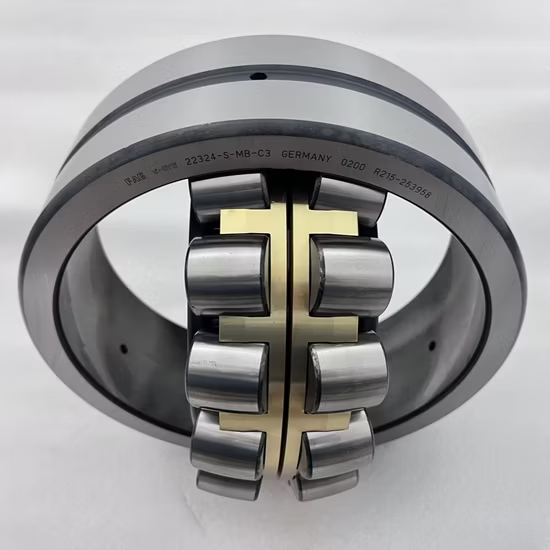
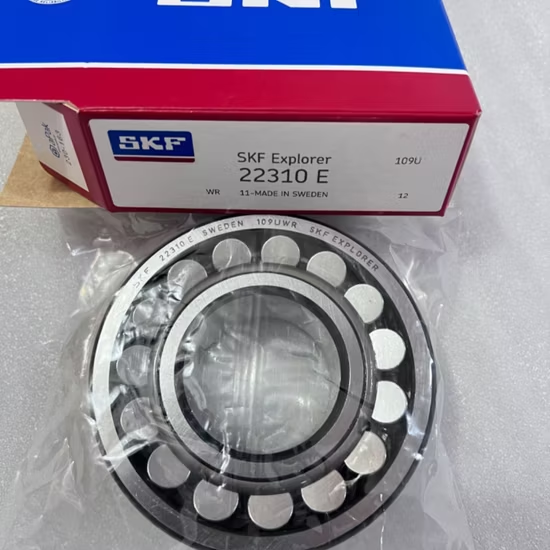


240/530 Double Row Spherical Roller Bearing — engineered to handle heavy radial loads and accommodate shaft misalignment in demanding construction and mining environments.
Verified via official apps — Every 240/530 spherical roller bearing we dispatch carries a scannable QR code linked directly to the manufacturer's authentication database, eliminating the risk of cloned markings on heavy-duty components.
| Parameter | Value |
|---|---|
| Designation | 240/530 |
| Bearing Type | Spherical Roller Bearing |
| Number of Rows | Double Row |
| Lubrication Compatibility | Oil & Grease Lube |
| Origin Options | Germany / Japan / Sweden / Malaysia / China |
| HS Code | 8482500090 |
| Industry | Typical Applications |
|---|---|
| Construction Machinery | Heavy-duty excavator slewing mechanisms and mobile crusher main shafts |
| Mining and Crushing | Vibrating screen exciters and jaw crusher pitman assemblies |
| Material Handling | Bucket elevator tail pulleys and stacker reclaimer pivot points |
Matching the base number is never enough when thermal expansion and heavy shock loads dictate the required internal clearance.
During my time working in African mining camps, I witnessed a catastrophic failure on a primary crusher because a batch of large-bore bearings arrived with ambiguous suffix documentation. The maintenance crew installed them assuming standard clearance, but the intense operational heat caused thermal binding and rapid seizure . When sourcing a 240/530 spherical roller bearing for similar extreme environments, relying solely on the base designation without verifying the exact internal clearance and cage design is a direct path to unplanned downtime.
Procurement engineers often focus on the outer dimensions, but the internal geometry determines survival in high-vibration zones. We supply the 240/530 spherical roller bearing with full cross-brand interchange expertise, ensuring that the internal profile and roller guidance match your specific equipment requirements. This prevents the subtle mismatches that lead to premature cage fatigue in continuous operation.
Equipment operating in open-pit mines faces severe temperature fluctuations that directly impact internal clearance and lubricant viscosity. If the ambient and operational heat exceeds the thermal limit of standard bearing steel, an inadequate clearance class will result in zero internal play and catastrophic locking. Furthermore, choosing between oil and grease lubrication requires evaluating the sealing effectiveness against abrasive silica dust, where contact seals might generate excessive friction heat while non-contact shields fail to block fine particulates .
The double row configuration of this designation provides the necessary radial load capacity and misalignment tolerance for heavily deflected shafts in construction machinery. Because no additional suffixes are present in the base identifier, verifying the exact clearance class—whether standard, C3, or C4—is mandatory before installation to accommodate the thermal expansion of the 530mm bore. The compatibility with both oil and grease lubrication offers flexibility for field maintenance, but the specific cage material must be confirmed to withstand the high vibration levels typical of crushing applications.
Installing a standard clearance bearing in a high-temperature application inevitably leads to thermal binding, which destroys the raceway and rollers within hours. According to failure analysis frameworks, a significant share of premature failures in large-bore equipment stems from these exact cross-reference errors where the internal design differs from the OEM requirement . This oversight not only voids the equipment warranty but also triggers massive secondary damage to the surrounding housing and shaft assemblies.
We eliminate the guesswork by matching cross-brand interchanges on clearance, cage material, and precision, rather than just swapping base designations. For large-bore units like this, we review your specific load, speed, and temperature parameters to confirm the internal design is correct for the application. Our authorized distribution network allows you to consolidate mixed-brand requirements into a single traceable order. Every shipment is backed by application-based selection reviews that catch suffix discrepancies before the bearings ever leave our facility.
To ensure the selected unit perfectly matches your machinery, please share your specific radial and axial load profiles, operating speeds, and ambient temperature ranges. Providing the original OEM equipment number allows our engineering team to perform a precise cross-reference check and L10 life calculation. This technical review guarantees that the internal clearance and cage design are fully optimized for your specific construction or mining application.
Q: How can site engineers verify the authenticity of the bearing upon delivery?
A: Every unit we supply features a unique QR code that links directly to the manufacturer's official authentication application. Site engineers can scan this code using their smartphones to instantly verify the batch origin and confirm that the bearing is a genuine product, effectively eliminating the risk of installing counterfeits with soft inner rings.
Q: What cross-reference checks are critical beyond the base designation?
A: Matching the base number is only the first step; we strictly verify the internal clearance class, cage material, and precision grade against your OEM requirements. Overlooking these suffix details often results in thermal binding or cage failure in the field, which is why our technical team reviews every parameter before confirming the interchange.
Q: How do you select the correct internal clearance for high-temperature equipment?
A: Internal clearance must compensate for the thermal expansion of the shaft and housing during operation. For heavy-duty construction equipment running hot, a C3 or C4 clearance is typically required instead of standard CN. We evaluate your specific operating temperatures to recommend the exact clearance class that prevents thermal binding.
Q: What are the recommended mounting practices for large-bore bearings?
A: Mounting a bearing with a 530mm bore requires precise induction heating applied exclusively to the inner ring to expand it for a slip fit. It is crucial to monitor the heating temperature carefully to avoid altering the steel's metallurgical structure, and to use proper lifting equipment to prevent damaging the outer ring during positioning.
Our 5-step process ensures every order is engineered, validated, and supported for optimal performance.
Technical needs assessment
Custom specifications
Free samples for $50k+
Pre-shipment inspection
On-site & predictive
Our certified engineers respond within 24 hours with detailed technical specifications, pricing, and lead time information.


