01
Consultation
Technical needs assessment

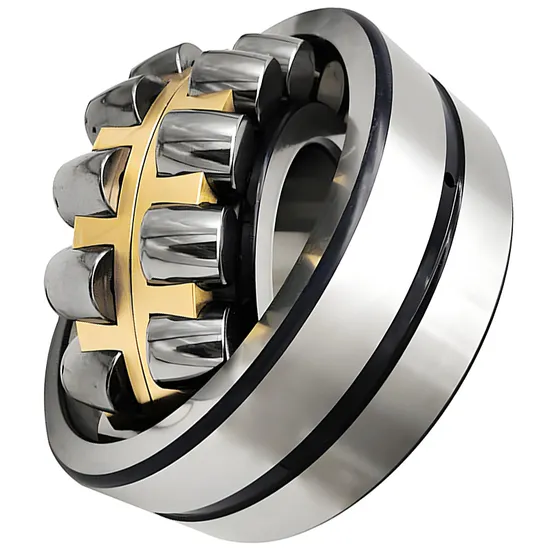
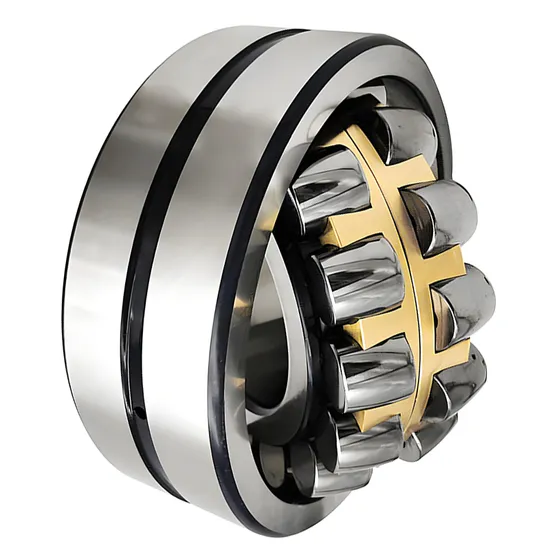
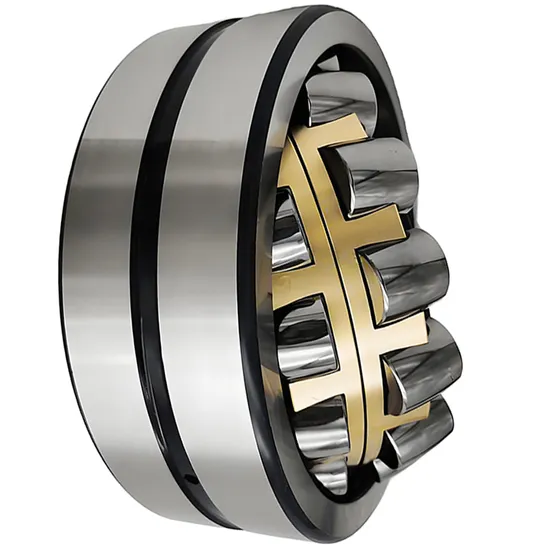
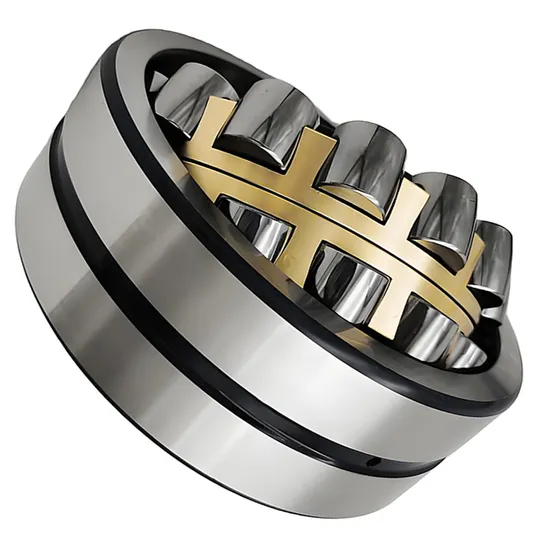
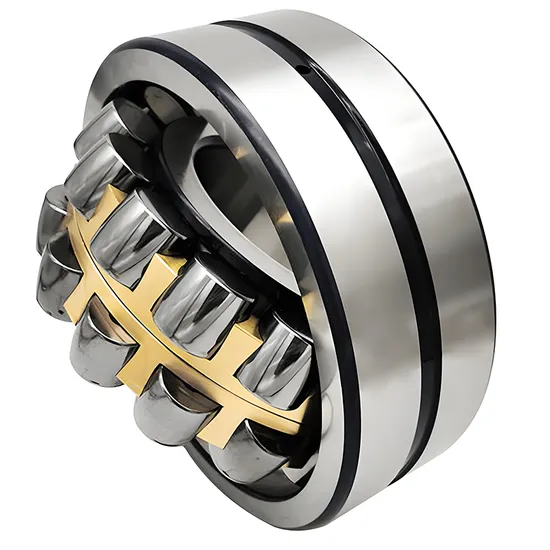
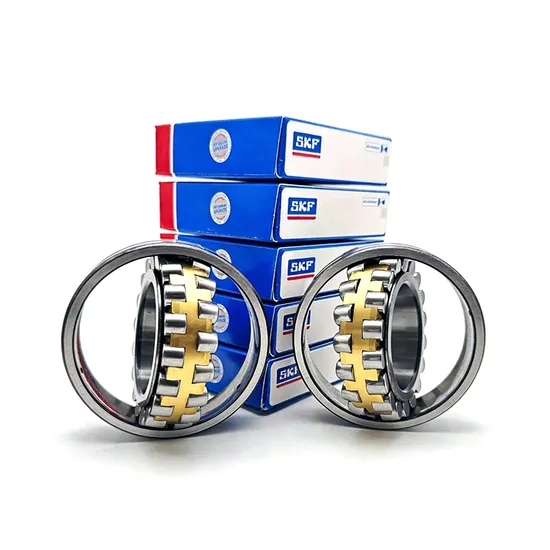
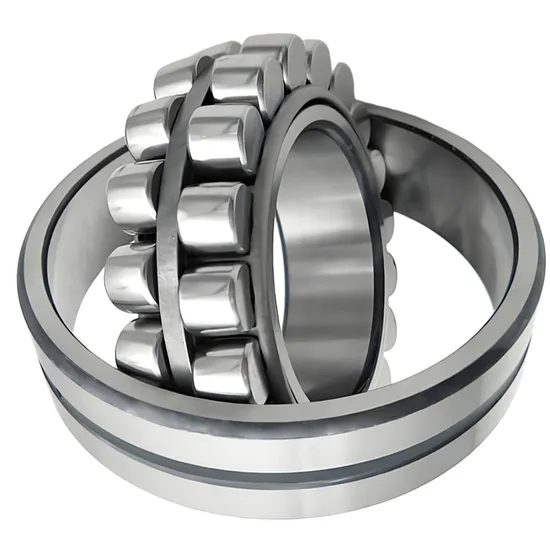
22338K-MB-C3 Spherical Roller Bearing — machined brass cage with 1:12 tapered bore and C3 radial clearance for heavy-duty vibrating and crushing equipment.
Scan the bearing QR code through the manufacturer's official app to confirm batch-level authenticity and traceability before installation.
Unified Multi-Brand Sourcing — Procure the 22338K-MB-C3 spherical roller bearing alongside mixed-brand requirements through a single authorized channel, eliminating complex multi-vendor coordination.
| Parameter | Value |
|---|---|
| Designation | 22338K-MB-C3 |
| Bearing Type | Spherical Roller Bearing |
| Bore Type | Tapered bore (1:12) |
| Cage Material | Machined brass, inner ring guided |
| Clearance Class | C3 |
| Origin | Germany / Japan / Sweden / Malaysia / China |
| HS Code | 8482500090 |
| Industry | Typical Applications |
|---|---|
| Mining and Crushing | Vibrating screen exciter mechanisms, primary jaw crusher eccentric shafts |
| Steel and Metallurgy | Continuous caster segment rolls, rolling mill gearbox pinion stands |
| Pulp and Paper | Paper machine dryer cylinders, press roll bearing housings |
| General Industrial | Heavy-duty gearbox low-speed shafts, bucket elevator head pulleys |
Matching the base designation without verifying the C3 clearance and MB cage suffixes guarantees thermal binding in high-temperature mining operations.
I have witnessed entire vibrating screen lines in Latin American mines grind to a halt because procurement teams approved standard CN clearance units based solely on the 22338 base number. When these incorrectly specified components operate under heavy radial loads and elevated ambient heat, the internal clearance vanishes, leading to catastrophic cage failure . Sourcing the exact 22338K-MB-C3 spherical roller bearing requires strict adherence to suffix alignment, preventing the devastating unplanned downtime that plagues heavy-duty extraction sites.
Securing the correct 22338K-MB-C3 spherical roller bearing involves more than just matching the outer dimensions; it demands a rigorous cross-reference review that accounts for thermal expansion and vibration resistance. Our technical selection process ensures that the C3 clearance and machined brass cage requirements are strictly maintained across brand interchanges. This prevents the all-too-common scenario where a base number matches perfectly, but the internal design fails to withstand the specific operational stresses of your equipment.
Crushing and screening equipment subjects components to severe shock loads and relentless vibration, demanding a cage design that resists fatigue and fracture. Elevated operating temperatures in these environments dictate the need for greater than normal internal clearance to compensate for thermal expansion of the shaft and housing. Proper lubrication flow is equally critical, as contaminated grease in mining sites rapidly degrades performance if the cage design impedes oil distribution. Furthermore, the tapered bore necessitates precise mounting procedures to achieve the correct drive-up distance and residual clearance .
The "K" suffix designates a 1:12 tapered bore, allowing for precise radial internal clearance adjustment during mounting on adapter sleeves or tapered shafts. The "MB" indicator specifies a machined brass cage guided on the inner ring, which provides superior strength and wear resistance under heavy loads compared to stamped steel alternatives. Finally, the "C3" clearance class ensures the bearing possesses greater than normal radial internal clearance, a non-negotiable requirement for applications involving high speeds or significant temperature differentials between the inner and outer rings. Together, these three suffixes transform a standard component into a highly specialized unit capable of surviving extreme industrial environments.
Installing a standard clearance bearing in an application requiring C3 clearance inevitably leads to thermal binding, resulting in premature failure and catastrophic damage to the surrounding housing. Utilizing a stamped steel cage instead of the specified machined brass variant in high-vibration screens often causes cage fracture, voiding equipment warranties and triggering extended production halts. These failures align perfectly with the fatigue and wear mechanisms documented in international reliability standards . The financial impact of such oversights far exceeds the initial procurement savings of accepting an incorrectly suffixed substitute.
We maintain authorized distribution coverage across all major international brands, allowing you to consolidate mixed-brand orders without sacrificing documentation integrity. Our cross-brand interchange protocol specifically verifies the C3 clearance and MB cage material simultaneously, ensuring functional equivalence rather than just base number matching. Every shipment includes batch traceability to the manufacturer, completely eliminating the risk of counterfeits with soft inner rings that plague the heavy machinery aftermarket. We also provide application-based selection reviews to confirm that the 1:12 tapered bore and clearance class align perfectly with your specific load and temperature parameters.
To ensure accurate L10 life calculations and cross-reference validation, please provide your specific radial and axial load profiles alongside operating speeds and ambient temperatures. Sharing the OEM equipment number allows our engineering team to verify the exact housing constraints and adapter sleeve requirements. Detailing the environmental conditions, such as exposure to abrasive dust or extreme heat, helps us confirm that the C3 clearance and machined brass configuration remain optimal for your application.
Q: Why must clearance, cage material, and precision be aligned together during cross-referencing?
A: Matching only the base designation while ignoring suffixes leads to catastrophic field failures. A standard clearance unit will thermally bind in high-heat environments, while a stamped steel cage will fracture under heavy vibration. Aligning the C3 clearance and MB machined brass cage ensures the replacement handles the exact thermal expansion and shock loads of the original design.
Q: What is the difference between CN and C3 clearance in this application?
A: CN represents normal internal clearance, suitable for standard temperature and speed conditions. The C3 designation provides greater than normal radial clearance, which is critical in mining and crushing applications to accommodate thermal expansion of the shaft and housing, preventing the rolling elements from binding and generating excessive friction heat.
Q: How does an MB machined brass cage compare to stamped steel cages in vibrating screens?
A: The MB machined brass cage, guided on the inner ring, offers substantially higher structural integrity and wear resistance under severe vibration and shock loads. Stamped steel cages are more prone to fatigue cracking and pocket wear in these aggressive environments, making the brass variant essential for extending service intervals in heavy-duty screening equipment.
Q: What are the correct mounting procedures for the 1:12 tapered bore?
A: Mounting requires driving the bearing up the tapered shaft or adapter sleeve to a precise calculated distance. This drive-up distance reduces the internal clearance from the unmounted C3 value to the optimal operational residual clearance. Over-tightening eliminates the clearance entirely, causing immediate thermal binding, while under-tightening leads to excessive vibration and fretting corrosion.
Q: How to verify the authenticity of the bearing using official brand apps?
A: Scan the QR code or data matrix on the bearing label using the manufacturer's official mobile application. This verifies the batch and lot traceability directly against the factory database, exposing counterfeit units that feature cloned visual labels but contain substandard metallurgy and soft inner rings incapable of supporting heavy radial loads.
Our 5-step process ensures every order is engineered, validated, and supported for optimal performance.
Technical needs assessment
Custom specifications
Free samples for $50k+
Pre-shipment inspection
On-site & predictive
Our certified engineers respond within 24 hours with detailed technical specifications, pricing, and lead time information.