01
Consultation
Technical needs assessment


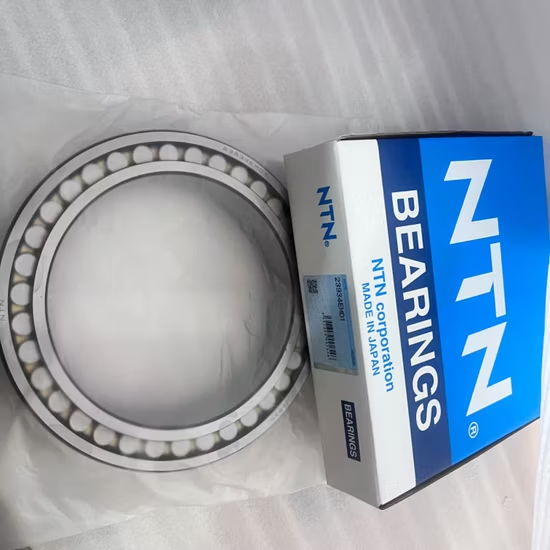


22308/22309/22310/22311/22312 Cck/W33 Cc Ca Cck30 W33 Spherical Roller Bearing — CC pressed steel and CA machined brass cages handle distinct vibration loads, while K 1:12 tapered bores and W33 outer ring grooves optimize mounting and relubrication.
Batch-Level Traceability — Every 22308/22309/22310/22311/22312 spherical roller bearing we dispatch is tied to a specific manufacturer lot, ensuring full QR verification and eliminating the risk of cloned markings on critical mining spares.
| Parameter | Value |
|---|---|
| Designation | 22308/22309/22310/22311/22312 Cck/W33 Cc Ca Cck30 W33 |
| Bearing Type | Spherical Roller Bearing |
| Cage Material Options | Pressed steel (CC) or machined brass (CA) |
| Bore Type Options | Cylindrical or tapered (K for 1:12, K30 for 1:30) |
| Lubrication Feature | W33 (outer ring groove and three holes) |
| Origin Options | Germany, Japan, Sweden, Malaysia, China |
| Customization | OEM services available |
| HS Code | 8482500090 |
Note: Suffix combinations "Cck" and "Cck30" appear in some legacy procurement lists but remain unverified in current standard catalogs; always confirm exact cage and bore designations with the manufacturer's latest technical documentation.
| Industry | Typical Applications |
|---|---|
| Mining and Crushing | Jaw crusher pitman shafts, vibrating screen exciter mechanisms |
| Steel and Metallurgy | Continuous caster roll segments, rolling mill gearboxes |
| Material Handling | Bucket elevator head pulleys, heavy-duty conveyor drive shafts |
| Pulp and Paper | Paper machine dryer cylinder journals, press roll bearings |
Thermal binding from incorrect internal clearance destroys the bearing long before the rings reach their fatigue limit.
I have seen 22310 CC/W33 units seize completely on a Latin American crushing site simply because a CN clearance was installed where a C3 was strictly required for thermal expansion. When the base number matches but the internal design suffixes are ignored, the 22308/22309/22310/22311/22312 spherical roller bearing series will rapidly overheat under heavy radial loads and misalignment . Procurement teams often focus solely on the outer dimensions, missing the fact that a stamped steel cage behaves entirely differently from a machined brass cage when subjected to severe shock loads and high vibration.
Selecting the right cage material is non-negotiable for this size range. The CC suffix indicates a pressed steel cage, which offers excellent fatigue strength and is ideal for high-speed, moderate-vibration environments. Conversely, the CA suffix designates a machined brass cage, providing superior resistance to shock loads, sudden accelerations, and severe vibration typical in screen and crusher applications. We cross-reference your specific equipment vibration data to ensure the 22308/22309/22310/22311/22312 spherical roller bearing selected has the optimal cage geometry and material to prevent premature cracking.
In heavy metallurgy and mining equipment, shaft deflection and high operating temperatures dictate strict clearance and lubrication requirements. Standard CN clearance will quickly vanish as the inner ring expands, leading to catastrophic preload; C3 or C4 clearances must be specified to compensate. Furthermore, the W33 suffix is critical here, providing an annular groove and three lubrication holes in the outer ring. This design ensures that fresh grease reaches the roller ends and cage pockets during relubrication cycles, flushing out abrasive dust and preventing localized starvation .
Understanding the exact suffix combination prevents installation disasters. The K suffix denotes a 1:12 tapered bore, allowing precise radial internal clearance adjustment when mounted on an adapter sleeve. The W33 feature ensures continuous lubrication flow in contaminated environments. While standard CC and CA configurations are well-documented, variations like Cck or Cck30 occasionally appear in older bills of materials. These require strict catalog verification to ensure the tapered bore ratio and cage type align with the physical housing and shaft constraints, preventing mismatched fits that cause micro-movements and fretting corrosion.
Substituting a standard clearance for a C3, or swapping a brass cage for a steel one to save cost, triggers a cascade of failures. According to ISO 281 life calculation frameworks, operating with insufficient clearance drastically reduces the dynamic load rating and accelerates subsurface fatigue . This results in unplanned downtime, catastrophic damage to adjacent gearbox components, and immediate warranty voidance. A minor suffix discrepancy on a purchase order translates directly into massive financial losses on the quarry floor.
Our procurement process eliminates the guesswork that plagues the heavy machinery aftermarket. First, we provide authorized multi-brand coverage, consolidating your mixed-brand requirements into a single, auditable shipment. Second, we enforce strict cross-reference alignment, verifying not just the base 22308 through 22312 numbers, but explicitly matching the clearance, cage material, and W33 lubrication features to your OEM specs. Third, every unit features batch traceability with QR verification through official brand apps, physically blocking soft inner rings and cloned packaging from entering your maintenance stores.
To ensure the selected configuration survives your specific operating environment, please provide your radial and axial load profiles, operating speeds, and steady-state temperature ranges. This data allows our engineering team to perform a precise L10 life calculation and verify the required internal clearance class. Additionally, sharing the OEM equipment serial numbers or original part numbers enables us to execute a rigorous cross-reference check, confirming that the cage material and bore taper perfectly match your existing shaft and housing arrangements.
Q: Why can't CC and CA cages be freely interchanged in vibrating screen applications?
A: Vibrating screens generate high-frequency centrifugal forces and severe shock loads. A CC pressed steel cage might fatigue and crack under these specific dynamic stresses, whereas a CA machined brass cage offers the necessary structural rigidity and wear resistance to guide the rollers safely. Swapping them without recalculating the dynamic load limits risks sudden cage disintegration and total bearing seizure.
Q: What is the functional difference between K and K30 tapered bores during installation?
A: The K suffix indicates a 1:12 taper, while K30 denotes a steeper 1:30 taper. This difference fundamentally alters the drive-up distance required on the adapter sleeve to achieve the correct reduction in radial internal clearance. Using the wrong sleeve or applying the wrong tightening torque will result in either a loose fit causing shaft fretting or excessive preload leading to immediate thermal failure.
Q: How does the W33 outer ring design extend service life in dusty environments?
A: The W33 suffix provides an* creating a direct path for fresh grease to enter the bearing interior. In dusty mining or cement environments, this allows maintenance crews to effectively purge contaminated grease and abrasive particles away from the roller paths during relubrication, significantly reducing abrasive wear and extending the operational cycle.
Q: How do you verify the authenticity of heavy-duty spherical roller bearings?
A: We supply units with full batch traceability and QR codes that link directly to the manufacturer's official verification app. Beyond digital checks, we review physical characteristics; counterfeit bearings often feature soft inner rings that fail standard hardness checks and poorly machined cage pockets. Our documentation ensures every bearing meets the strict metallurgical and dimensional standards required for heavy shock loads.
Q: How should internal clearance be selected for high-temperature metallurgy applications?
A: In high-heat environments like steel mills, the inner ring expands significantly more than the outer ring, rapidly consuming standard CN clearance. Selecting a C3 or C4 clearance class is mandatory to compensate for this thermal growth and maintain a safe operating gap. Failing to specify the correct expanded clearance will cause the rollers to bind, generating massive friction and leading to rapid thermal seizure.
Our 5-step process ensures every order is engineered, validated, and supported for optimal performance.
Technical needs assessment
Custom specifications
Free samples for $50k+
Pre-shipment inspection
On-site & predictive
Our certified engineers respond within 24 hours with detailed technical specifications, pricing, and lead time information.


