01
Consultation
Technical needs assessment




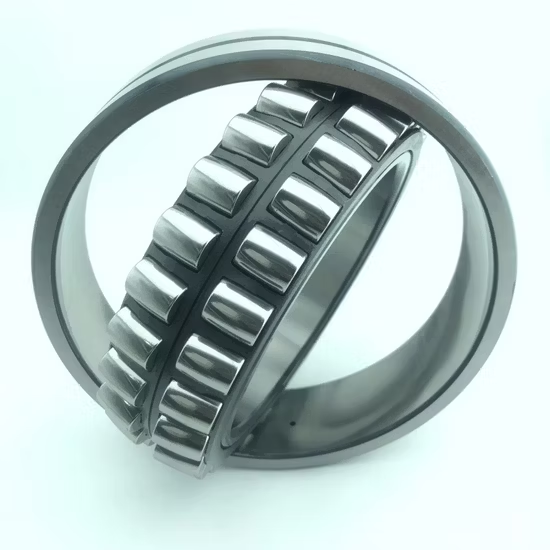
22226 22228 22230 22232 22238 Spherical Roller Bearing — 222 series built for heavy radial loads and shaft misalignment in vibrating screens and crushers.
Multi-Brand Authorized Coverage — A single procurement order fulfills mixed-brand requirements for the 22226 22228 22230 22232 22238 spherical roller bearing series without coordinating multiple vendors.
| Parameter | Value |
|---|---|
| Designation | 22226 22228 22230 22232 22238 |
| Bearing Type | Spherical Roller Bearing |
| Series Code | 22 (Spherical Roller Bearing series) |
| Width Series | 2 |
| Bore Diameter Series | 26 / 28 / 30 / 32 / 38 |
| Origin | Germany / Japan / Sweden / Malaysia / China |
| HS Code | 8482500090 |
| Service | OEM |
| Industry | Typical Applications |
|---|---|
| Mining and Crushing | Vibrating screen exciter mechanisms, jaw crusher eccentric shafts |
| Steel and Metallurgy | Continuous casting machine roll segments, rolling mill gearbox pinions |
| Industrial Gearboxes | Heavy-duty reduction gear low-speed shafts, extruder drive assemblies |
Ignoring internal clearance and cage design during cross-referencing turns a standard replacement into a rapid failure point.
When sourcing replacements for heavy machinery, procurement teams often focus solely on the base dimension series. Yet, installing a standard clearance variant where thermal expansion demands extra internal play leads to catastrophic seizure under load. I have witnessed this exact scenario at a cement plant in Nigeria, where a misapplied clearance class caused *temperatures. The 22226 22228 22230 22232 22238 spherical roller bearing range requires meticulous alignment of internal geometry, not just outer dimensions, to survive severe shock loads .
Selecting the correct configuration for this series demands looking past the catalog number. Our technical review process evaluates the specific radial loads, axial thrust components, and ambient temperatures of your equipment. By cross-referencing the exact cage material and clearance class against the OEM equipment specifications, we ensure the supplied units can handle the intense vibration and misalignment inherent in mining and steel mill operations.
Equipment operating in quarries or metallurgical plants faces extreme radial shock loads combined with heavy particulate contamination. The internal clearance must accommodate significant thermal gradients; otherwise, the rolling elements will skid and smear against the raceways. Lubrication intervals are often compromised by dust ingress, meaning the cage design must maintain structural integrity even when the lubricant film degrades. Proper sealing arrangements and robust retainer materials are non-negotiable to prevent premature fatigue .
The "22" prefix identifies the spherical roller bearing series, optimized for heavy radial loads and moderate axial loads in both directions. The subsequent "2" denotes the width series, providing the necessary load-carrying cross-section for industrial gearboxes. The final digits (26, 28, 30, 32, 38) indicate the bore diameter series code. Within this dimensional framework, the internal design dictates survival. Options include machined brass cages for high-vibration environments where stamped steel might fracture, or optimized internal geometries that distribute stress more evenly across the roller profile. Selecting the appropriate internal clearance—such as stepping up from standard to C3—is critical when the inner ring operates at a noticeably higher temperature than the housing.
A slight deviation in the suffix code does not merely reduce service life; it triggers unplanned downtime that halts entire production lines. When a bearing seizes due to thermal binding, the resulting shaft scoring and housing damage escalate a simple component swap into a major mechanical overhaul. According to failure analysis frameworks, a significant share of premature failures stems from incorrect internal clearance selection rather than material defects . The cost of a misapplied unit is measured in lost tonnage and emergency freight, not just the price of the replacement part.
We do not merely pick parts from a shelf; we validate the cross-reference against three critical axes: base dimension, internal clearance, and cage design. For the 22226 22230 22238 sizes, confusing a stamped steel cage with a machined brass variant in a vibrating screen application is a common error we actively prevent. Our authorized multi-brand network means we can source the exact Timken, NSK, NTN, Koyo, or NACHI specification your OEM requires, backed by batch traceability that proves the metallurgy meets the original design intent.
To ensure the supplied units match your exact operational reality, please provide the specific radial and axial load profiles, operating speeds, and steady-state temperature differentials between the shaft and housing. Sharing the OEM equipment number or the exact suffix string currently in service allows our engineering team to perform a comprehensive cross-reference check, verifying that the internal geometry and clearance class will withstand your specific application demands.
Q: Why is it critical to verify the clearance suffix when cross-referencing this series?
A: Base dimensions only define the physical envelope. In heavy-duty applications like crushers, thermal expansion requires extra internal play. Installing a standard clearance unit instead of a C3 variant leads to thermal binding and rapid seizure under load, turning a routine replacement into a catastrophic failure.
Q: How do I verify the authenticity of the supplied bearings to avoid counterfeits?
A: Counterfeiters often clone outer packaging but use soft inner rings that fail under shock loads. We provide full batch traceability and support QR verification through the manufacturer's official mobile applications, ensuring the metallurgy and heat treatment of every unit meet the original design specifications.
Q: What cage material should I specify for high-vibration equipment like vibrating screens?
A: High-vibration environments generate intense inertial forces that can fracture standard stamped steel retainers. For these applications, a one-piece machined brass cage is typically required to maintain roller guidance and structural integrity, preventing cage disintegration during continuous operation.
Q: How do you handle cross-brand substitutions when the original OEM brand has long lead times?
A: We do not just match the base number. Our technical team cross-references the internal geometry, clearance class, and cage design across our authorized brands to ensure the substitute offers identical load ratings and thermal performance, preventing fitment or operational issues in the field.
Our 5-step process ensures every order is engineered, validated, and supported for optimal performance.
Technical needs assessment
Custom specifications
Free samples for $50k+
Pre-shipment inspection
On-site & predictive
Our certified engineers respond within 24 hours with detailed technical specifications, pricing, and lead time information.