01
Consultation
Technical needs assessment

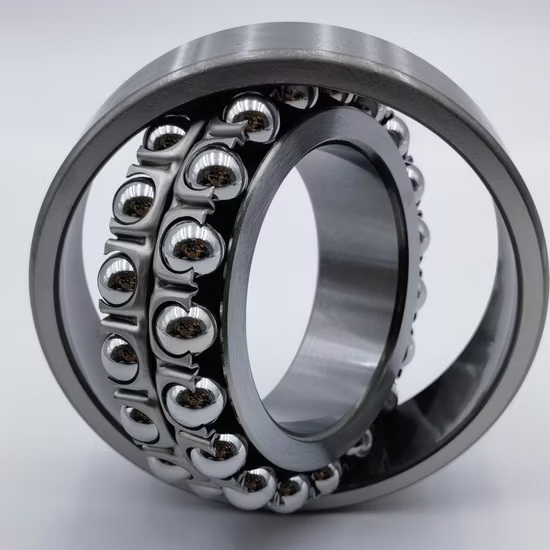


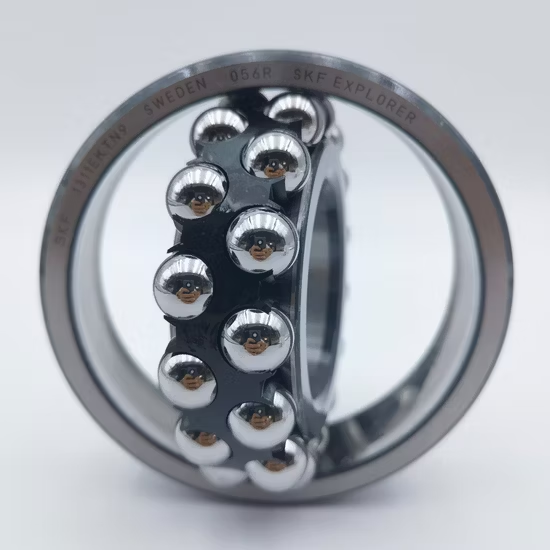
2220m Self-Aligning Ball Bearing features a spherical outer ring raceway designed to accommodate static shaft misalignment in material handling and agricultural machinery applications.
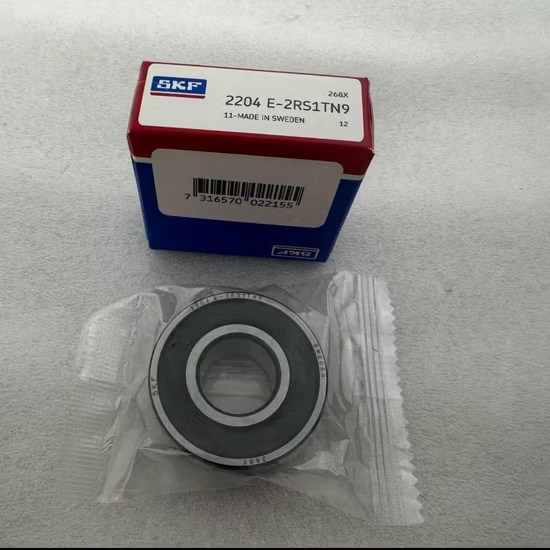
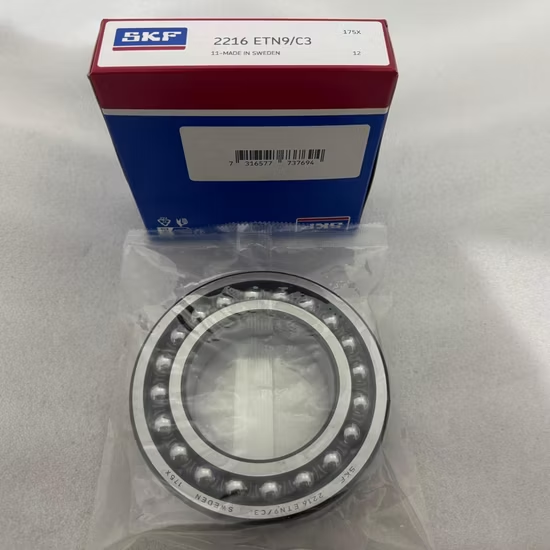
Full Batch Traceability — Every 2220m self-aligning ball bearing ships with manufacturer lot documentation and official QR verification support to guarantee authenticity.
| Parameter | Value |
|---|---|
| Designation | 2220m |
| Product Type | Self-Aligning Ball Bearing |
| Bearing Style | Open, Rubber Seals, Iron Seals (available variants) |
| Origin | Germany, Japan, Sweden, Malaysia, China |
| HS Code | 848210 |
Note: The 'm' suffix is an unverified designation requiring manufacturer catalog confirmation for exact internal design specifics.
| Industry | Typical Applications |
|---|---|
| Fitness & Recreation | Heavy-duty resistance machine pivot joints, commercial treadmill incline mechanisms |
| Material Handling | Conveyor belt return idler pulleys, automated sorting system guide rollers |
| Agricultural Machinery | Harvester vibrating sieves, tractor linkage pivot points |
| General MRO | Industrial fan shafts, exhaust blower assemblies |
A base number match does not guarantee internal design compatibility.
In heavy-equipment environments, overlooking a single suffix variation leads to catastrophic field failures. I previously managed a mining conveyor project where a supplier substituted a standard cage for a 2220-Etn9 polyamide variant without checking the cross-reference. The incorrect cage material shattered under heavy shock loads, causing a complete line stoppage. When sourcing a 2220m self-aligning ball bearing, assuming the internal clearance and cage design match the OEM requirement without verification is a critical procurement risk .
Selecting the correct internal configuration ensures the 2220m self-aligning ball bearing handles specific misalignment and load profiles. Our engineering team reviews your application parameters to confirm that the cage material and clearance class match the operational reality, preventing the thermal binding that plagues incorrectly specified replacements.
Fitness equipment and agricultural machinery expose bearings to sweat, fertilizer dust, and fluctuating ambient temperatures. Open designs require frequent relubrication but run cooler, while rubber or iron seals trap contaminants at the cost of higher friction. If the internal clearance is not adjusted for these thermal shifts, the rolling elements will bind against the raceway .
The specific suffix dictates the internal geometry and cage material, which directly impacts vibration resistance and speed limits. Brass cages handle heavy shock loads better, while polyamide variants offer quieter operation at higher speeds. Seal selection must balance contamination exclusion with friction heat generation; iron shields deflect large debris without contact friction, whereas rubber seals provide superior moisture protection for washdown environments.
Substituting a bearing based solely on the base designation often results in unplanned downtime and premature failure. If the replacement lacks the correct internal clearance for the operating temperature, the bearing will seize, potentially destroying the shaft and housing. This catastrophic damage voids equipment warranties and forces emergency air-freight replacements, turning a minor maintenance task into a major operational disruption .
We maintain authorized distribution across all major brands, allowing a single order to cover mixed-brand MRO requirements without juggling multiple vendors. Our cross-reference protocol strictly aligns the base number, clearance class, and cage material, eliminating the guesswork that causes field seizures. Every shipment includes batch traceability to the manufacturer, verified via official brand apps to block cloned QR codes. We also provide application-based selection reviews to ensure the seal type and internal design survive your specific load and temperature conditions.
To ensure accurate selection and L10 life calculation, please share your radial and axial load profiles, operating speeds, and ambient temperature ranges. If you are replacing an existing unit, provide the exact OEM equipment number and the full designation printed on the current bearing ring. This data allows our engineering team to verify the cross-reference and confirm the optimal seal and clearance configuration for your specific machinery.
Q: How do I verify the authenticity of the 2220m self-aligning ball bearing?
A: We provide full batch traceability documentation with every shipment. You can verify the authenticity by scanning the QR code on the packaging using the specific brand's official mobile application. This direct digital link to the manufacturer's database effectively blocks counterfeit products that rely on cloned visual stickers and soft inner rings.
Q: Why must I check the clearance and seal suffix during cross-referencing?
A: Matching only the base number ignores critical internal design differences. If a standard clearance is installed where a C3 is required for thermal expansion, the bearing will bind and fail. Similarly, swapping a non-contact iron shield for a rubber seal in a high-speed application generates excess friction heat, leading to rapid cage degradation.
Q: What are the selection boundaries for open, rubber, and iron seal variants?
A: Open bearings suit clean, easily accessible environments requiring regular relubrication. Iron shields deflect large particulate matter without adding contact friction, making them ideal for high-speed conveyor rollers. Rubber seals provide maximum moisture and fine dust exclusion for agricultural or washdown applications, though they introduce higher rotational friction and temperature limits.
Q: What are the common failure modes and alignment requirements for this bearing type?
A: While the outer ring features a spherical raceway to accommodate static housing misalignment, it cannot compensate for dynamic shaft deflection or severe installation errors. Common failure modes include cage fracture from excessive vibration and raceway spalling caused by contaminated lubricant. Proper shaft preparation and precise housing alignment remain essential for maximizing service life.
Our 5-step process ensures every order is engineered, validated, and supported for optimal performance.
Technical needs assessment
Custom specifications
Free samples for $50k+
Pre-shipment inspection
On-site & predictive
Our certified engineers respond within 24 hours with detailed technical specifications, pricing, and lead time information.