01
Consultation
Technical needs assessment

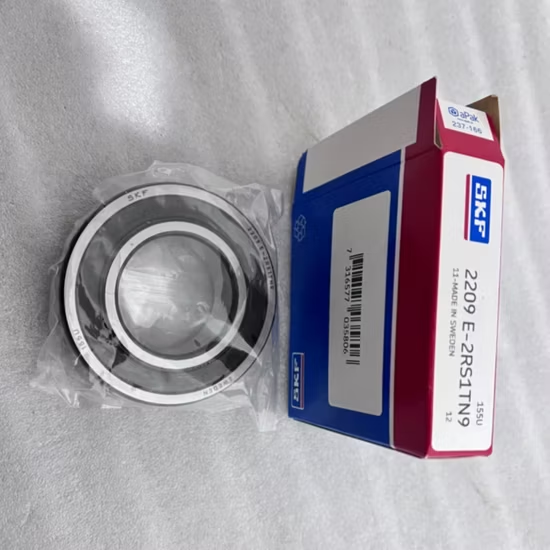
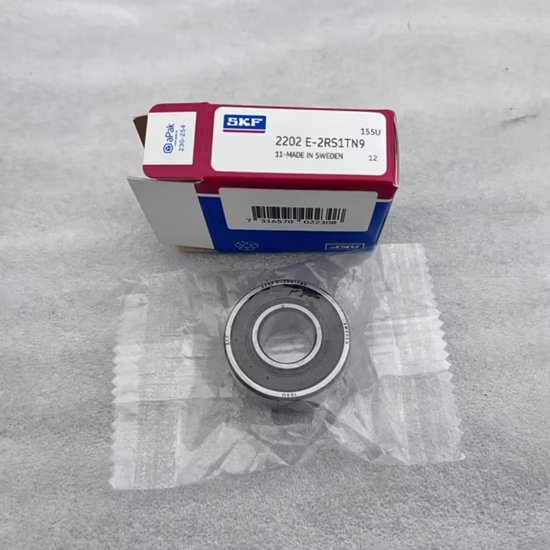
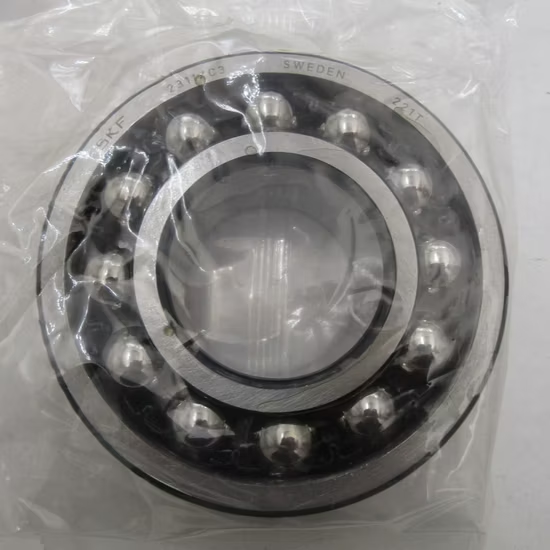
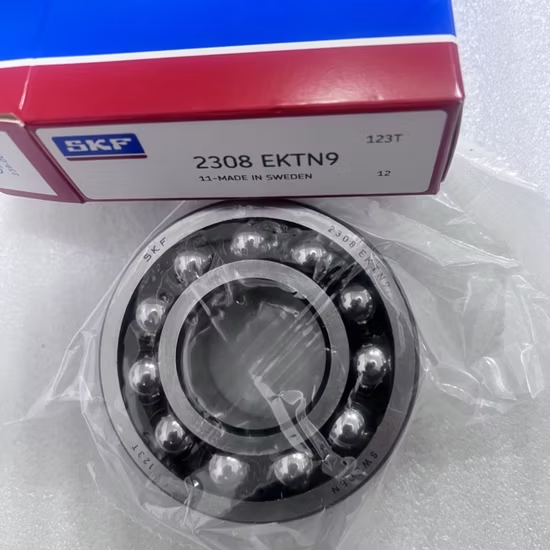
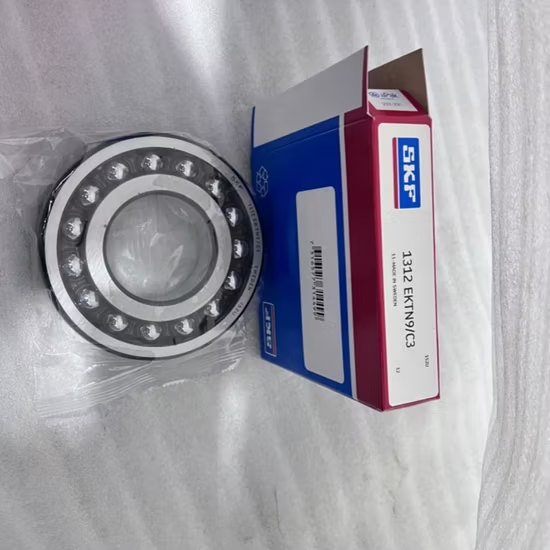
2200-2RS Self-Aligning Ball Bearing — Spherical outer ring raceway accommodates shaft misalignment for electric motors and gearboxes.
Unified Multi-Brand Sourcing — Procure SKF, FAG, and NSK equivalents for the 2200-2RS self-aligning ball bearing in a single consolidated shipment without juggling multiple vendors.
| Parameter | Value |
|---|---|
| Designation | 2200-2RS |
| Bearing Type | Self-Aligning Ball Bearing |
| Seal or Shield Type | Rubber Seals (2RS) |
| Origin | Germany / Japan / Sweden / Malaysia / China |
| HS Code | 848210 |
Note: The "2RS" suffix is an unverified suffix — requires manufacturer catalog confirmation, commonly denoting double side contact seals.
| Industry | Typical Applications |
|---|---|
| Electric Motors | Rotor shaft support experiencing minor housing misalignment |
| Pumps | Impeller shaft sealing in mildly contaminated fluid environments |
| Conveyors | Idler roller ends subjected to belt tracking deflection |
| Gearboxes | Intermediate shafts operating with slight bore misalignment |
| Agricultural Machinery | PTO driveline joints exposed to heavy dust and moisture |
Matching the base designation while ignoring the 2RS seal and internal clearance suffixes guarantees premature thermal binding.
I have seen countless 2200 series bearings seize on high-temperature fans because procurement only checked the bore and outside diameter. When a standard CN clearance is forced into an application demanding C3 for thermal expansion, the internal preload spikes as the shaft heats up . This rough replacement approach turns a minor misalignment advantage into a catastrophic friction failure.
The 2200-2RS self-aligning ball bearing compensates for static housing bore misalignment and shaft deflection, protecting the rolling elements from edge loading. Our technical team reviews your specific load and speed parameters to ensure the selected seal variant and clearance class actually match the operating environment. This application-based selection prevents the common mistake of installing an open bearing where the 2RS contact seals are strictly required to block particulate ingress.
In agricultural and conveyor applications, fine particulate matter easily penetrates open bearing pockets, accelerating abrasive wear on the inner ring. The double rubber seals maintain a tight contact lip to exclude moisture and dirt, though this introduces slight friction that must be factored into limiting speed calculations. Furthermore, when operating near heat sources, the internal clearance must accommodate shaft expansion to prevent the balls from skidding against the raceway . Proper greasing intervals and seal integrity are critical to sustaining rotational stability under these combined thermal and environmental stresses.
The defining feature of this configuration is the dual contact sealing arrangement, which retains factory lubrication while shielding the spherical outer ring raceway from external contaminants. Unlike iron shields that offer non-contact protection, the rubber seals physically wipe the inner ring, making them mandatory for washdown or dusty environments despite a slight reduction in maximum permissible speed. The self-aligning capability relies on the continuous spherical profile of the outer ring, allowing the inner ring and ball assembly to pivot freely. Selecting the correct internal clearance class is equally vital; a standard clearance will bind under thermal growth, whereas a C3 clearance provides the necessary operational gap for heated shafts.
Installing a bearing with the correct base number but the wrong internal geometry leads to unplanned downtime and catastrophic damage to adjacent machinery components. If the clearance is too tight for the operating temperature, the resulting thermal binding generates immense friction, rapidly degrading the lubricant and destroying the cage. Conversely, using an open bearing in a contaminated zone allows abrasive particles to score the raceway, drastically shortening the calculated service life . These premature failures void equipment warranties and force expensive emergency maintenance interventions.
We supply authorized coverage across all major international brands, meaning your mixed-brand requirements for the 2200 series are fulfilled in a single, fully documented order. Our cross-brand interchange process strictly matches the clearance, cage material, and seal suffixes, eliminating the dangerous assumption that identical base numbers guarantee identical internal performance. Every shipment includes batch traceability to the manufacturer, verified through official brand apps, ensuring you receive genuine components rather than counterfeits with soft inner rings. We also conduct an application-based selection review to confirm that the chosen seal and clearance variant can withstand your specific load, speed, and temperature conditions.
Share your radial and axial load profiles, operating speeds, and ambient temperature ranges so our engineering team can verify the L10 life and confirm the optimal internal clearance class. If you are replacing an existing component, provide the OEM equipment number or the exact designation stamped on the old bearing to ensure precise cross-reference alignment. Detailing the environmental contamination level allows us to validate whether the double rubber seal configuration is sufficient or if alternative sealing solutions are required.
Q: How can I verify the authenticity of multi-origin bearings using official brand apps?
A: Scan the QR code printed on the packaging using the specific manufacturer's official mobile application. This process links the unique batch and lot numbers directly to the factory's production database, confirming the origin and specifications. It effectively exposes counterfeits that rely on cloned visual markers but lack valid digital traceability records in the brand's secure system.
Q: Why must clearance and seal suffixes be matched during cross-brand interchange?
A: Matching only the base designation ignores critical internal geometry differences that dictate field performance. A standard clearance installed in a high-temperature application will thermally bind, while an open bearing used in a dusty environment will suffer rapid abrasive wear. Exact suffix alignment ensures the replacement handles the specific thermal expansion and contamination challenges of your machinery.
Q: What are the selection boundaries between rubber seals and iron shields for self-aligning ball bearings?
A: Rubber contact seals provide superior exclusion of fine dust and moisture, making them ideal for harsh environments, but they generate slight friction that limits maximum rotational speed. Iron shields offer non-contact protection with lower friction, allowing higher speeds, but they cannot prevent the ingress of liquid or fine particulate matter. The choice depends entirely on balancing contamination severity with speed requirements.
Q: How do I determine the correct internal clearance based on operating temperature?
A: Evaluate the temperature differential between the inner ring and the outer housing during steady-state operation. Significant thermal gradients cause the shaft to expand more than the housing, reducing the internal operational gap. If the operating temperature is substantially elevated, a C3 or greater clearance is typically required to prevent thermal binding and ensure the rolling elements maintain a proper lubricant film.
Our 5-step process ensures every order is engineered, validated, and supported for optimal performance.
Technical needs assessment
Custom specifications
Free samples for $50k+
Pre-shipment inspection
On-site & predictive
Our certified engineers respond within 24 hours with detailed technical specifications, pricing, and lead time information.