01
Consultation
Technical needs assessment

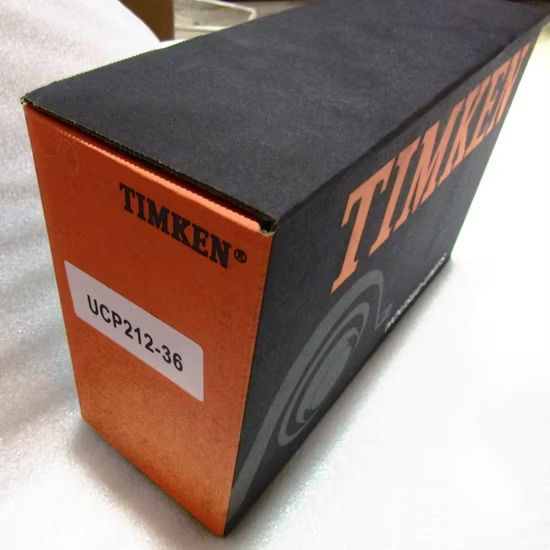
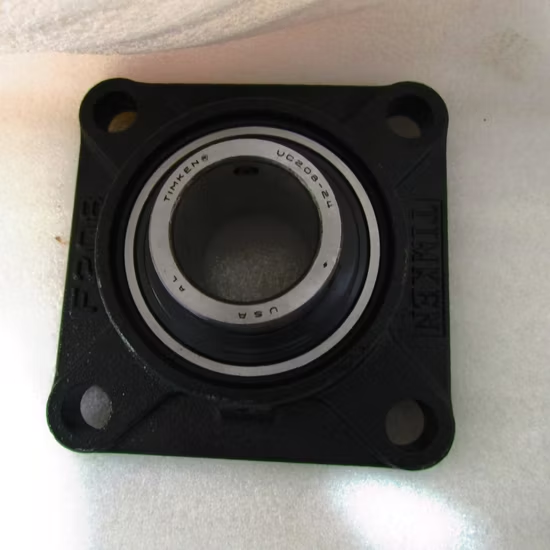
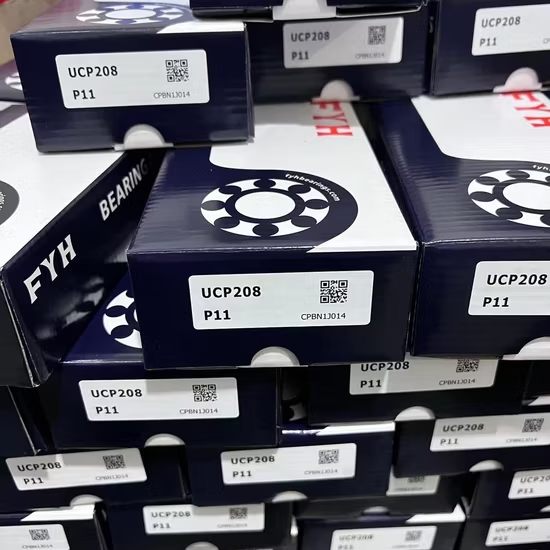
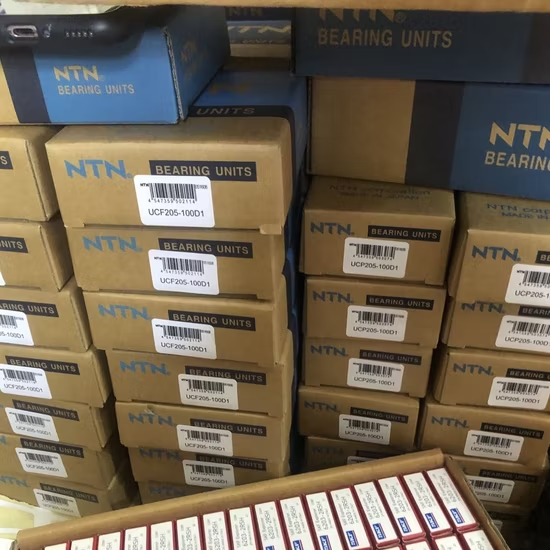
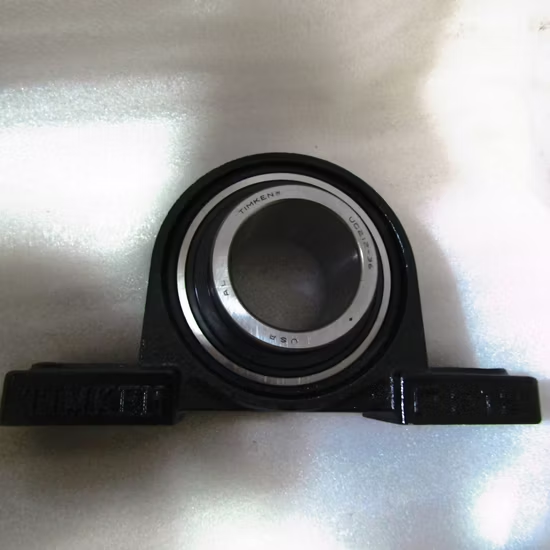
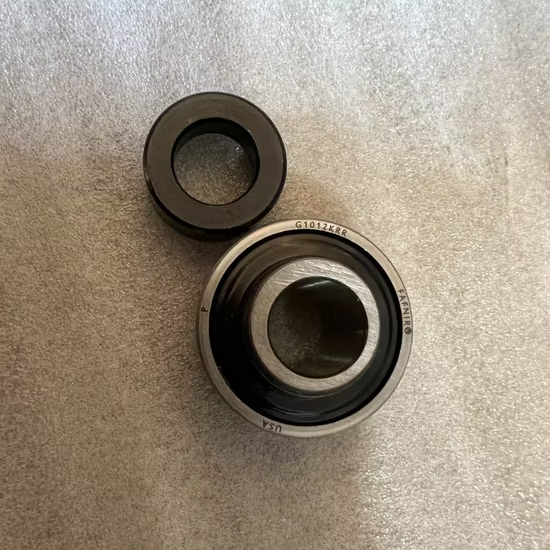
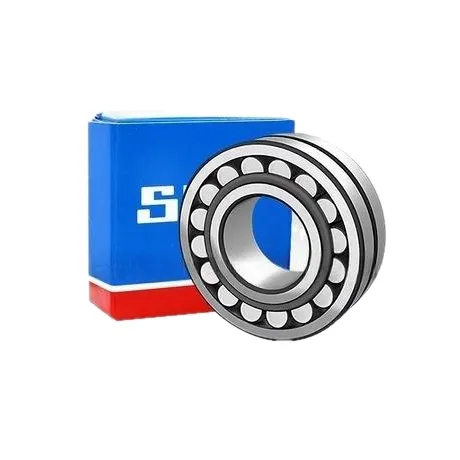
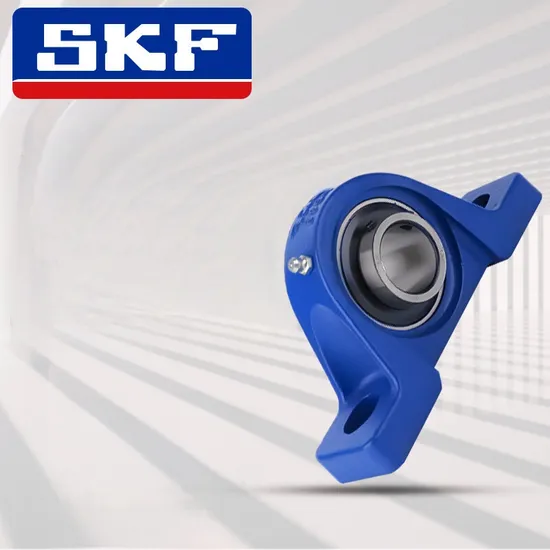
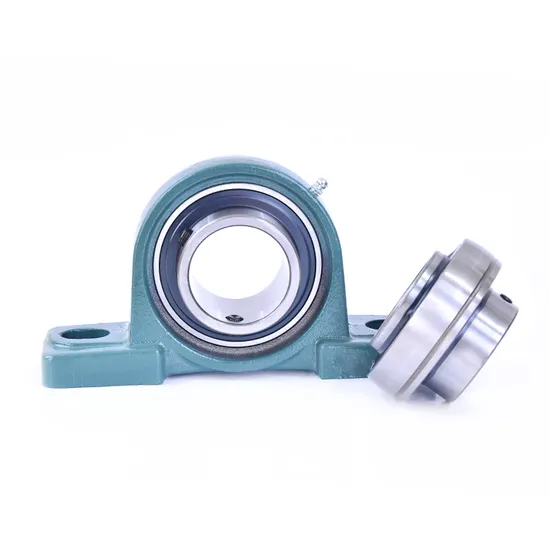
UCP318-56 Pillow Block Bearing — equipped with a cast iron pillow block housing and insert unit engineered for high-temperature conditions.
Traceable Batch Origins — Every UCP318-56 unit ships with manufacturer lot documentation verified through official brand applications.
| Parameter | Value |
|---|---|
| Designation | UCP318-56 |
| Bearing Type | Pillow Block Bearing |
| Housing Model | P (Pillow block) |
| Insert Type | UC (Insert bearing unit) |
| Raceway | Deep Groove Raceway |
| Rows Number | Single |
| Housing Material | Cast Iron |
| Environmental Features | Corrosion Resistant, High Temperature capability |
| Origin | Germany / Japan / Sweden / Malaysia / China |
Note: The numerical suffixes 318 and -56 require manufacturer catalog confirmation for exact dimensional and bore specifications.
| Industry | Typical Applications |
|---|---|
| Agricultural Machinery | Combine harvester rotor drives, tractor PTO shaft supports |
| Material Handling | Belt conveyor tail pulleys, bucket elevator return shafts |
| Textile Machines | Loom warp beam supports, spinning frame drafting rollers |
Matching the housing block is only the first step; internal insert clearance and seal geometry dictate field survival.
Sourcing by base designation alone leads to catastrophic mismatches when internal designs diverge from OEM requirements. In Latin American agricultural operations, I have repeatedly seen units seize mid-harvest because a standard clearance insert was forced into a high-heat rotor application where thermal expansion demanded a C3 fit. When the internal geometry ignores the operating environment, the result is rapid cage failure and shaft scoring .
Selecting the correct UCP318-56 pillow block bearing requires looking past the cast iron housing to verify the insert's internal clearance and sealing arrangement. Agricultural environments demand seals that exclude fine particulate matter without generating excessive friction heat. We cross-reference the exact insert suffix to ensure the sealing lip design and internal geometry align with the specific radial loads and thermal cycles of your equipment.
Heavy radial loads from unbalanced rotor assemblies combine with severe dust ingress to accelerate wear. High ambient temperatures and friction heat reduce lubricant viscosity, making the correct internal clearance class critical to prevent thermal binding. Effective sealing must balance contamination exclusion with friction management, while relubrication intervals depend heavily on the housing's grease path design and the severity of the particulate exposure .
The UC prefix identifies a standard insert bearing unit with set screw locking, while the P denotes the solid cast iron pillow block housing designed for robust vibration damping. The deep groove raceway handles primarily radial loads typical in conveyor and agricultural shafts. Because the 318 and -56 suffixes are unverified in standard generic tables, confirming the exact bore size and housing dimensions through manufacturer catalogs is mandatory before procurement.
Installing an insert with incorrect internal clearance or inadequate sealing leads to unplanned downtime and catastrophic shaft damage. A misapplied seal allows abrasive dust to destroy the raceway, while incorrect clearance causes thermal seizure under load. Following ISO 281 guidelines for life calculation requires accurate internal geometry data; ignoring these suffixes voids warranty coverage and guarantees premature failure .
We prevent cross-reference errors by verifying that the replacement insert matches the OEM clearance, cage material, and seal type, not just the base housing number. Our technical team reviews application parameters to ensure the deep groove geometry and cast iron housing can withstand your specific shock loads. Batch traceability is maintained from the manufacturer to your site, ensuring every unit meets original equipment standards.
To ensure precise selection, provide your equipment's radial and axial load profiles, operating speeds, and ambient temperature ranges. Sharing the OEM equipment number allows our engineering team to perform a comprehensive cross-reference review. Detailing the environmental exposure, such as dust concentration or moisture levels, helps us verify the optimal seal type and internal clearance for your application.
Q: How do I verify the authenticity of the received units?
A: Each unit includes batch documentation that can be verified using the manufacturer's official mobile application. Scanning the provided QR code confirms the production origin and authenticates the specific insert and housing combination, protecting your operation from counterfeit products with soft inner rings that fail under load.
Q: Why is matching the insert suffix as critical as the housing model?
A: The housing model only defines the external mounting dimensions. The insert suffix dictates internal clearance, seal type, and locking mechanism. Installing an insert with standard clearance in a high-temperature application causes thermal binding, while incorrect seals allow dust ingress, leading to rapid raceway degradation and premature field failure.
Q: How do I determine the exact dimensions for the unverified suffixes?
A: Since specific numerical suffixes require manufacturer catalog confirmation, you should provide your shaft diameter and mounting space constraints. Our technical team will cross-reference the OEM equipment number and application parameters to identify the precise bore size and housing dimensions required for your machinery.
Q: What lubrication practices are recommended for these deep groove units?
A: Relubrication intervals depend on operating speed, load, and environmental contamination. For units operating in heavy dust, purging grease through the housing fitting at regular intervals is necessary to expel particulate matter. Always use a grease compatible with the factory fill to maintain optimal friction and temperature characteristics.
Our 5-step process ensures every order is engineered, validated, and supported for optimal performance.
Technical needs assessment
Custom specifications
Free samples for $50k+
Pre-shipment inspection
On-site & predictive
Our certified engineers respond within 24 hours with detailed technical specifications, pricing, and lead time information.