01
Consultation
Technical needs assessment


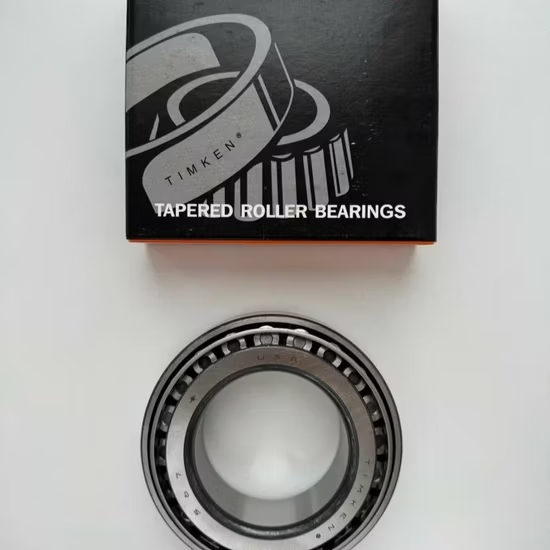
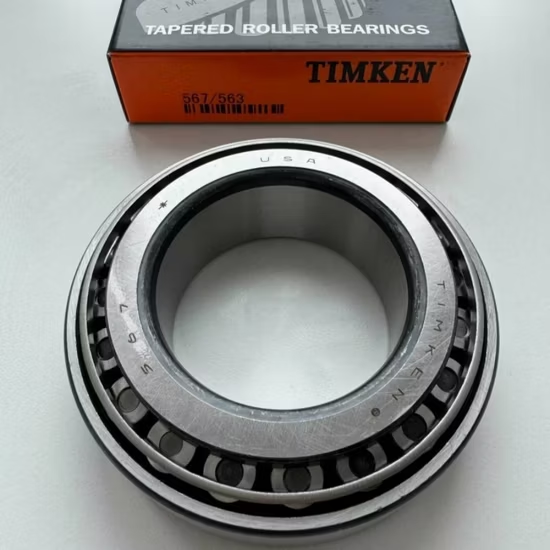

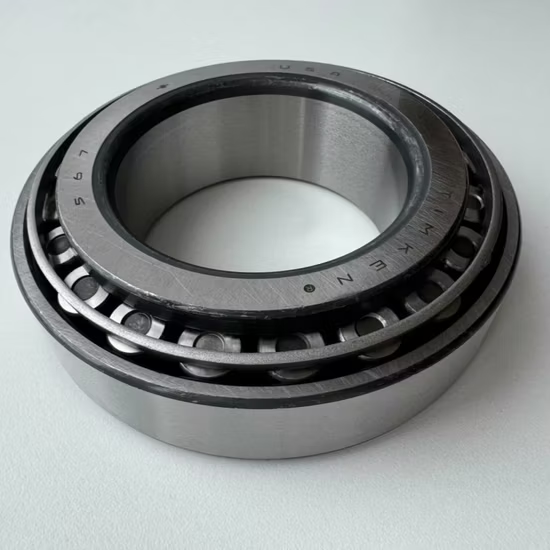
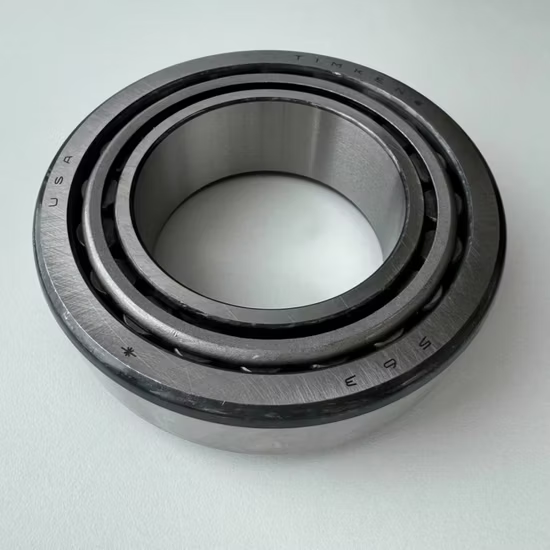
567/563 Inch Tapered Roller Bearing P4 — Machined from GCr15 bearing steel, this cone and cup assembly manages heavy radial and axial loads in truck wheel hubs. P4 precision ensures tight dimensional accuracy for stable operation under demanding conditions.
Three-way cross-reference alignment — matching the base inch designation, internal geometry, and precision class to prevent thermal binding in heavy-duty truck axles.
| Parameter | Value |
|---|---|
| Designation | 567/563 |
| Product Type | Tapered Roller Bearing |
| Precision Class | P4 |
| Material | GCr15 bearing steel |
| Origin | Germany / Japan / Sweden / Malaysia / China |
| HS Code | 8482500090 |
Cage material options such as nylon, brass, or iron are subject to verification against the specific manufacturer catalog for this inch series.
| Industry | Typical Applications |
|---|---|
| Automotive and Heavy Vehicle | Truck wheel hubs, steer axle assemblies, drive axle differentials |
| Material Handling | Heavy-duty forklift wheel bearings, terminal tractor axles |
| General Machinery | Vibrating screens, heavy conveyor pulleys, agricultural trailer axles |
Thermal expansion in heavy vehicle axles demands exact internal geometry, not just a matching part number.
Sourcing a 567/563 tapered roller bearing based solely on the cone and cup numbers often leads to catastrophic field failures. I have seen entire fleet axles lock up on steep descents because the replacement parts matched the base designation but carried the wrong internal clearance or precision class. When a standard clearance bearing is forced into a heavy truck hub designed for thermal expansion, the inner ring expands under braking heat and binds against the rollers . The resulting friction generates more heat, creating a runaway thermal cycle that welds the cage to the raceway.
Heavy truck wheel hubs subject bearings to a punishing mix of radial vehicle weight and axial cornering thrust. The 567/563 tapered roller bearing is engineered to handle this combined load vector through its specific contact angle and roller profile. By supplying units that strictly adhere to OEM dimensional tolerances, we ensure the load is distributed evenly across the roller paths, preventing edge-loading that prematurely fatigues the GCr15 bearing steel.
Truck axles experience massive temperature swings from ambient cold to intense braking heat. This thermal cycling dictates strict requirements for internal clearance and dimensional accuracy. If the bearing components lack the necessary precision, the microscopic variations in roller spacing cause uneven load sharing. At elevated temperatures, these tight spots generate localized friction, breaking down the lubricant film and accelerating surface spalling .
The 567/563 designation identifies a standard inch-series tapered roller assembly comprising the 567 cone and 563 cup. While commercial truck hubs typically use standard precision, this specific configuration is available in a P4 precision class. This tighter dimensional and running accuracy ensures exceptionally smooth rotation and precise preload setting during hub adjustment. Proper preload is critical; too loose causes roller skidding and wear, while too tight mimics a lack of clearance, leading to the exact thermal seizure failures we aim to prevent.
Installing an incorrectly specified inch bearing rarely results in a gradual decline; it usually ends in sudden, catastrophic wheel-end failure. According to ISO 281 frameworks for bearing life calculation, even minor deviations in internal geometry or material hardness drastically reduce the fatigue life under heavy dynamic loads . A seized hub on a loaded commercial truck means unplanned downtime, expensive roadside recovery, and potential collateral damage to the axle spindle and braking systems, far exceeding the cost of a correctly specified component.
We do not just ship a box with a matching part number printed on it. Our technical team verifies the internal geometry and precision class of every 567/563 unit before it leaves our facility, ensuring it matches your OEM equipment requirements. We maintain authorized distribution channels across major global brands, allowing you to consolidate mixed-brand fleet requirements into a single, fully traceable order. Furthermore, our cross-reference process checks the cage material and internal design, not just the base numbers, eliminating the risk of receiving a visually identical but functionally incompatible part.
To ensure the selected bearing configuration perfectly matches your fleet or machinery requirements, please provide the specific axle model, expected radial and axial loads, and typical operating temperatures. If you are replacing an existing unit, sharing the OEM equipment number allows our engineering team to perform a precise cross-reference check. This technical review guarantees that the internal clearance and precision class align with your specific wheel-end dynamics, eliminating guesswork and preventing premature thermal failures.
Q: How do I verify the authenticity of 567/563 bearings to avoid soft inner rings?
A: Counterfeiters often use substandard steel that passes casual visual checks but fails under load. Always demand original manufacturer batch traceability and use the brand's official mobile app to scan the QR code on the packaging. We provide full documentation and verification support to ensure every cone and cup meets genuine metallurgical standards.
Q: What cross-reference checks are critical when replacing OEM truck wheel bearings?
A: Matching the base 567/563 number is insufficient. You must verify the internal clearance class, cage material, and precision tolerances. Installing a standard clearance bearing in a hub requiring extra clearance for thermal expansion will cause the inner ring to bind and seize the axle under heavy braking heat.
Q: How does P4 precision benefit heavy vehicle tapered roller bearings?
A: While standard commercial grades are common, P4 precision offers tighter dimensional and running accuracy. This allows for highly precise hub preload adjustment, ensuring even load distribution across the rollers, reducing friction heat generation, and extending the service life of the wheel-end assembly under continuous heavy loads.
Q: Which mounting practices prevent cage damage in inch tapered bearings?
A: Never apply mounting force through the rolling elements or the cage. When pressing the 567 cone onto the axle spindle, use a properly sized drift tube that contacts only the inner ring face. Additionally, ensure the induction heating temperature does not exceed the thermal limit of the bearing steel to prevent annealing.
Our 5-step process ensures every order is engineered, validated, and supported for optimal performance.
Technical needs assessment
Custom specifications
Free samples for $50k+
Pre-shipment inspection
On-site & predictive
Our certified engineers respond within 24 hours with detailed technical specifications, pricing, and lead time information.


