01
Consultation
Technical needs assessment


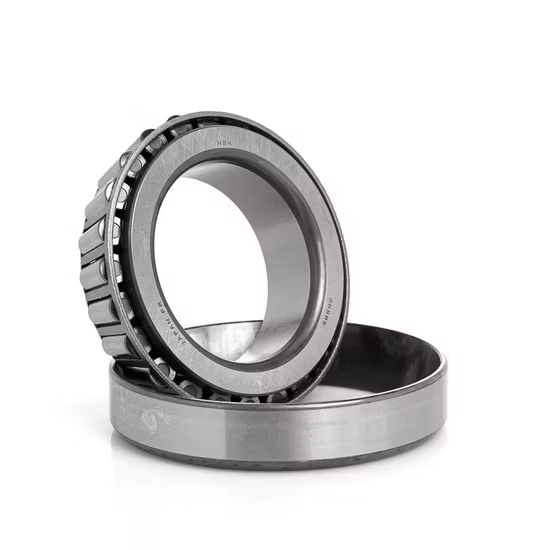


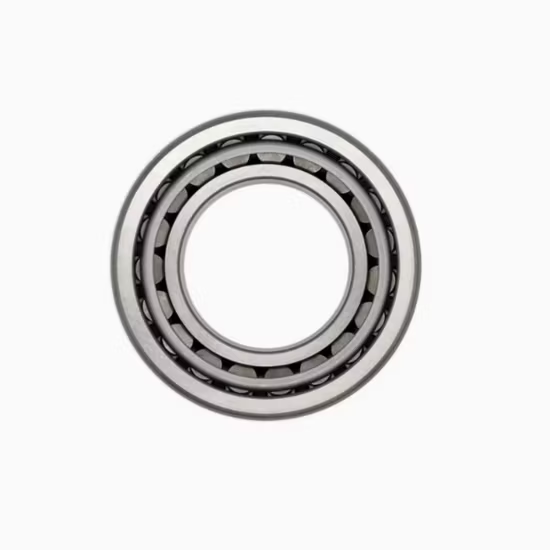
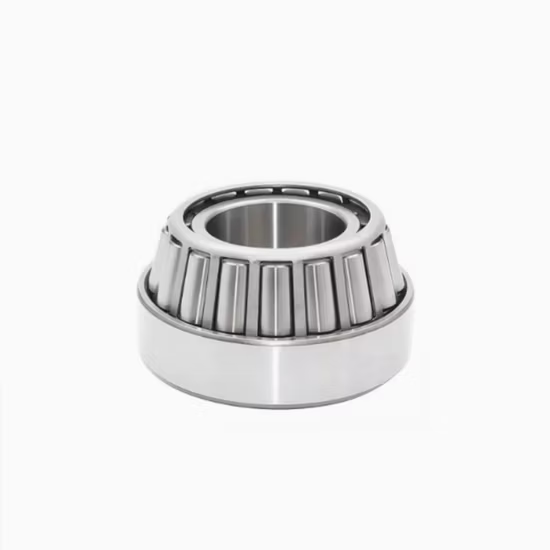
Koyo 3490/20 3490/3420 Inch Tapered Roller Bearing 38.1×79.375×29.37 mm — single-row inch-series construction optimizes roller-to-raceway contact for combined radial and unidirectional axial loads.
Full Traceability — Every Koyo 3490/20 3490/3420 shipment includes manufacturer lot documentation and official app verification to eliminate counterfeit risks.
| Parameter | Value |
|---|---|
| Designation | Koyo 3490/20 3490/3420 |
| Bearing Type | Tapered Roller Bearing |
| Bore Diameter (d) | 38.1 mm |
| Outside Diameter (D) | 79.375 mm |
| Width (T) | 29.370 mm |
| Number of Rows | Single Row |
| Material | GCr15 Bearing Steel |
| Dimensional Standard | Inch Series |
| Industry | Typical Applications |
|---|---|
| Automotive & Heavy Vehicles | Wheel hubs, truck axles, steering knuckles |
| Industrial Power Transmission | Heavy-duty gearboxes, reduction drives |
| Material Handling | Conveyor pulley shafts, forklift mast rollers |
| Marine & Off-Highway | Propulsion shaft supports, marine drives |
Matching only the base numbers without verifying internal geometry leads to catastrophic thermal binding under heavy loads.
Procurement teams often assume that any bearing sharing the 3490 cone and 3420 cup designations will perform identically. In reality, overlooking internal design variants, cage materials, or clearance classes causes premature failures. We have seen installations where standard clearance components were forced into high-temperature gearbox applications, resulting in rapid seizure. The Koyo 3490/3420 tapered roller bearing requires strict alignment of all suffixes and internal specs to survive demanding operational environments.
Replacing imperial components demands more than converting millimeters to inches. The Koyo 3490/20 3490/3420 operates on strict inch-series dimensional standards, meaning even microscopic deviations in the cup outer diameter or cone bore will compromise the fit. Our technical team cross-references the exact cone and cup pairing to ensure the contact lines align perfectly with your specific housing and shaft tolerances.
Heavy vehicle axles and industrial gearboxes subject these components to intense combined radial and axial loads, often accompanied by severe shock loading. Thermal expansion from continuous friction heat necessitates careful clearance selection during installation. Furthermore, contamination from road debris or industrial dust requires robust sealing solutions at the housing level, as the bearing itself relies on the surrounding enclosure for environmental protection. Proper lubrication intervals are equally critical to prevent micropitting on the roller profiles.
The nomenclature for this assembly splits into two distinct functional halves. The "3490" identifies the inner ring, or cone, which houses the rollers and cage assembly. The "3420" designates the outer ring, or cup, which presses into the housing; the "/20" is simply an industry shorthand for the 3420 cup, but both refer to the exact same mating component. Because this is an inch-series Koyo 3490/3420 tapered roller bearing, the 38.1x79.375x29.370mm dimensions are derived from fractional imperial measurements. This single-row configuration is engineered to manage thrust loads in one direction while supporting substantial radial forces, requiring a paired installation or precise axial adjustment to establish the correct operating clearance.
Installing a component without verifying the required internal clearance routinely triggers unplanned downtime. If the operating temperature rises and the housing expands more than the shaft, a standard clearance bearing will lose its internal play, leading to extreme friction and eventual cage destruction. Such catastrophic damage not only destroys the bearing but frequently scores the shaft and housing, turning a simple replacement into a major machining repair.
We mandate a complete cross-reference check that validates the cone, the cup, and the internal design variant simultaneously. Sourcing mixed-brand requirements in a single order eliminates the coordination delays of dealing with multiple suppliers. Every Koyo 3490/20 3490/3420 we dispatch carries batch traceability directly to the manufacturer's production facilities. Our application-based selection review evaluates your specific load and temperature profiles to confirm the clearance class is appropriate. Finally, we provide comprehensive dimensional inspection reports to guarantee the inch-series tolerances match your equipment requirements.
Submit your specific radial and axial load profiles, operating speeds, and continuous temperature ranges so our engineers can validate the L10 life and clearance requirements. Providing the original OEM equipment numbers allows us to perform a rigorous cross-reference check against the factory specifications. Detail any environmental exposure, such as heavy particulate contamination or moisture, to ensure the surrounding housing seals are adequately specified for the application.
Q: Why must both the cone and cup designations be verified during cross-referencing?
A: The 3490 cone and 3420 cup are engineered as a matched set with specific contact angles and roller profiles. Substituting only one half, or mixing manufacturers, disrupts the load distribution across the raceways. This mismatch accelerates wear and causes premature spalling, which is why we verify the complete Koyo 3490/3420 tapered roller bearing assembly before shipment.
Q: How can we verify the authenticity of the received components?
A: Every genuine unit features a unique traceability code. Procurement teams can scan this code using the manufacturer's official mobile application to instantly verify the production batch and origin. We also supply a Certificate of Conformity and lot documentation, ensuring full transparency from the factory floor to your maintenance shop.
Q: What dictates the choice of cage material for inch-series tapered rollers?
A: The operational speed, vibration levels, and temperature envelope determine the optimal cage design. Pressed steel cages handle standard speeds and high radial loads efficiently, while machined brass or specialized polymer cages offer superior performance in high-vibration or high-speed gearboxes. We review your specific application parameters to recommend the correct internal configuration.
Q: How is the internal clearance controlled during installation?
A: Unlike deep groove ball bearings, single-row tapered roller assemblies require manual clearance adjustment during mounting. Technicians must precisely tighten the shaft nut or housing cover while rotating the assembly to seat the rollers, then back off to the specified axial play. Incorrect adjustment leads to either destructive preload or excessive shaft play.
Q: What lubrication practices are recommended for heavy-duty axle applications?
A: Heavy-duty environments demand high-viscosity gear oils or extreme-pressure greases capable of maintaining a protective film under severe shock loads. Because this is an open bearing design, the housing must be packed with the correct lubricant volume, and regular re-lubrication intervals must be strictly followed to flush out metallic wear debris and prevent micropitting.
Our 5-step process ensures every order is engineered, validated, and supported for optimal performance.
Technical needs assessment
Custom specifications
Free samples for $50k+
Pre-shipment inspection
On-site & predictive
Our certified engineers respond within 24 hours with detailed technical specifications, pricing, and lead time information.