01
Consultation
Technical needs assessment


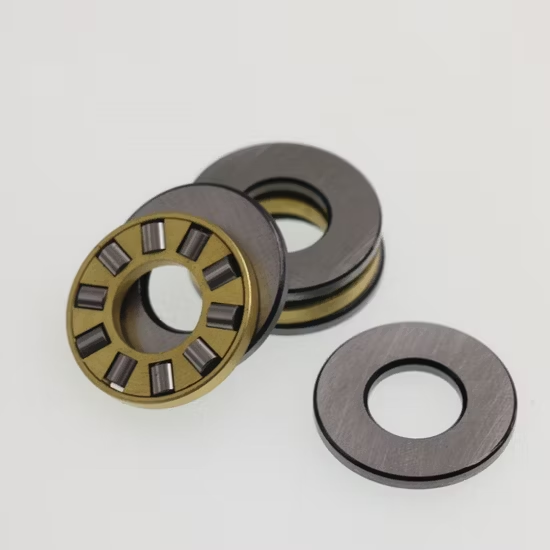
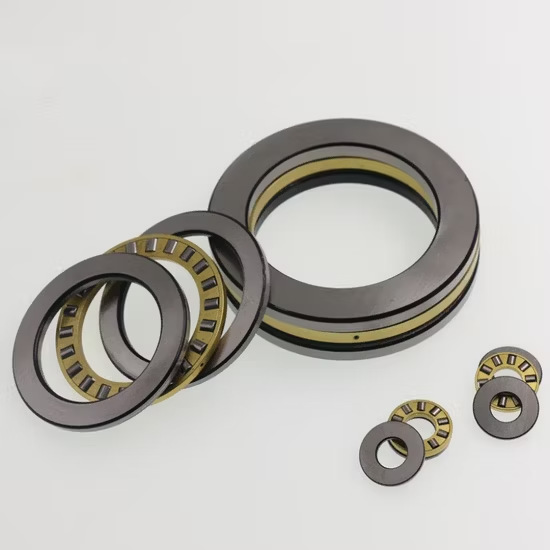
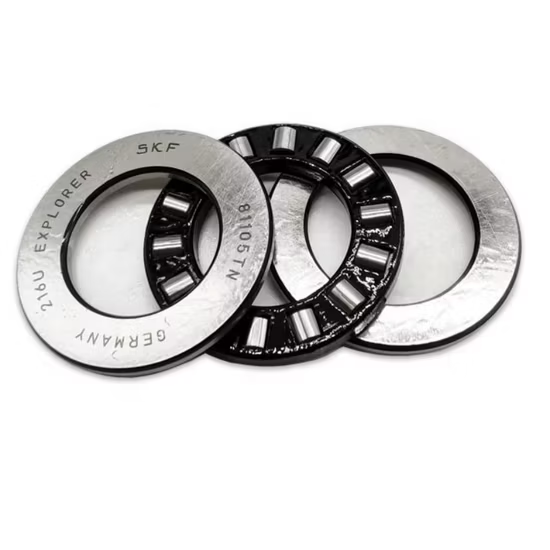
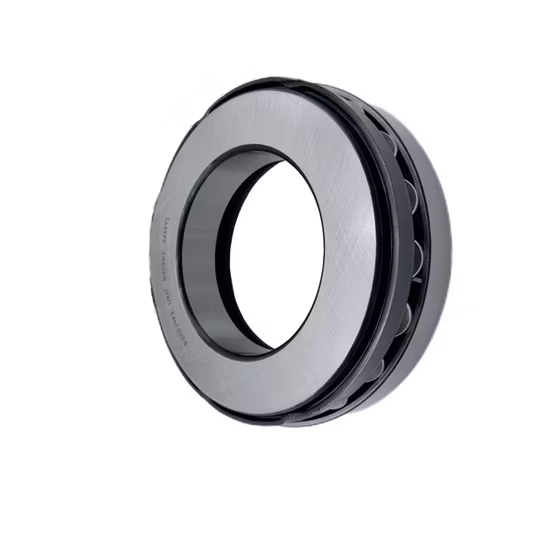
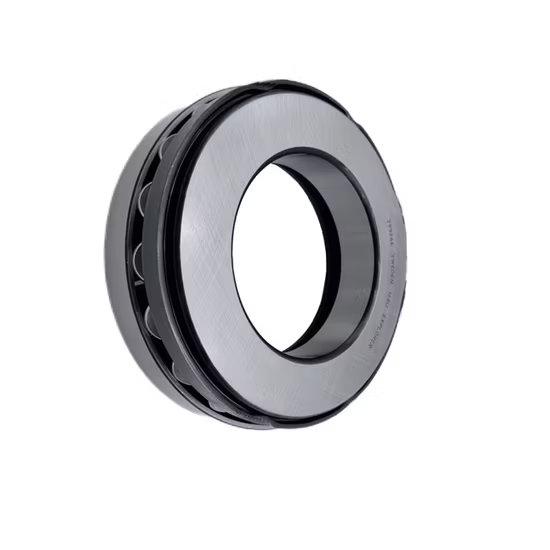
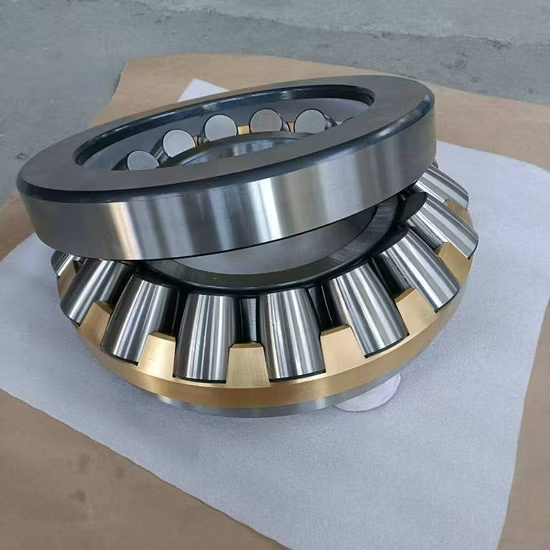
81222 Cylindrical Roller Thrust Bearing 110×160×38 mm — engineered to sustain heavy unidirectional axial loads in crane rotation and extruder mechanisms.
Full Batch Traceability — Every 81222 unit ships with manufacturer lot documentation and QR codes verifiable through official brand applications.
| Parameter | Value |
|---|---|
| Designation | 81222 |
| Product Type | Cylindrical Roller Thrust Bearing |
| Bore Diameter (d) | 110 mm |
| Outside Diameter (D) | 160 mm |
| Width (T) | 38 mm |
| Bearing Type | Cylindrical Roller Thrust |
| Cage Material | Machined brass or pressed steel options available |
| Clearance Class | Standard or C3 available upon request |
| Precision Class | Standard (P0) or higher precision options |
| Industry | Typical Applications |
|---|---|
| Material Handling | Crane slewing mechanisms and hoist drives |
| Heavy Machinery | Heavy-duty gearboxes and extruder thrust zones |
| Plastics Processing | Injection molding machine clamping units |
Axial collapse in heavy lifting usually traces back to ignored thermal expansion rather than structural overload.
In high-ambient environments, standard clearance thrust bearings expand rapidly under continuous friction. When the internal clearance vanishes, the rollers bind against the raceways, generating excessive heat that softens the inner ring material . Procurement teams often match the base 110x160x38mm dimensions perfectly but overlook the necessary clearance adjustments for hot climates, leading to sudden rotational lockups that halt entire lifting operations.
Selecting the correct thrust component requires looking beyond basic dimensional cross-referencing. A genuine 81222 cylindrical roller thrust bearing handles massive unidirectional axial loads inherent to crane rotation, but its operational success depends on matching the internal geometry to the specific duty cycle. We review the exact load spectrum and rotational speed to ensure the selected cage design and clearance class will sustain the equipment through peak lifting phases without premature fatigue.
Operating heavy lifting equipment in high-temperature regions introduces severe thermal gradients across the bearing cross-section. The housing typically dissipates heat faster than the rotating shaft, causing the inner ring to expand more than the outer ring and steadily reducing internal clearance . Combined with the axial shock loads generated when a crane hoist engages a heavy payload, inadequate clearance leads to roller skidding, cage deformation, and eventual seizure. Proper lubrication intervals and high-temperature grease selection are critical to maintaining the hydrodynamic film under these extreme thermal and mechanical stresses.
The 81222 designation identifies a standard cylindrical roller thrust bearing with a 110 mm bore, 160 mm outside diameter, and 38 mm width. Without specific suffixes, it implies a standard design, but heavy-duty applications frequently require a C3 clearance class to accommodate the thermal expansion mentioned earlier. The cage material is equally vital; machined brass cages are generally preferred for crane slewing rings due to their superior vibration damping and durability under shock loads, whereas pressed steel cages might suffice for steady-state gearbox applications. Ensuring the precision class aligns with the required rotational accuracy prevents uneven load distribution across the cylindrical rollers.
Installing a standard-clearance bearing in a high-heat application guarantees unplanned downtime once the internal gap closes and friction spikes. The resulting catastrophic damage often destroys the adjacent shaft seating and housing, turning a simple component swap into a major structural rebuild . Furthermore, utilizing counterfeit parts with soft inner rings or incorrectly cloned QR codes voids equipment warranties and compromises the structural integrity of the entire lifting mechanism, risking severe safety incidents on the job site.
We maintain authorized distribution channels across all major international brands, allowing you to consolidate mixed-brand requirements into a single, verified shipment. Cross-referencing thrust bearings requires matching the exact clearance and cage specifications, not just the base 110x160x38mm dimensions, preventing the dangerous installation of standard-clearance units in high-heat crane applications. Every batch undergoes strict verification to reject soft inner rings and cloned codes that plague the secondary market. Our technical team provides application-based selection reviews to confirm that the chosen 81222 variant handles your specific axial load and thermal profile.
To ensure the selected thrust bearing matches your equipment's exact requirements, please provide the operational axial load, rotational speed, and ambient temperature range for a comprehensive L10 life calculation. If you are replacing an existing unit, sharing the OEM equipment number allows our engineering team to perform a precise cross-reference check, verifying that the clearance and cage specifications align with the original design intent. This technical alignment prevents the costly installation of dimensionally correct but internally incompatible components.
Q: How can I verify the authenticity of the 81222 using official brand apps?
A: Scan the QR code printed on the physical packaging and the bearing label using the specific manufacturer's official mobile application. The app will confirm the production batch, origin, and whether the code has been scanned previously, instantly exposing cloned labels commonly found on counterfeit thrust bearings with soft inner rings.
Q: What are the common failure modes of this bearing in crane applications?
A: The most frequent failure in crane slewing mechanisms is thermal seizure caused by using standard clearance in high-ambient temperatures. As the shaft expands, the internal clearance vanishes, leading to roller binding, excessive heat generation, and eventual cage collapse or raceway spalling under heavy axial shock loads.
Q: How do I ensure cross-reference accuracy when replacing 81222 bearings?
A: Do not rely solely on the base 110x160x38mm dimensions. You must verify the internal clearance class, cage material, and precision grade. A dimensionally identical bearing with standard clearance instead of C3 will fail prematurely in hot environments, making exact suffix and internal design matching critical for operational safety.
Q: What documentation should accompany a genuine batch of these thrust bearings?
A: A fully traceable shipment includes a Certificate of Conformity, original manufacturer batch and lot traceability records, material test reports for the steel components, and a dimensional inspection report confirming the bore, outside diameter, and width tolerances meet the specified precision class requirements.
Q: How should I select the correct lubrication for crane rotation thrust bearings?
A: Crane slewing applications require greases with high load-carrying additives and excellent mechanical stability to withstand axial shocks. The lubrication interval must be adjusted based on the operating temperature and environmental contamination levels, ensuring the hydrodynamic film between the cylindrical rollers and raceways remains intact during continuous rotation.
Our 5-step process ensures every order is engineered, validated, and supported for optimal performance.
Technical needs assessment
Custom specifications
Free samples for $50k+
Pre-shipment inspection
On-site & predictive
Our certified engineers respond within 24 hours with detailed technical specifications, pricing, and lead time information.