01
Consultation
Technical needs assessment

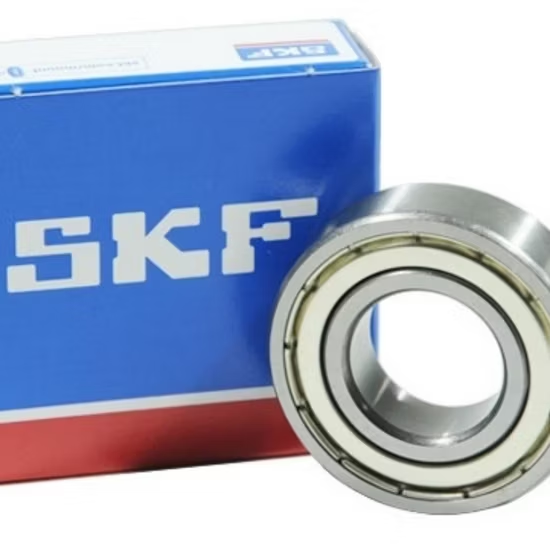
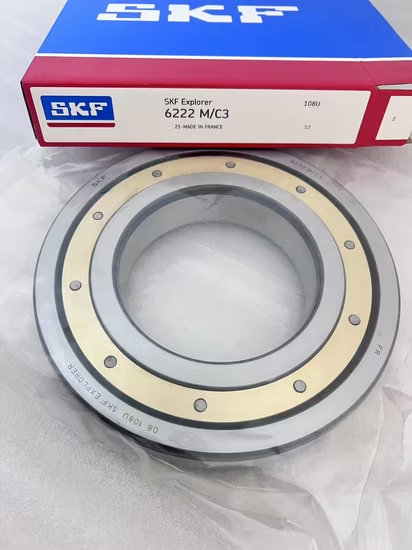

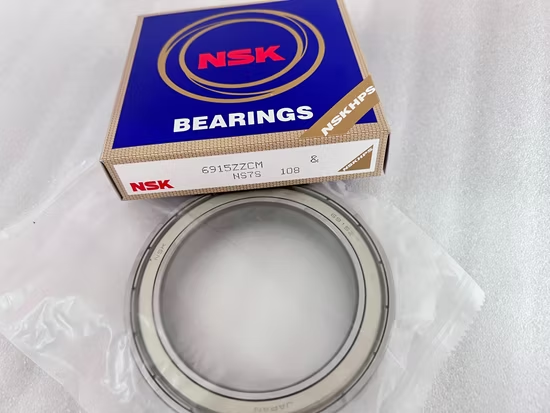
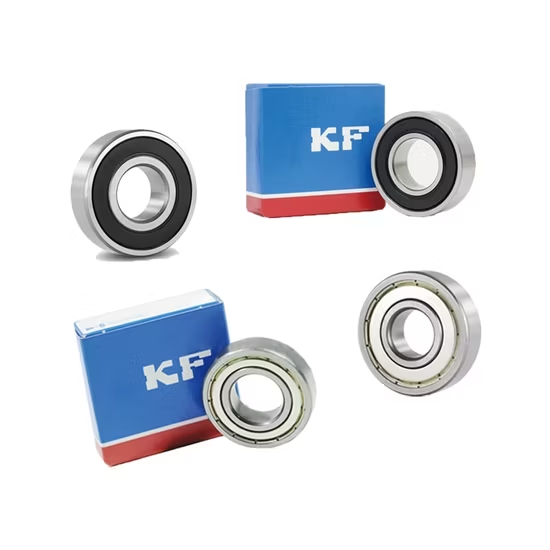

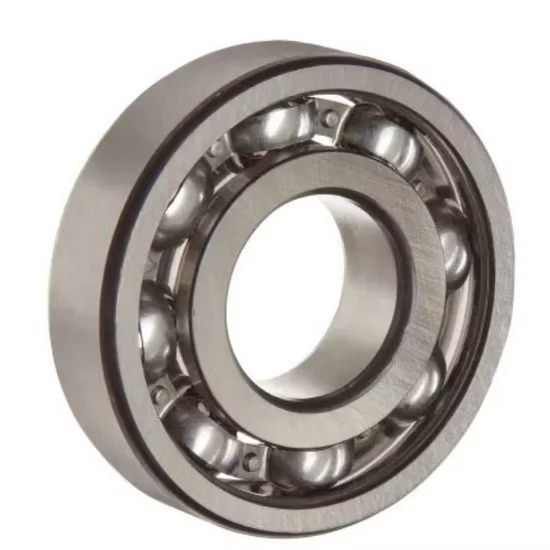
6300 6301 6302 6303 6304 6305 6306 Deep Groove Ball Bearing — offered in Open, 2RS contact rubber seals for maintenance-free contamination protection, and 2ZZ steel shields for medium-speed dust resistance.
Full Multi-Brand Authorization — one consolidated shipment covers German, Japanese, and Swedish origins for the entire 6300 to 6306 range without juggling separate suppliers.
| Parameter | Value |
|---|---|
| Designation | 6300 6301 6302 6303 6304 6305 6306 |
| Product Type | Deep Groove Ball Bearing |
| Seal or Shield Type | Open, 2RS (Double-sided contact rubber seals), 2ZZ (Double-sided steel shields) |
| Noise and Vibration Class | Z1V1, Z2V2, Z3V3, Z4V4 |
| Origin | Germany / Japan / Sweden / Malaysia / China |
| HS Code | 848210 |
| Industry | Typical Applications |
|---|---|
| Electric Motors | Rotor shaft support in high-efficiency induction motors and servo drives |
| Industrial Gearboxes | High-speed input shafts and intermediate reduction stages |
| Material Handling | Drive pulleys and idler rollers in continuous belt conveyor systems |
| Pumps | Impeller shaft support in centrifugal water and chemical transfer pumps |
Matching the base designation while ignoring seal friction and clearance suffixes guarantees premature thermal binding.
Procurement teams often source replacements based solely on the core number, assuming a standard variant will fit. In tropical, high-humidity environments, this oversight leads to rapid degradation. I have seen batches of rubber-sealed units fail within months because the lip material hardened under continuous thermal load, leaking grease and causing the bearings to seize. Selecting the correct 6300 6301 6302 6303 6304 6305 6306 deep groove ball bearing requires verifying that the internal clearance accommodates thermal expansion and that the seal material withstands the specific operating temperature .
Choosing between open, 2RS, and 2ZZ configurations dictates the survival of the 6300 6301 6302 6303 6304 6305 6306 deep groove ball bearing in dirty or wet environments. We review the exact pollution level of your facility to recommend the optimal barrier. Open designs suit clean, oil-lubricated gearboxes, while 2ZZ steel shields offer low-friction protection against coarse dust. For high-moisture areas, 2RS rubber seals provide superior exclusion, provided the lip elastomer is rated for the motor's surface temperature.
Electric motors and pump shafts generate significant internal heat, directly impacting internal clearance and lubricant viscosity. If a standard CN clearance is installed where C3 is required for thermal expansion, the rolling elements will skid, generating excessive friction. Furthermore, in humid conditions, moisture ingress compromises the grease structure. Selecting the appropriate noise and vibration class, from Z1V1 up to Z4V4, ensures the internal geometry and surface finish are optimized to maintain a stable lubricant film and minimize acoustic emissions at high rotational speeds .
The Z1V1 through Z4V4 classifications define the strictness of the manufacturing tolerances regarding acoustic emissions and vibration amplitude. A Z4V4 grade is essential for precision spindle motors or household appliances where operational silence is critical, requiring superior raceway honing and tighter ball grouping. Conversely, the 2RS suffix indicates double-sided contact rubber seals, which introduce a specific amount of frictional torque. Understanding this trade-off between maximum sealing efficacy and limiting speed is vital when cross-referencing equivalents across different manufacturers.
Substituting a bearing without verifying the exact seal material or internal geometry often results in unplanned downtime and catastrophic damage to the surrounding housing. When a 2RS seal fails due to thermal hardening, the resulting grease starvation causes the cage to disintegrate, scoring the shaft and stator. Following the failure analysis frameworks outlined in industry standards helps identify whether the root cause was a material mismatch or an incorrect clearance selection, preventing repeated warranty voidance and costly secondary repairs .
We maintain authorized distribution channels across all major international brands, allowing you to consolidate mixed-brand requirements into a single, traceable order. Our cross-reference process strictly aligns the base number, seal type, and noise class, ensuring a replacement 2RS unit matches the original equipment's thermal limits. Every batch is backed by manufacturer traceability, eliminating the risk of counterfeit rings with compromised hardness. We also provide application-based selection reviews, analyzing your specific load and speed parameters to confirm the chosen variant will survive the intended operational environment.
To ensure the selected variant matches your operational demands, please provide the exact radial and axial loads, continuous operating speeds, and ambient temperature ranges. Sharing the original equipment manufacturer part numbers allows our engineering team to perform a precise cross-reference check, verifying that the seal friction and internal clearance of the proposed equivalent align perfectly with your machinery's design parameters.
Q: Why do base numbers match but the replacement bearing still fails early?
A: Base numbers only define the physical dimensions. If the replacement ignores the internal clearance or seal material suffix, it will fail under operational stress. A standard clearance unit might thermally bind in a hot motor, while an incorrect seal elastomer will harden and leak grease, leading to premature seizure and equipment damage.
Q: What is the operational boundary between 2RS rubber seals and 2ZZ steel shields?
A: 2RS rubber seals provide excellent protection against moisture and fine dust but generate higher frictional heat, limiting the maximum allowable speed. 2ZZ steel shields offer lower friction and higher speed capabilities but only guard against coarse, dry contaminants. The choice depends entirely on the contamination level and the thermal limits of your specific application.
Q: How do Z1V1 to Z4V4 noise classes affect motor performance?
A: These classes dictate the strictness of the raceway surface finish and ball sorting. Higher classes like Z3V3 or Z4V4 significantly reduce acoustic emissions and vibration amplitudes, which is critical for high-speed servo motors and precision appliances. Using a lower class in a noise-sensitive application can cause resonance and accelerated fatigue in the supporting structure.
Q: How can I verify the authenticity of multi-origin bearings?
A: We provide comprehensive batch traceability documentation and a Certificate of Conformity for every shipment. You can also use the respective brand's official mobile application to scan the QR codes on the packaging. This direct verification ensures the internal metallurgy and seal materials meet the original factory specifications.
Our 5-step process ensures every order is engineered, validated, and supported for optimal performance.
Technical needs assessment
Custom specifications
Free samples for $50k+
Pre-shipment inspection
On-site & predictive
Our certified engineers respond within 24 hours with detailed technical specifications, pricing, and lead time information.