01
Consultation
Technical needs assessment

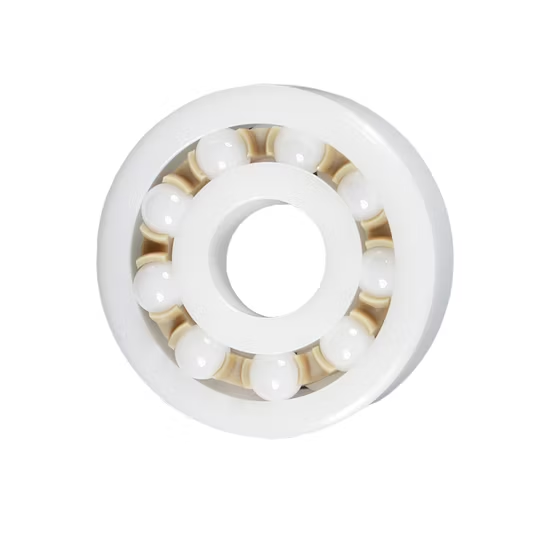
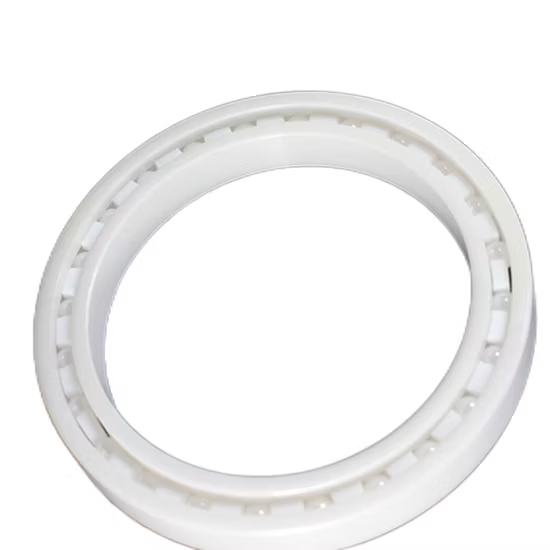
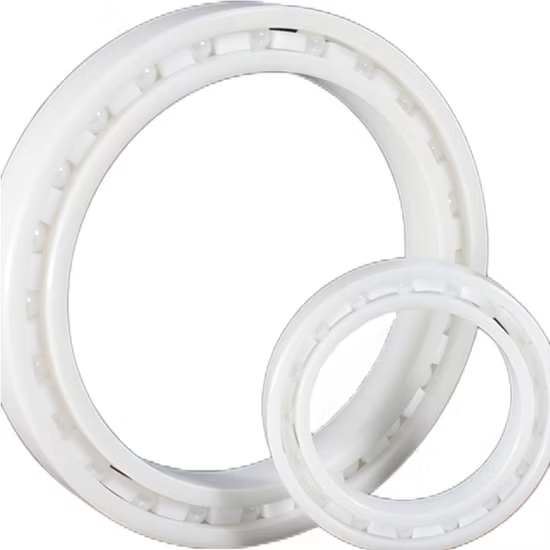

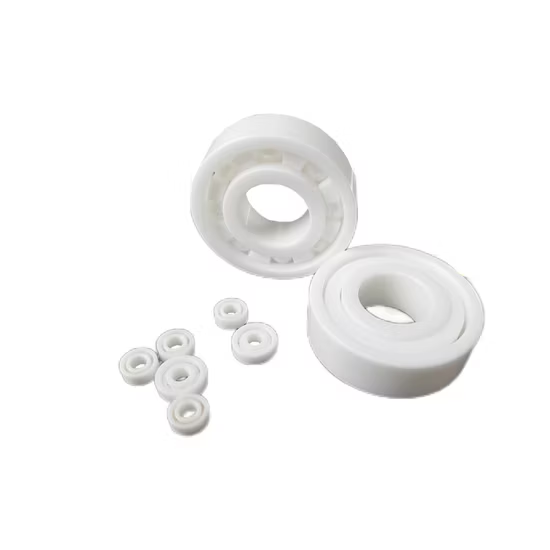
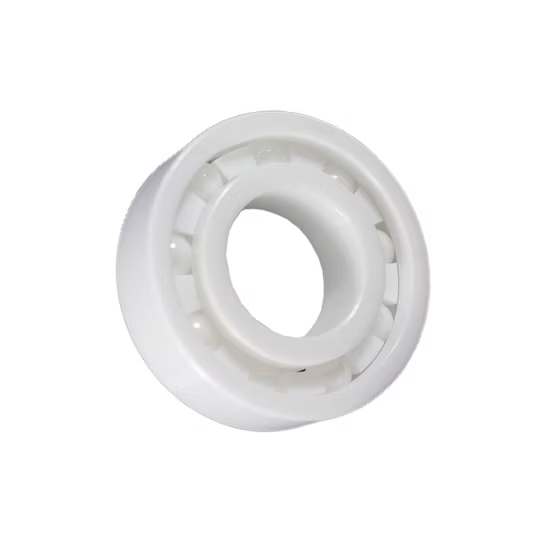
6213CE Zirconia Ceramic Deep Groove Ball Bearing — ceramic construction for high-temperature and electrical insulation applications.
Cross-reference checks verify clearance, cage material, and precision class alignment beyond base number matching.
Full Batch Traceability — Every 6213CE zirconia ceramic deep groove ball bearing ships with verifiable lot documentation linked directly to the manufacturer's production records.
| Parameter | Value |
|---|---|
| Designation | 6213CE |
| Product Type | Zirconia Ceramic Deep Groove Ball Bearing |
| Material Options | Available in zirconia ceramic or stainless steel variants |
| Bearing Style Options | Open, rubber seals, or iron seals |
| Quality Levels | Z1V1, Z2V2, Z3V3, Z4V4 |
| Precision Class | P5 |
| Customization | Available |
Note: The 'CE' suffix is an unverified designation requiring manufacturer catalog confirmation for exact internal geometry.
| Industry | Typical Applications |
|---|---|
| Electric Motors | High-speed rotor shafts requiring electrical insulation |
| Industrial Gearboxes | High-temperature output shafts and corrosion-prone assemblies |
| Material Handling | Conveyor drive rollers operating in washdown environments |
Thermal binding remains the primary cause of unexpected motor shaft seizures. When standard steel rolling elements operate at high rotational speeds, friction generates heat that outpaces dissipation, causing the balls to expand and eliminate internal clearance. Sourcing a genuine 6213CE zirconia ceramic deep groove ball bearing prevents this catastrophic failure mode by utilizing rolling elements with considerably less thermal expansion. During my technical service years in Suzhou, I repeatedly dismantled seized spindle assemblies where standard steel bearings had expanded and locked solid under continuous high-speed operation .
Selecting the correct 6213CE zirconia ceramic deep groove ball bearing involves aligning the ceramic properties with the specific electrical and thermal demands of the motor. Ceramic rolling elements provide essential electrical insulation, preventing stray currents from arcing th* Our technical review process ensures the selected quality level and sealing configuration match the exact vibration limits and environmental exposure of your equipment.
High-speed motor environments demand careful attention to lubrication stability and thermal growth. As operating temperatures rise, the differential expansion between the shaft and housing alters the internal clearance, making the initial clearance class selection absolutely critical. Furthermore, environments with high moisture or particulate contamination require appropriate sealing; rubber seals offer superior exclusion but introduce friction heat, while iron shields provide non-contact protection for higher speed limits. Balancing these factors ensures the bearing maintains its geometric stability without premature lubricant degradation .
The P5 precision class specified for this configuration guarantees tighter dimensional and running accuracy, which is essential for minimizing vibration in high-speed electric motors. The availability of Z1V1 through Z4V4 quality levels allows procurement teams to match specific noise and vibration limits required by sensitive equipment. The unverified 'CE' suffix requires careful cross-referencing, as base designation matches often overlook critical internal design differences. Verifying the exact seal type—whether open, rubber-sealed, or iron-shielded—ensures the bearing integrates correctly with the motor's existing lubrication and cooling pathways.
Installing a bearing with standard clearance in an application that demands extra clearance for thermal expansion inevitably leads to thermal binding and catastrophic damage. According to ISO 281 framework principles, ignoring the thermal growth characteristics of the housing and shaft drastically reduces the calculated L10 life. Such premature failures result in unplanned downtime, voided equipment warranties, and secondary damage to adjacent motor components .
We eliminate cross-reference errors by verifying not just the base 6213 number, but the specific ceramic material, P5 precision class, and seal variants against your OEM requirements. Our authorized multi-brand coverage allows you to consolidate mixed-brand orders while maintaining strict batch traceability for every unit. We provide application-based selection reviews that evaluate your specific load, speed, and temperature conditions to prevent clearance mismatches. Every shipment includes comprehensive documentation, ensuring your maintenance team has full authenticity verification and technical support for mounting.
To ensure the selected configuration perfectly matches your application, please provide detailed operating parameters including radial and axial loads, operating speeds, and expected temperature ranges. Sharing the specific OEM equipment number allows our engineering team to perform a precise cross-reference check and L10 life calculation. This technical review guarantees the clearance class and sealing options align with your motor's thermal expansion characteristics.
Q: How do we verify the authenticity of ceramic bearings and avoid soft inner ring counterfeits?
A: We supply every unit with batch traceability documentation and QR codes verifiable through official brand applications. This strict verification process ensures the rolling elements are genuine zirconia ceramic and the inner rings possess the correct metallurgical hardness, completely eliminating the risk of counterfeit components causing premature motor failures.
Q: What does the Z1V1 to Z4V4 quality level mean for noise and vibration in electric motors?
A: These classifications define the strict vibration and acoustic emission limits of the bearing. Higher levels, such as Z4V4, indicate exceptionally smooth raceway finishes and tighter ball tolerances, which are absolutely critical for minimizing noise and preventing resonance in high-speed, precision electric motor applications.
Q: How should we choose between open, rubber seal, and iron seal styles for different environments?
A: Open bearings suit oil-lubricated or sealed motor housings, rubber seals provide maximum protection against moisture and dust but add slight friction, and iron shields offer non-contact protection ideal for high-speed limits. The choice depends entirely on the specific contamination risk and thermal constraints of your application.
Q: What are the critical cross-reference checks beyond the base designation when sourcing ceramic variants?
A: A complete cross-reference must verify the ceramic material grade, the exact P5 precision class, and the specific seal configuration. Relying solely on the base 6213 or 6214 number often results in receiving standard steel bearings or incorrect clearance classes that fail under high-speed thermal expansion.
Q: How do we interpret unverified suffixes like 'CE' on deep groove ball bearings without manufacturer catalogs?
A: Unverified suffixes require direct confirmation against the specific manufacturer's technical catalog to determine the exact internal geometry or material code. We handle this verification process during the technical selection phase to ensure the physical dimensions and internal clearances perfectly match your equipment requirements.
Our 5-step process ensures every order is engineered, validated, and supported for optimal performance.
Technical needs assessment
Custom specifications
Free samples for $50k+
Pre-shipment inspection
On-site & predictive
Our certified engineers respond within 24 hours with detailed technical specifications, pricing, and lead time information.