01
Consultation
Technical needs assessment

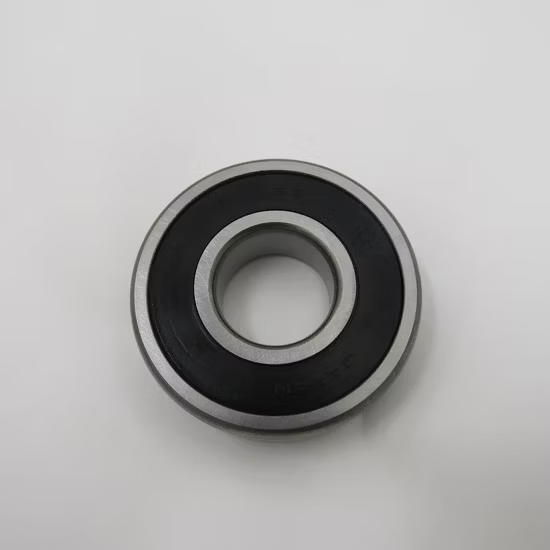
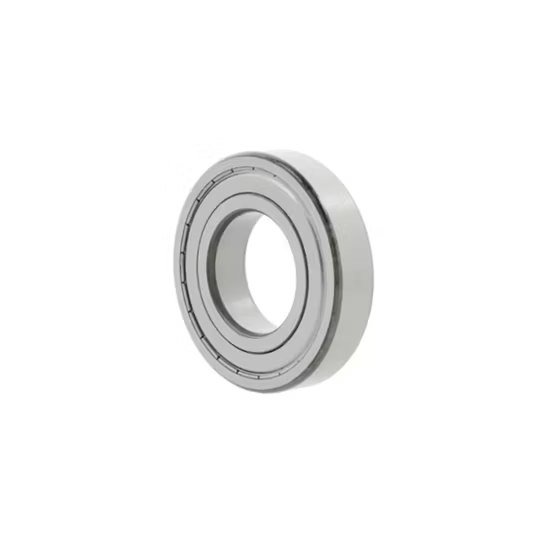
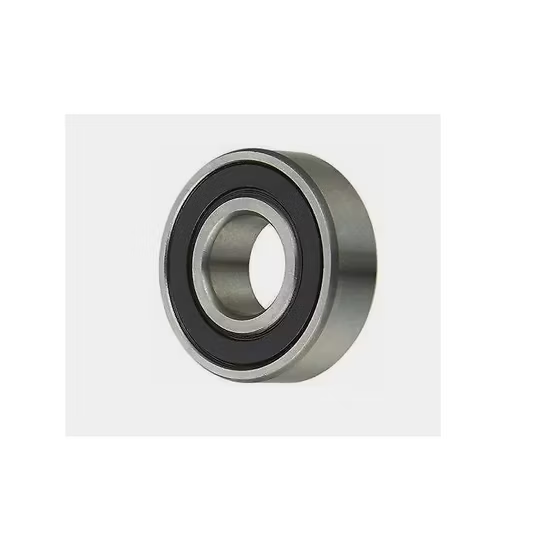
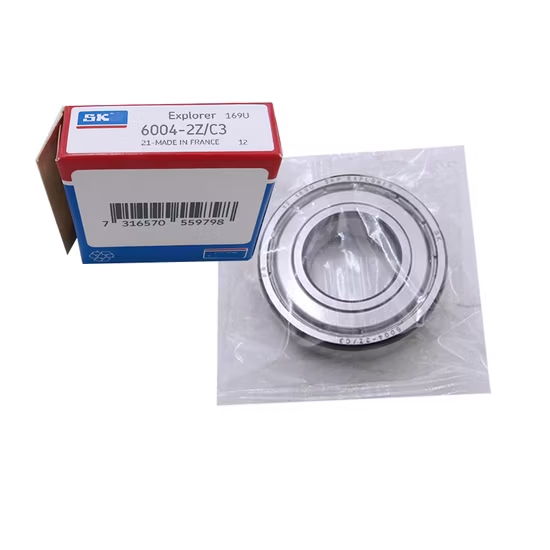
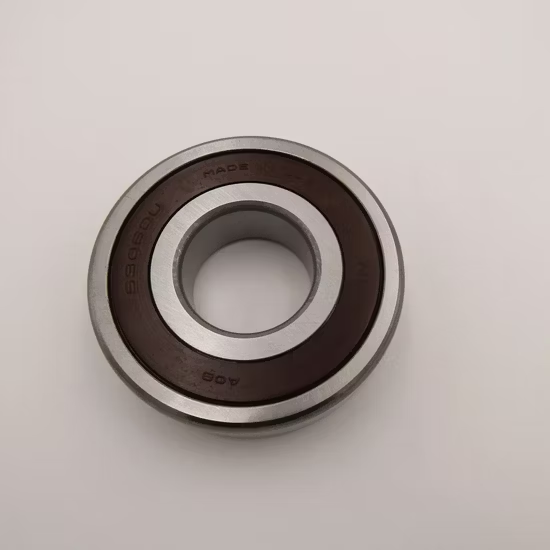
605 Zz Deep Groove Ball Bearing — manufactured from GCr15 bearing steel for reliable hardness and wear resistance in electric motors and general machinery.
Verified QR Authenticity — Scan the manufacturer's official app to confirm batch traceability and material origin for every 605 Zz unit before installation.
| Parameter | Value |
|---|---|
| Designation | 605 Zz |
| Bearing Type | Deep Groove Ball Bearing |
| Seal or Shield Type | Zz, 2RS, Open |
| Material | GCr15 bearing steel |
| Origin | Shanghai |
The 'Zz' suffix is an unverified designation commonly equivalent to double metal shielding; always confirm the exact shield configuration via the manufacturer catalog.
| Industry | Typical Applications |
|---|---|
| Electric Motors | Small rotor shafts, cooling fan assemblies, servo motor joints |
| Industrial Gearboxes | Low-speed auxiliary drive shafts, instrument gearing, actuator pivots |
| General Machinery | Conveyor guide rollers, light-duty pulley systems, textile spindles |
A standard clearance class will cause thermal binding in elevated temperature motor applications.
In compact electric motors, the tight housing tolerances and rapid heat generation demand careful internal clearance selection. Procurement teams often focus solely on the base number, ignoring the fact that installing a standard clearance bearing where thermal expansion requires a C3 class leads to rapid seizure. Cross-reference errors that match the basic geometry but overlook these critical internal gaps cause a significant share of premature failures in high-speed small machinery .
Selecting the correct shielding configuration for a 605 Zz deep groove ball bearing requires balancing friction and contamination defense. Metal shields provide excellent dust exclusion with minimal friction, making them ideal for high-speed instrument motors, while rubber contact seals offer superior moisture protection at the cost of higher operating temperatures. Our engineering review ensures the selected seal type aligns perfectly with your specific motor housing design and environmental exposure.
Compact motor housings restrict heat dissipation, causing internal bearing temperatures to rise rapidly during continuous operation. This thermal expansion reduces internal clearance, meaning a bearing that spins freely at room temperature may bind under load when hot. Proper grease selection and fill volume are critical; overfilling causes churning heat, while underfilling leads to cage wear .
The deep groove raceway geometry supports moderate radial and axial loads, but the shielding dictates its survival in dirty environments. Non-contact metal shields prevent large particulate ingress without adding rotational drag, preserving the high-speed capability required for small spindle applications. Conversely, contacting seals retain lubricant more effectively in wet conditions but generate friction heat. Verifying the exact clearance class ensures the internal gap accommodates the thermal growth of the GCr15 rings during operation.
Substituting a shielded bearing with an open or incorrectly sealed variant in a dusty gearbox leads to rapid raceway abrasion. According to ISO 281 life calculation frameworks, particulate contamination drastically reduces the fatigue life of the rolling elements. Unplanned downtime, catastrophic damage to the surrounding motor windings, and voided equipment warranties frequently stem from these minor suffix mismatches during the procurement phase .
Counterfeit bearings with soft inner rings fail to maintain dimensional stability under thermal stress, leading to unexpected shaft play. We supply genuine GCr15 components with verified metallurgical properties, ensuring the hardness meets specification. Our cross-referencing process checks not just the base number, but the exact shield and clearance suffixes, preventing the installation of standard clearance parts in high-heat applications. This rigorous verification eliminates the field failures caused by superficial part number matching.
To ensure accurate selection and L10 life verification, please provide your specific radial and axial load profiles, operating speeds, and ambient temperature ranges. Sharing the exact OEM equipment designation allows our team to perform a comprehensive cross-reference check, confirming that the shield type and internal clearance match the original design intent. This technical review prevents costly mismatches before the order is finalized.
Q: What is the practical difference between Zz and 2RS configurations for this bearing?
A: The Zz configuration typically utilizes non-contact metal shields, offering low friction for high-speed applications while blocking large dust particles. The 2RS variant uses contacting rubber seals, providing superior protection against moisture and fine contaminants but generating slightly more friction heat. Choosing between them depends on your specific environmental exposure and speed requirements.
Q: How can I verify the authenticity and material traceability upon delivery?
A: Every shipment includes batch traceability documentation and a Certificate of Conformity. You can verify authenticity by scanning the provided QR codes using the manufacturer's official mobile application. This confirms the exact production lot, material grade, and origin, ensuring you have received genuine components rather than visually similar counterfeits.
Q: Why is matching the exact clearance class critical during cross-referencing?
A: Base numbers often match while internal clearances differ. Installing a standard clearance bearing in an application requiring C3 for thermal expansion will cause the internal gap to close as the motor heats up, leading to thermal binding and rapid seizure. We verify the exact clearance suffix to ensure the bearing accommodates your specific operating temperatures.
Q: What are the lubrication rules for the shielded and sealed variants?
A: Both the metal-shielded and rubber-sealed variants are typically pre-lubricated for life and should not be relubricated in the field. Attempting to force grease past the shields or seals usually damages the retaining clips or seal lips, introducing contaminants and causing premature failure. Open variants require a strict external lubrication schedule based on your operating hours.
Our 5-step process ensures every order is engineered, validated, and supported for optimal performance.
Technical needs assessment
Custom specifications
Free samples for $50k+
Pre-shipment inspection
On-site & predictive
Our certified engineers respond within 24 hours with detailed technical specifications, pricing, and lead time information.


