01
Consultation
Technical needs assessment





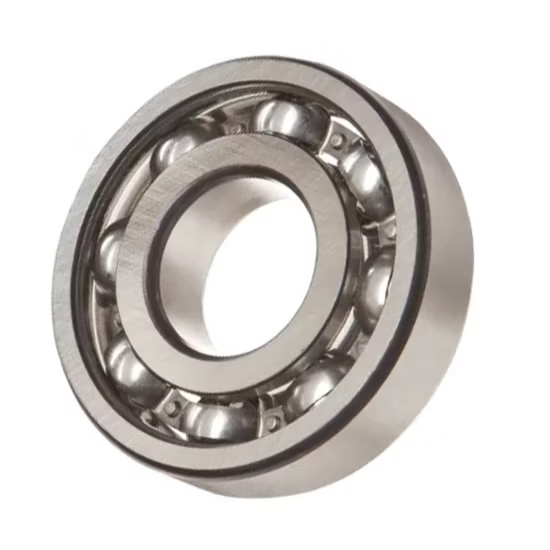
6203-2RS Deep Groove Ball Bearing — supplied with selectable noise and vibration grades ranging from Z1V1 to Z4V4 for precise electric motor and gearbox integration.
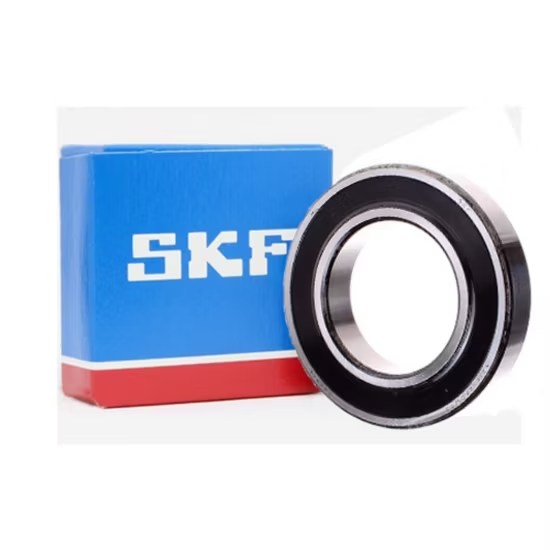
Unified multi-brand sourcing — Consolidate your SKF, FAG, and NSK requirements for this specific deep groove model into a single traceable shipment without juggling multiple vendors.
| Parameter | Value |
|---|---|
| Designation | 6203-2RS |
| Bearing Type | Deep Groove Ball Bearing |
| Seal or Shield Type | Open, Rubber Seals, Iron Seals |
| Noise and Vibration Level | Z1V1, Z2V2, Z3V3, Z4V4 |
| Origin | Germany, Japan, Sweden, Malaysia, China |
| HS Code | 848210 |
Note: The 2RS suffix generally denotes dual rubber contact seals, but exact manufacturer catalog confirmation is required to verify specific seal lip profiles and elastomer compounds.
| Industry | Typical Applications |
|---|---|
| Electric Motors | Rotor shaft support in fractional horsepower induction motors |
| Pumps | Impeller shaft alignment in centrifugal water circulation pumps |
| Conveyors | Idler roller journals in bulk material handling belt systems |
| Gearboxes | Low-speed output shaft support in helical gear reducers |
| Household Appliances | Drum rotation axis in front-loading washing machines |
The rubber compound formulation dictates thermal survival, not just the base designation.
Procurement teams often assume any unit carrying the correct numeric code will perform identically in high-temperature motor environments. In reality, inferior seal lip materials harden and leak grease rapidly when exposed to continuous thermal loads, leading to premature dry running. Sourcing a genuine 6203-2RS deep groove ball bearing requires verifying the exact elastomer specification to prevent catastrophic field failures .
Matching the sealing arrangement to the specific operating environment ensures long-term reliability. We review the application parameters to determine whether the rubber-sealed or iron-shielded variant of the 6203-2RS deep groove ball bearing provides the optimal balance between friction and contamination exclusion. This technical selection process prevents the common mistake of installing high-friction contact seals in high-speed applications where they would generate excessive heat.
Electric motors and gearboxes subject deep groove ball bearings to fluctuating temperatures that directly impact internal clearance and grease viscosity. When thermal expansion occurs, a standard clearance class might bind, whereas an appropriate expanded clearance accommodates the dimensional shifts. Furthermore, environments with fine particulate matter demand robust sealing solutions to prevent abrasive wear on the raceways, making the choice of seal lip material and contact pressure absolutely critical for maintaining operational integrity .
The Z1V1 through Z4V4 noise and vibration classifications indicate the strictness of the manufacturing tolerances and the dynamic balancing of the rotating components. For precision household appliances or quiet office equipment, specifying a higher grade like Z3V3 or Z4V4 ensures smooth, silent operation by minimizing structural resonance. Simultaneously, choosing between rubber seals and iron shields involves trading off absolute moisture protection for lower rotational friction, a decision that must align with the specific speed and ambient humidity of the target machinery.
Installing a standard clearance bearing in an application that demands thermal expansion room inevitably leads to excessive preload and rapid cage degradation. This misalignment causes unplanned downtime and catastrophic damage to the surrounding motor housing or pump casing. Adhering to the failure analysis frameworks outlined in international standards helps identify these root causes early, avoiding the severe financial impact of repeated warranty claims and halted production lines .
Our distribution network covers all major international brands, allowing you to fulfill mixed-brand requirements for this deep groove model in a single order. We actively intercept counterfeit units featuring soft inner rings and cloned packaging by conducting rigorous cross-reference checks that verify the seal type and internal geometry, not just the base number. Every batch is backed by manufacturer traceability, ensuring the rubber compounds and dimensional tolerances meet the exact specifications required for your equipment.
Share your specific radial and axial load profiles, operating speeds, and ambient temperature ranges so our engineering team can validate the optimal clearance class and vibration grade. If you are replacing existing components, providing the original equipment manufacturer part numbers allows us to perform a comprehensive cross-reference check. This ensures the replacement unit matches the exact internal design and sealing configuration required by your machinery.
Q: How can we verify the authenticity of the received units?
A: You can scan the QR codes on the packaging using the official mobile applications provided by the respective bearing manufacturers. We also supply complete batch traceability documentation and Certificates of Conformity that link the physical products directly to the factory's original production records, ensuring absolute transparency and preventing the installation of counterfeit components.
Q: When should we choose rubber seals over iron shields?
A: Rubber seals provide superior protection against moisture and fine dust ingress, making them ideal for harsh or humid environments. However, they generate slightly more friction than non-contact iron shields. We recommend iron shields for high-speed applications where minimizing rotational torque and heat generation is more critical than achieving a complete environmental seal.
Q: What do the Z1V1 to Z4V4 designations actually mean?
A: These codes represent the strictness of the manufacturing tolerances regarding noise and vibration levels. Z1V1 is standard for general industrial use, while Z4V4 indicates ultra-precision balancing and surface finishing. Higher grades are essential for applications like electric motors in household appliances or medical equipment where operational silence and minimal vibration are strictly required.
Q: How do you handle cross-referencing between different brands?
A: We do not simply match the base numeric designation. Our technical team verifies that the internal clearance, cage material, and specific seal lip designs of the alternative brand perfectly align with your original equipment requirements. This comprehensive review prevents the installation of functionally incompatible units that could lead to thermal binding or premature failure in the field.
Q: Can these sealed bearings be re-lubricated in the field?
A: No, units equipped with contact rubber seals or non-contact iron shields are designed as maintenance-free, life-lubricated components. The factory-filled grease volume is precisely calculated for the internal free space. Attempting to force additional grease into the cavity will over-pressurize the seals, causing them to rupture or pop out, which immediately compromises the bearing's contamination protection.
Our 5-step process ensures every order is engineered, validated, and supported for optimal performance.
Technical needs assessment
Custom specifications
Free samples for $50k+
Pre-shipment inspection
On-site & predictive
Our certified engineers respond within 24 hours with detailed technical specifications, pricing, and lead time information.