01
Consultation
Technical needs assessment

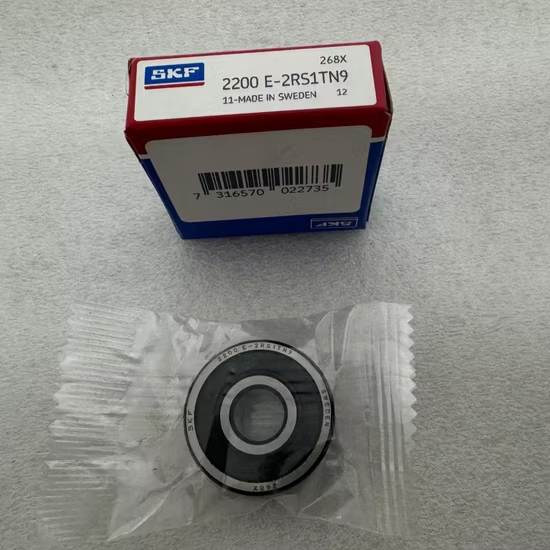

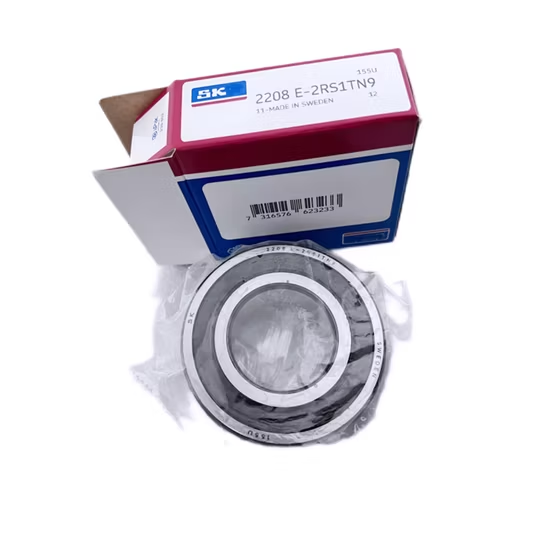
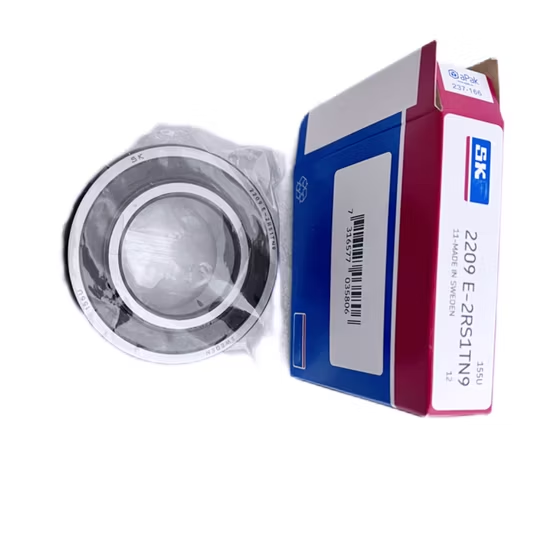
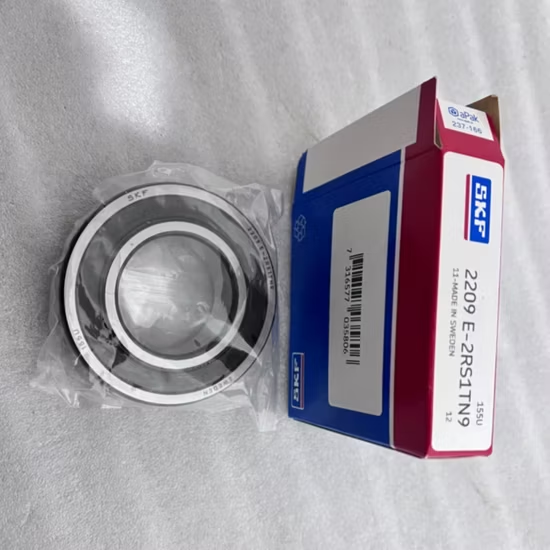
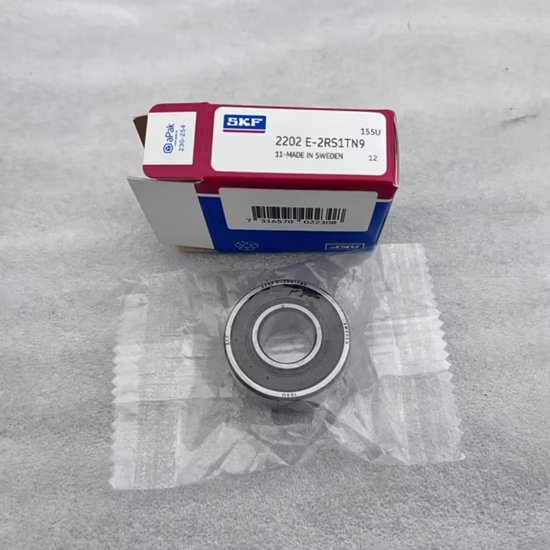
2200/E/2RS1TN9 Stainless Steel Self-Aligning Ball Bearing featuring enhanced internal design for optimized load distribution.
Verified via official apps — Every 2200/E/2RS1TN9 stainless steel self-aligning ball bearing ships with scannable QR codes linked directly to the manufacturer's authentication database for immediate field verification.
| Parameter | Value |
|---|---|
| Designation | 2200/E/2RS1TN9 |
| Bearing Type | Self-Aligning Ball Bearing |
| Material | Stainless steel variants available |
| Internal Design | Enhanced (E) |
| Cage Material | Glass fiber reinforced polyamide (TN9) |
| Seal or Shield Type | Double-sided contact rubber seals (2RS1) |
| Customization | Available |
| Industry | Typical Applications |
|---|---|
| Compact Automation | Robotic arm joints and miniature actuator pivots |
| Material Handling | Low-profile conveyor guide rollers and sorting diverters |
| Textile Machinery | Yarn tensioning pulleys and high-speed spindle guides |
When sourcing a 2200/E/2RS1TN9 stainless steel self-aligning ball bearing, ignoring the exact suffix combination leads to rapid thermal binding in tight spaces.
Precision suffix matching prevents catastrophic cage failure in confined automation assemblies.
Procurement teams often approve replacements based solely on the base 2200 designation, overlooking critical internal variations. In compact automation systems where heat dissipation is severely restricted, installing a standard steel-caged alternative instead of the specified polyamide variant causes friction to spike. The resulting thermal expansion eliminates internal clearance, locking the shaft and halting the entire production line .
Miniature actuators demand components that tolerate slight housing deflections without generating excess friction. The 2200/E/2RS1TN9 stainless steel self-aligning ball bearing accommodates these angular errors natively, protecting adjacent delicate sensors from vibrational transfer while maintaining smooth articulation in restricted envelopes.
Confined automation enclosures trap heat and restrict airflow, making friction management critical for continuous operation. Radial loads fluctuate as robotic arms articulate, requiring a cage design that minimizes inertial resistance at varying speeds. Furthermore, textile and material handling environments introduce microscopic particulate matter that easily penetrates standard shields. Contact seals are mandatory to block debris, yet they must be engineered to limit frictional heat generation to prevent the lubricant from degrading prematurely .
The enhanced internal design maximizes load distribution across the rolling elements, extending fatigue life under dynamic articulation. Double-sided contact rubber seals retain factory-applied lubrication while physically blocking abrasive dust from entering the raceway. Crucially, the glass fiber reinforced polyamide cage operates with significantly lower friction than pressed steel alternatives, making it ideal for high-speed, low-torque applications where heat buildup must be strictly minimized.
Substituting a standard open bearing for a sealed variant in a dusty conveyor environment guarantees premature failure due to raceway scoring. Relying on a basic cross-reference that ignores the polyamide cage specification often results in metal-to-metal contact noise and accelerated wear. These oversights trigger unplanned downtime, void equipment warranties, and cause catastrophic damage to precision machined housings .
We verify that the cross-reference alignment covers the exact E, 2RS1, and TN9 suffixes, preventing the common error of supplying a base 2200 with incorrect internal clearance. Our inventory provides authorized coverage across all major brands, allowing mixed-brand requirements to be fulfilled in a single shipment. We supply full batch traceability to the manufacturer, ensuring every component is genuine and verifiable. Our application-based selection review evaluates your specific speed and temperature parameters to confirm the polyamide cage is the optimal choice. Finally, we provide complete documentation packages to satisfy stringent quality audits.
Share your specific radial and axial load profiles, operating speeds, and ambient temperature ranges so our engineering team can verify the L10 life calculation for this exact configuration. Providing the OEM equipment number allows us to perform a comprehensive cross-reference check, ensuring the internal design and seal type perfectly match the original equipment requirements.
Q: How do I verify the authenticity of the 2200/E/2RS1TN9 bearing using official apps?
A: Scan the QR code printed on the product packaging using the manufacturer's official mobile application. This instantly retrieves the original production batch data, confirming the exact suffix configuration and material specifications match the physical component, effectively ruling out cloned counterfeit products.
Q: Why must the TN9 cage and 2RS1 seal suffixes be strictly matched during interchange?
A: The TN9 polyamide cage minimizes friction and heat generation in compact spaces, while the 2RS1 seals retain lubrication. Substituting a steel cage or open design alters the thermal profile and contamination resistance, leading to rapid thermal binding or raceway scoring in confined automation assemblies.
Q: What are the mounting tolerances for self-aligning ball bearings in automation systems?
A: While the outer ring can accommodate minor angular misalignments between the shaft and housing, the shaft seat must still be machined to precise tolerances. Excessive shaft deflection or out-of-square housing shoulders will force the contact seals to rub unevenly, generating excess heat and accelerating wear.
Q: How does the stainless steel material affect the dynamic load rating?
A: Stainless steel variants generally exhibit a slightly lower dynamic load rating compared to standard high-carbon chromium bearing steel due to differences in material hardness and fatigue limits. Engineers must account for this reduction when calculating the expected L10 life for heavily loaded applications.
Q: What are the recommended lubrication intervals for 2RS1 sealed bearings?
A: Bearings equipped with 2RS1 contact seals are typically lubricated for life and should not be relubricated in the field. Attempting to force new grease past the contact seals can damage the sealing lips or overfill the internal cavity, causing churning and excessive heat buildup during high-speed operation.
Our 5-step process ensures every order is engineered, validated, and supported for optimal performance.
Technical needs assessment
Custom specifications
Free samples for $50k+
Pre-shipment inspection
On-site & predictive
Our certified engineers respond within 24 hours with detailed technical specifications, pricing, and lead time information.