01
Consultation
Technical needs assessment

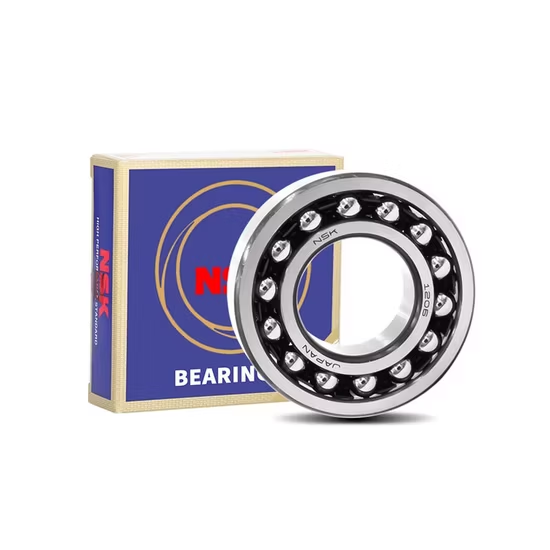
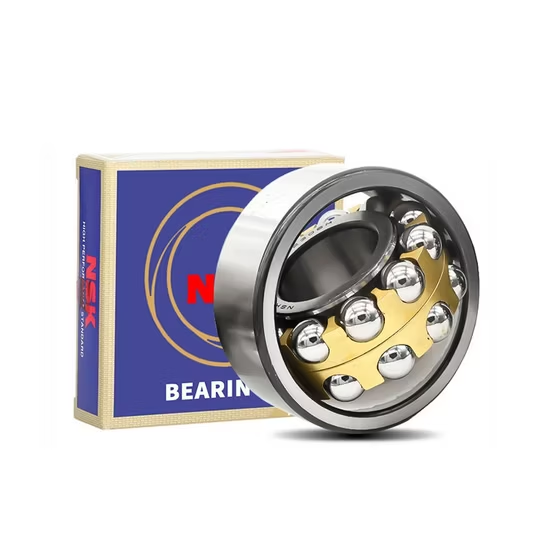
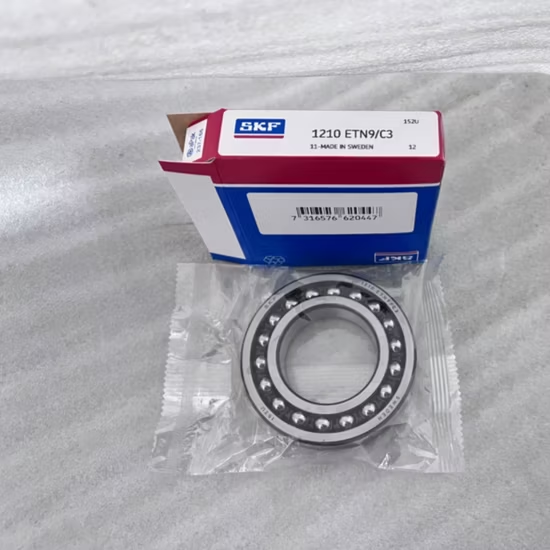

1018 1096 1035 1026 1027 1028 1029 1200 1201 1202 Self-Aligning Ball Bearings — available in open, rubber, and iron seal configurations to match specific contamination and lubrication requirements.
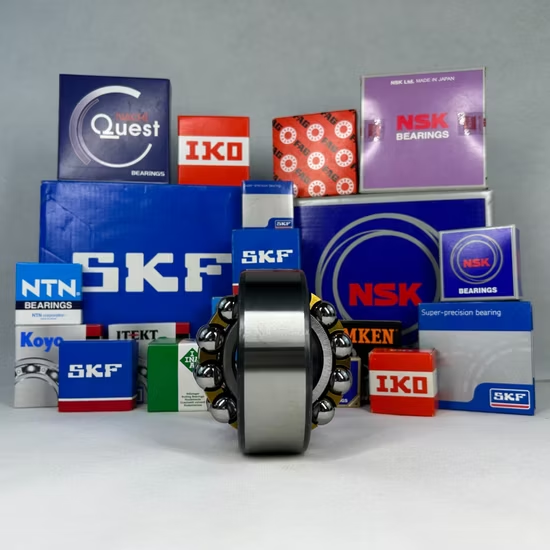
Multi-Origin Sourcing — We consolidate genuine 1018 1096 1035 1026 1027 1028 1029 1200 1201 1202 units from authorized facilities across Germany, Japan, Sweden, Malaysia, and China into single traceable shipments.
| Parameter | Value |
|---|---|
| Designation | 1018 1096 1035 1026 1027 1028 1029 1200 1201 1202 |
| Bearing Type | Self-Aligning Ball Bearing |
| Product Type | Miniature Self Aligning Ball Bearing |
| Seal or Shield Type | Open, Rubber Seals, Iron Seals |
| Origin | Germany / Japan / Sweden / Malaysia / China |
| HS Code | 848210 |
| Feature | Low Noise, High Speed |
| Customization | OEM specific sealing and clearance options available |
| Industry | Typical Applications |
|---|---|
| Electric Motors | Cooling fan shafts and small rotor supports requiring misalignment compensation |
| Textile Machines | High-speed yarn guide rollers and tensioning pulley assemblies |
| Household Appliances | Washing machine drum supports and quiet HVAC blower motor shafts |
| Pumps & Conveyors | Small fluid transfer impeller shafts and light-duty belt tracker idlers |
Matching the base number is only the first step; ignoring internal geometry variations leads to rapid thermal seizure.
Procurement engineers often assume that ordering a standard miniature self aligning ball bearing 1018 1200 series designation guarantees a direct drop-in replacement. In reality, cross-reference errors frequently occur when the base number aligns but the internal clearance or seal type differs from the original equipment requirement. I have seen countless micro-motors fail prematurely because a standard clearance unit was installed in an application that generated significant heat, causing the internal components to bind. When sourcing these compact components, verifying the exact operational context is just as critical as matching the outer dimensions .
Selecting the correct miniature self aligning ball bearing 1018 1200 series configuration requires a deep understanding of the specific shaft deflection and housing tolerances present in your machinery. Our technical team reviews your application parameters to ensure the spherical outer ring raceway provides adequate compensation for the expected angular misalignment. By evaluating the exact load profile and rotational speed, we prevent the common pitfall of over-specifying or under-specifying the bearing capacity for delicate instrument and motor applications.
Small-scale rotating equipment often operates in confined spaces where heat dissipation is poor and environmental sealing is difficult to maintain. The friction generated by inappropriate seal selection can rapidly elevate internal temperatures, degrading the lubricant and accelerating wear. In dusty textile environments or humid pump applications, the choice between open, rubber-sealed, or iron-shielded variants dictates the service life. Proper lubrication intervals and selecting the correct shield type are essential to prevent particulate ingress without introducing excessive drag on high-speed micro-shfts .
The 1018 1096 1035 1026 1027 1028 1029 1200 1201 1202 designations represent a comprehensive range of miniature and standard self-aligning architectures. The fundamental design features a double-row inner ring raceway and a spherical outer ring raceway, granting the bearing its self-aligning capability to absorb static and dynamic shaft misalignments. The optimized internal geometry and specialized cage designs are engineered specifically for low noise and high-speed operation, making them ideal for precision household appliances and quiet electric motors. Because these base designations do not carry explicit suffixes in their standard catalog form, confirming the exact internal clearance and sealing configuration with the supplier is mandatory to avoid field failures.
Installing a bearing with the wrong internal clearance or inadequate sealing in a high-speed micro-motor results in catastrophic thermal binding and unplanned downtime. The resulting shaft damage often extends far beyond the bearing itself, ruining adjacent housings and voiding equipment warranties. According to industry failure analysis frameworks, a significant share of premature failures in small rotating equipment stems directly from specification mismatches rather than manufacturing defects .
We maintain authorized distribution channels across all major international brands, allowing you to consolidate mixed-brand requirements for the 1018 1096 1035 1026 1027 1028 1029 1200 1201 1202 series into a single order. Our cross-brand interchange process strictly aligns internal clearance and seal types, not just the base designation, preventing the thermal binding issues common in generic replacements. Every batch is fully traceable to the manufacturer, and we provide application-based selection reviews to ensure the chosen variant handles your specific speed and temperature conditions.
To ensure optimal performance, please provide your specific radial and axial load profiles, operating speeds, and expected temperature ranges for our L10 life calculations. Sharing the original equipment manufacturer part numbers allows our engineering team to perform a precise cross-reference check, verifying that the internal geometry and sealing arrangements perfectly match your machinery's demands.
Q: How do rubber seals and iron shields differ for these miniature bearings?
A: Rubber seals provide superior protection against dust and moisture ingress, making them ideal for harsh environments, but they generate slightly higher friction. Iron shields offer a non-contact barrier that maintains lower friction and higher speed capabilities, which is critical for the low-noise requirements of precision electric motors and household appliances.
Q: Why is cross-referencing base numbers insufficient for the 1018 1200 series?
A: Matching the base designation only confirms the physical dimensions. It overlooks critical internal variations such as clearance class and cage material. Installing a standard clearance unit in a high-temperature motor application will cause thermal expansion to eliminate internal play, leading to rapid overheating and catastrophic seizure of the miniature shaft.
Q: What is the difference between the 10xx and 12xx series in this range?
A: The 10xx series generally features a narrower cross-section and lighter load capacity, optimized for extremely compact, high-speed instrument applications. The 12xx series offers a slightly wider profile with enhanced radial load capacity, making it better suited for small industrial gearboxes and textile machinery where shaft deflection and misalignment are more pronounced.
Q: How can I verify the authenticity of the supplied bearings?
A: We provide full batch traceability and a Certificate of Conformity for every shipment. You can verify the authenticity by scanning the QR codes on the packaging using the official mobile applications provided by the respective bearing manufacturers, which effectively exposes counterfeit products featuring cloned labels and substandard metallurgy.
Our 5-step process ensures every order is engineered, validated, and supported for optimal performance.
Technical needs assessment
Custom specifications
Free samples for $50k+
Pre-shipment inspection
On-site & predictive
Our certified engineers respond within 24 hours with detailed technical specifications, pricing, and lead time information.


