01
Consultation
Technical needs assessment

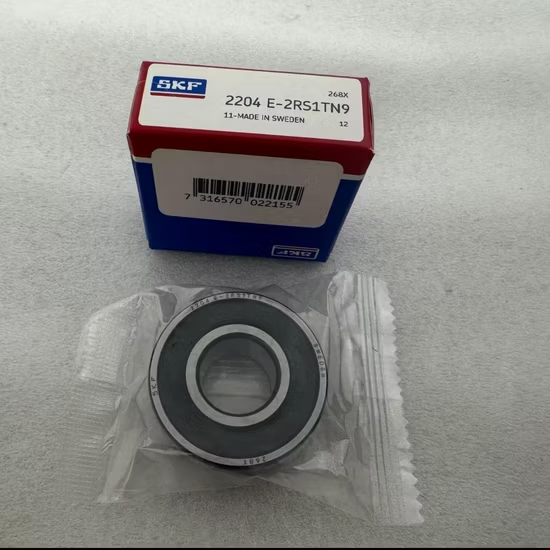
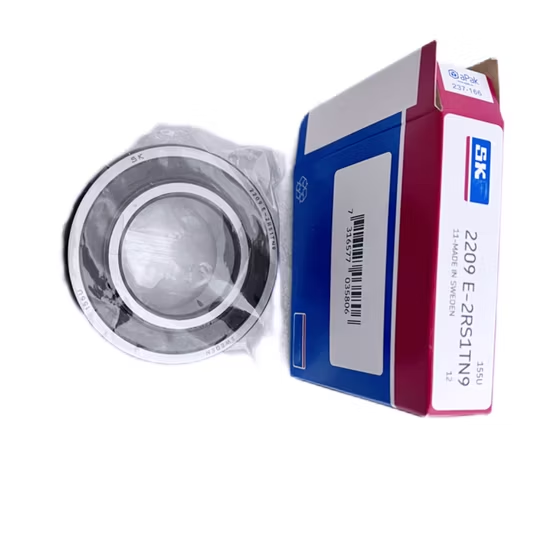

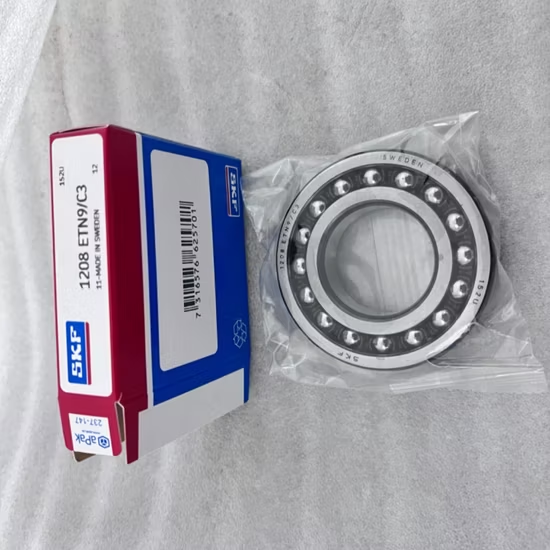
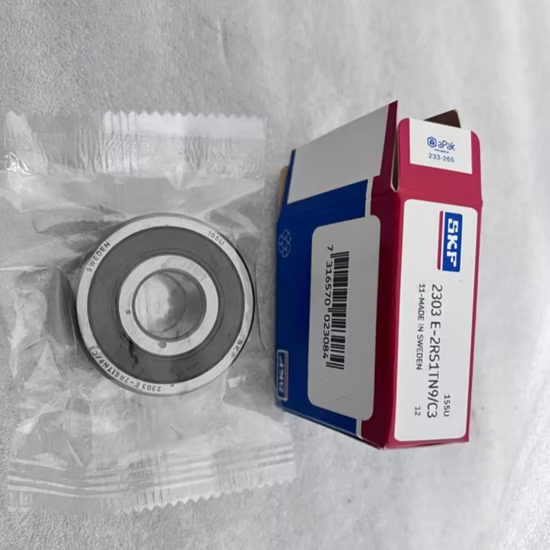
SKF 2204/E/2RS1TN9 Self-Aligning Ball Bearing 20×47×18 mm — optimized internal design improves load distribution for processing machinery.
Precision Cross-Reference Alignment — Matching the base number is merely the starting point; true interchangeability demands exact alignment of internal geometry, cage material, and seal configurations to prevent field failures.
| Parameter | Value |
|---|---|
| Designation | 2204/E/2RS1TN9 |
| Bearing Type | Self-Aligning Ball Bearing |
| Bore Diameter (d) | 20 mm |
| Outside Diameter (D) | 47 mm |
| Width (B) | 18 mm |
| Dynamic Load Rating (C) | 12.7 kN |
| Static Load Rating (C₀) | 3.4 kN |
| Limiting Speed | 10000 r/min |
| Cage Material | Glass fibre reinforced polyamide |
| Seal Type | Contact seal on both sides |
| Number of Rows | 2 |
| Material Options | Available in standard bearing steel or stainless steel variants |
| Origin | Manufacturer's global production facilities |
| Industry | Typical Applications |
|---|---|
| Small Processing Machinery | Conveyor guide rollers, mixing agitator shafts |
| Electric Motors | Cooling fan assemblies, small rotor supports |
| Agricultural Machinery | Seed metering drives, light tillage pivot joints |
| Material Handling | Light-duty belt tensioners, sorting transfer nodes |
Base numbers match, but ignoring suffix details guarantees premature failure in misaligned shafts.
In the Pearl River Delta distribution network, I have repeatedly seen small processing machinery grind to a halt because a standard carbon steel variant was substituted where a specific sealed design was required. The humid environment rapidly corroded the exposed races, seizing the shaft. When sourcing a 2204/E/2RS1TN9 self-aligning ball bearing, assuming interchangeability based solely on the 2204 prefix ignores the optimized internal geometry and specific polyamide cage requirements . This oversight leads to thermal binding and cage disintegration under continuous operation.
Selecting the correct variant requires looking beyond the basic dimensions. Our technical review process ensures that the specific 2204/E/2RS1TN9 self-aligning ball bearing you receive matches your exact operational demands. We verify the cross-reference against your OEM equipment number, confirming that the internal design and sealing arrangement can handle your specific misalignment and contamination levels.
Self-aligning ball bearings are engineered to accommodate static and dynamic shaft misalignment, but this capability is compromised if the wrong seal or cage is installed. In applications like agricultural pivots or small gearboxes, dust and moisture ingress rapidly degrade standard open bearings. The integral contact seals prevent contaminant entry, while the polyamide cage maintains low friction at higher speeds. However, if the operating environment involves severe chemical exposure or continuous washdowns, evaluating stainless steel variants becomes critical to avoid rapid raceway degradation .
The suffix string on this designation dictates its actual field performance. The E suffix indicates an optimized internal design, maximizing the load-carrying capacity and improving the stress distribution across the rolling elements. The 2RS1 designation confirms the presence of integral contact seals on both sides, which retain the factory lubricant and block external debris, though this introduces a slight friction penalty compared to open variants. Finally, the TN9 suffix specifies a glass fibre reinforced polyamide cage. This material is crucial for maintaining dimensional stability and reducing vibration at the 10000 r/min limiting speed, outperforming standard pressed steel cages in high-speed, low-load scenarios.
Substituting a bearing with a matching base number but incorrect internal clearance or cage material inevitably leads to unplanned downtime. If a standard clearance is forced into an application requiring thermal expansion room, the internal preload spikes as the shaft heats up, causing catastrophic cage failure. According to ISO 281 standards, such deviations drastically reduce the calculated L10 life . Furthermore, using an unsealed bearing in a dusty environment voids equipment warranties and accelerates abrasive wear on the shaft journals.
Our distribution model eliminates the guesswork from mixed-brand orders. We provide authorized coverage that ensures every 2204/E/2RS1TN9 self-aligning ball bearing is sourced directly from the manufacturer's production facilities. Our cross-reference protocol strictly checks the TN9 cage specification, as substituting a brass or steel cage alters the high-speed vibration profile. We also verify the 2RS1 seal lip design to ensure it matches the original equipment manufacturer's friction and exclusion requirements, preventing the common field error of installing non-contact shields in high-contamination zones.
To ensure precise application matching, provide your radial and axial load profiles, operating speeds, and ambient temperature ranges. Sharing the specific OEM equipment number or existing housing dimensions allows our engineering team to perform a comprehensive cross-reference review. This data enables us to confirm if the standard bearing steel variant is sufficient or if a stainless steel alternative is required for your specific environmental conditions.
Q: How do I verify the authenticity of the 2204/E/2RS1TN9 bearing using official apps?
A: Scan the QR code printed on the product packaging using the manufacturer's official mobile application. This digital verification confirms the batch origin and validates the specific E, 2RS1, and TN9 suffix configuration, ensuring the component is not a counterfeit with cloned packaging or soft inner rings.
Q: Why must the TN9 cage material be strictly matched during cross-referencing?
A: The TN9 glass fibre reinforced polyamide cage is engineered for high-speed stability and low friction. Substituting it with a standard pressed steel or brass cage alters the vibration characteristics and weight distribution, potentially causing thermal binding or premature fatigue when operating near the 10000 r/min limiting speed.
Q: What are the operational temperature limits for the TN9 polyamide cage?
A: Polyamide cages operate effectively within standard ambient ranges but lose structural integrity at elevated temperatures. If your application involves continuous heat generation or external thermal sources exceeding standard limits, we must evaluate alternative cage materials or specialized high-temperature variants to prevent cage collapse.
Q: How do I resolve material discrepancies if my equipment requires stainless steel?
A: The standard 2204E designation without specific material suffixes indicates standard bearing steel. If your environment demands corrosion resistance, provide your exact washdown or chemical exposure parameters. We will cross-reference and source the appropriate stainless steel variant that maintains the required self-aligning geometry and seal configuration.
Q: What are the recommended mounting practices for the 2RS1 contact seals?
A: When press-fitting the 20 mm bore onto the shaft, apply force exclusively to the inner ring. Never transmit mounting force through the 2RS1 seals or the outer ring, as this will permanently deform the contact lips, causing immediate lubricant leakage and contaminant ingress upon startup.
Our 5-step process ensures every order is engineered, validated, and supported for optimal performance.
Technical needs assessment
Custom specifications
Free samples for $50k+
Pre-shipment inspection
On-site & predictive
Our certified engineers respond within 24 hours with detailed technical specifications, pricing, and lead time information.