01
Consultation
Technical needs assessment



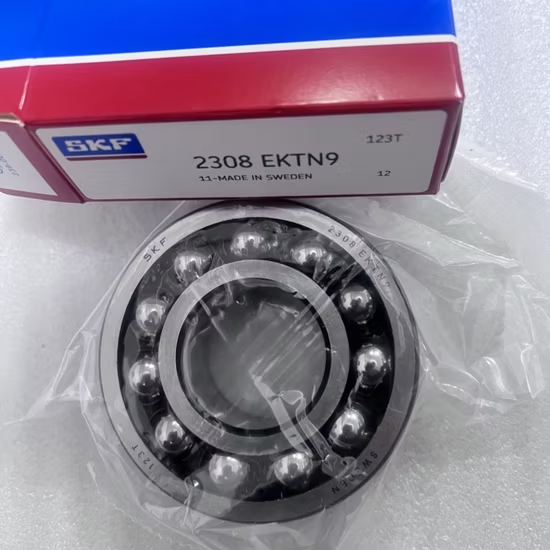


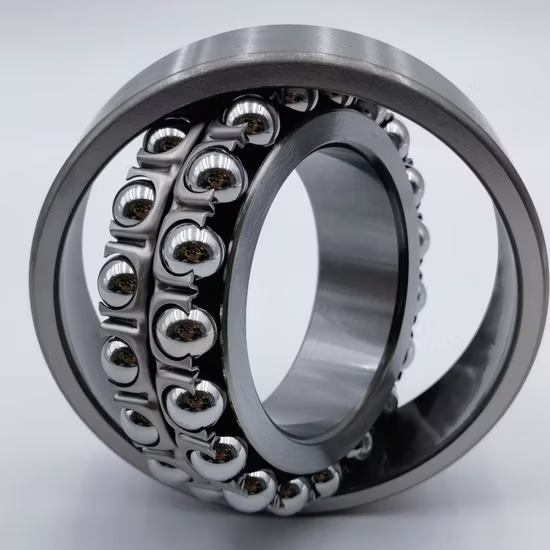
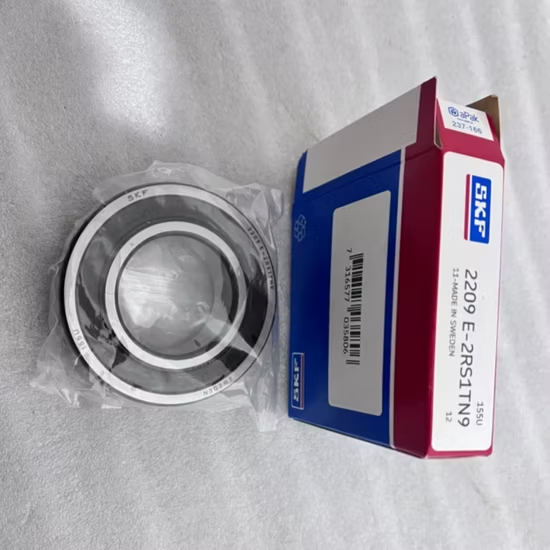
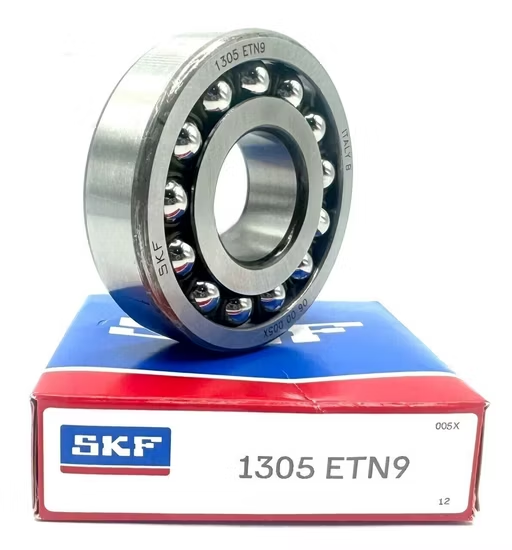
1217 K C3 Self-Aligning Ball Bearing — featuring a 1:12 tapered bore and C3 radial internal clearance.
Authorized Multi-Brand Coverage — Source your 1217 K C3 self-aligning ball bearing alongside mixed SKF, FAG, or NSK requirements in a single consolidated shipment.
| Parameter | Value |
|---|---|
| Designation | 1217 K C3 |
| Bearing Type | Self-Aligning Ball Bearing |
| Bore Type | 1:12 Tapered Bore |
| Clearance Class | C3 (Greater than Normal) |
| Material Options | Available in standard bearing steel or stainless steel variants |
| Bearing Style Options | Open, Rubber Seals, Iron Seals |
| Feature Options | Low Noise, High Speed, Long Service Life |
| Origin | Germany / Japan / Sweden / Malaysia / China |
| HS Code | 848210 |
| Industry | Typical Applications |
|---|---|
| General Machinery | Conveyor belt pulleys with minor shaft deflection |
| Electric Motors | Cooling fan assemblies experiencing thermal shaft growth |
| Material Handling | Vibrating screen eccentric shafts with angular misalignment |
A standard CN clearance will thermally bind and seize under continuous operational heat.
Cross-referencing only the base number while overlooking the C3 radial internal clearance is a frequent cause of catastrophic field failures. I have seen batches of these bearings incorrectly shipped with normal clearance, leading to inner ring expansion and immediate shaft lockup at elevated temperatures. Ensuring the correct thermal expansion allowance prevents these unplanned downtimes and protects the surrounding machinery .
The 1217 K C3 self-aligning ball bearing automatically compensates for angular misalignment between the shaft and housing, which is common in general machinery frames subjected to dynamic loads. By utilizing the 1:12 tapered bore, maintenance teams can easily adjust the internal clearance during mounting with an adapter sleeve. This precise fitment capability ensures reliable operation across various material handling and electric motor applications.
Continuous operation in general machinery generates significant frictional heat, demanding a C3 clearance to accommodate thermal expansion without compromising the rolling elements. Environments like material handling introduce heavy particulate contamination, making the choice between open, rubber-sealed, or iron-shielded variants critical for balancing friction and protection. Proper adapter sleeve tightening is equally vital, as insufficient drive-up distance leaves the tapered bore loose, causing fretting corrosion on the shaft surface .
The K suffix denotes a 1:12 tapered bore, requiring an adapter sleeve for secure shaft locking and precise internal clearance adjustment during installation. The C3 designation provides greater than normal radial internal clearance, specifically engineered to prevent thermal binding when the inner ring expands under operational heat. This self-aligning architecture features two rows of balls with a common sphered raceway in the outer ring, allowing the inner ring to tilt freely. Depending on the specific contamination level of your facility, this model is available in open, rubber-sealed, or iron-shielded configurations to optimize the balance between friction and particle ingress protection.
Substituting a standard clearance bearing where a C3 is required inevitably leads to thermal seizure, resulting in catastrophic damage to the shaft and housing. Failing to verify the material declaration can introduce carbon steel components into corrosive environments, causing rapid raceway degradation and premature failure. These missteps void equipment warranties and trigger extensive unplanned downtime that far exceeds the initial component savings. Adhering strictly to ISO 281 life calculations requires exact alignment of clearance, bore type, and material properties with the actual operating conditions .
We verify every suffix combination, ensuring your 1217 K C3 self-aligning ball bearing actually carries the C3 clearance rather than a visually identical CN standard variant. Our cross-brand interchange reviews match the exact internal geometry and cage design, preventing the thermal binding caused by superficial base-number substitutions. We provide full batch traceability to the manufacturer, allowing your quality team to verify authenticity directly through official brand applications. Furthermore, our application-based selection review evaluates your specific load, speed, and temperature parameters to confirm the tapered bore and clearance class are perfectly suited for your machinery.
Share your specific radial and axial load profiles, operational speeds, and ambient temperature ranges so our engineering team can validate the C3 clearance and L10 life calculations. Provide the exact OEM equipment number or cross-reference designations to ensure the tapered bore and adapter sleeve dimensions align perfectly with your existing shaft geometry. Detailing the environmental exposure helps us recommend the most appropriate sealing or shielding configuration for your application.
Q: Why must the K tapered bore and C3 clearance suffixes be matched simultaneously during cross-referencing?
A: Matching only the base 1217 number ignores critical internal geometry. The K suffix dictates the 1:12 tapered bore required for adapter sleeve mounting, while C3 ensures sufficient thermal expansion room. Missing either suffix results in improper shaft fitment or thermal seizure under operational heat, leading to rapid field failure.
Q: How does C3 clearance differ from standard CN in general machinery applications?
A: Standard CN clearance is suited for normal operating temperatures. In continuous machinery operation, frictional heat causes the inner ring to expand. The C3 clearance provides a larger internal gap to accommodate this thermal growth, preventing the rolling elements from binding and seizing against the raceways.
Q: What is the correct procedure for mounting the 1217 K with an adapter sleeve?
A: The bearing is driven onto the adapter sleeve until the correct residual internal clearance is achieved. This is typically measured using a feeler gauge or by calculating the locknut tightening angle. Over-tightening eliminates the C3 clearance, while under-tightening causes shaft fretting.
Q: How can I verify the authenticity of the supplied bearings?
A: Every shipment includes batch traceability documentation and a Certificate of Conformity. You can scan the manufacturer's QR code using their official mobile application to instantly verify the production lot, origin, and technical specifications against the physical product.
Q: How do I prevent material misrepresentation when ordering stainless steel variants?
A: Always request a material test report with your shipment. This document details the exact chemical composition, confirming the use of proper martensitic stainless grades rather than cheaper carbon steel alternatives that would rapidly corrode in washdown or humid environments.
Our 5-step process ensures every order is engineered, validated, and supported for optimal performance.
Technical needs assessment
Custom specifications
Free samples for $50k+
Pre-shipment inspection
On-site & predictive
Our certified engineers respond within 24 hours with detailed technical specifications, pricing, and lead time information.