01
Consultation
Technical needs assessment


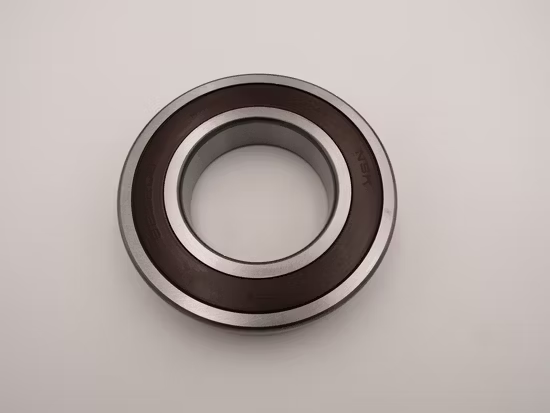
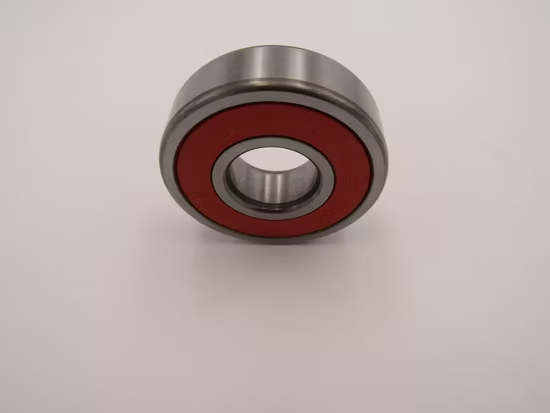
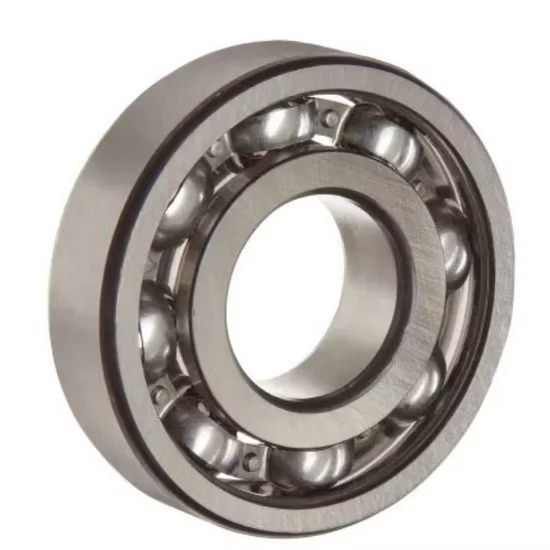
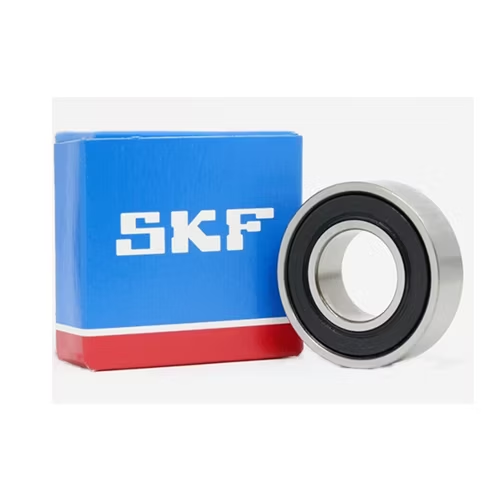
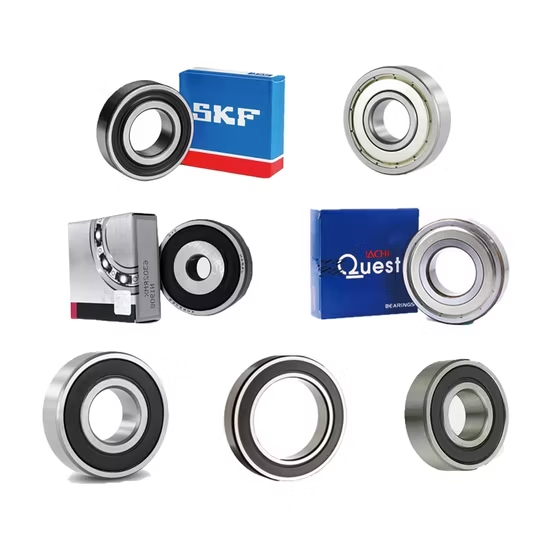
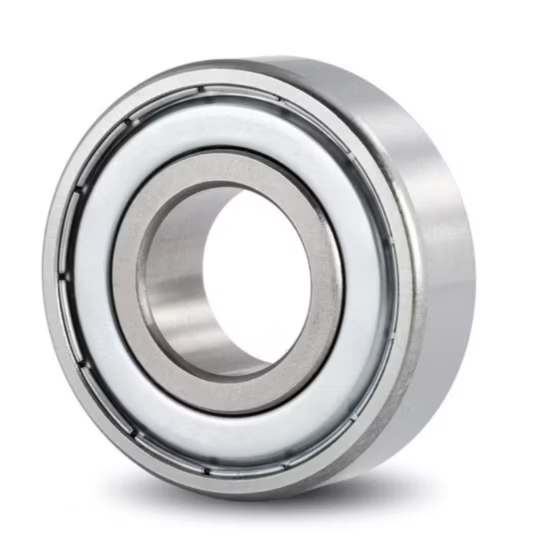
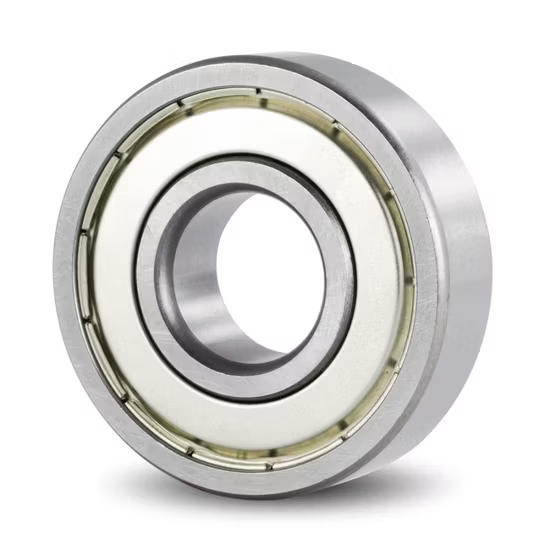
6310 Deep Groove Ball Bearing
Unified Multi-Brand Sourcing — One consolidated order covers mixed-brand requirements for this 6310 deep groove ball bearing without juggling multiple suppliers.
| Parameter | Value |
|---|---|
| Designation | 6310 |
| Product Type | Deep Groove Ball Bearing |
| Bearing Style Options | Open, Rubber Seals, Iron Seals |
| Quality Levels | Z1V1, Z2V2, Z3V3, Z4V4 |
| Feature | Low Noise, High Speed |
| HS Code | 848210 |
| Origin Options | Germany, Japan, Sweden, Malaysia, China |
| Industry | Typical Applications |
|---|---|
| Electric Motors | Continuous duty rotor shafts requiring low-noise operation |
| Industrial Gearboxes | High-speed input shafts and intermediate gear stages |
| Pumps & Conveyors | Centrifugal pump impeller shafts and conveyor drive rollers |
| General MRO | Standard replacement for miscellaneous rotating machinery |
A base number match is meaningless if the internal clearance and sealing configuration contradict the actual thermal and environmental demands of the equipment.
I have seen this exact scenario play out on the shop floor in Ningbo. A motor assembly line blindly installed standard clearance units where thermal expansion demanded larger internal gaps. The result was rapid thermal binding, cage deformation, and total motor burnout within hours of startup . Procurement teams often focus solely on the basic 6310 deep groove ball bearing designation, ignoring that the Z-level noise grading and specific seal friction characteristics dictate whether the unit survives continuous high-speed duty or fails prematurely.
Selecting the correct variant goes far beyond the basic dimensions. When sourcing a 6310 deep groove ball bearing for precision electric motors, the Z1V1 through Z4V4 quality levels dictate the acceptable vibration and acoustic thresholds. A high-efficiency motor demands the strictest Z4V4 grading to prevent resonance, while a standard conveyor drive might only require Z1V1. Our technical review process aligns these specific noise grades and sealing styles—whether open for external oil lubrication or sealed for maintenance-free operation—directly with your equipment's performance requirements.
Electric motors and industrial gearboxes subject bearings to intense thermal gradients and particulate contamination. As operating temperatures rise, the inner ring expands, systematically reducing internal clearance . If an application involves significant temperature differentials between the shaft and housing, standard clearance will inevitably lead to excessive preload. Furthermore, choosing between non-contact iron shields and contact rubber seals requires balancing the need for absolute dust exclusion against the friction heat generated at high rotational speeds.
The versatility of this series lies in its configurable sealing and precision parameters. Open variants allow for unrestricted oil bath or circulating lubrication in heavy-duty gearboxes, while rubber-sealed configurations provide maximum protection against moisture and fine dust in agricultural or outdoor MRO applications. Iron shields offer a middle ground, retaining factory grease while minimizing friction. The Z-level vibration grading ensures that the internal geometry and surface finish of the raceways are optimized for smooth, quiet rotation, preventing micro-pitting caused by harmonic vibrations in sensitive spindle or motor applications.
Misaligning the internal clearance class with the application's thermal profile triggers a cascade of mechanical failures. According to failure mode classifications outlined in ISO 15243, excessive preload from thermal binding accelerates surface fatigue and leads to catastrophic cage collapse . This results in unplanned downtime, secondary damage to the motor housing, and voided equipment warranties. The financial impact of a single seized motor shaft vastly outweighs the initial cost of specifying the correct clearance and sealing combination from the start.
Our cross-brand interchange process validates the exact sealing friction and internal geometry, ensuring the replacement perfectly mirrors the OEM specification rather than just matching the basic number. We eliminate the risk of soft inner rings by strictly sourcing through authorized channels, guaranteeing the raceway hardness meets rigorous operational demands. Every batch is verified for dimensional accuracy, ensuring that the high-speed capabilities and low-noise features perform reliably under continuous industrial loads without premature degradation.
To ensure the selected configuration survives your specific operating environment, please provide the radial and axial load profiles, maximum rotational speeds, and expected operating temperature ranges. Sharing the exact OEM equipment number allows our engineering team to perform a comprehensive cross-reference check, verifying that the internal clearance and sealing arrangement perfectly align with the original design intent and preventing costly field failures.
Q: How do I verify the authenticity of the received units?
A: We supply full batch traceability documentation with every shipment. You can verify the authenticity by scanning the QR codes on the packaging using the manufacturer's official mobile application. This confirms the origin, production date, and specific configuration, ensuring you have not received counterfeits with compromised metallurgical hardness.
Q: Why is cross-referencing more than just matching the base number?
A: Matching only the base designation ignores critical internal variables. A standard unit might physically fit the housing, but if the application requires a larger internal clearance for thermal expansion or a specific contact seal for dust exclusion, the incorrect variant will fail rapidly. We validate all suffixes and quality grades against your OEM requirements.
Q: What are the differences between the Z1V1 and Z4V4 quality levels?
A: These designations classify the noise and vibration characteristics of the bearing. Z1V1 represents standard commercial grades suitable for general machinery, while Z4V4 indicates ultra-precise geometry and surface finishes required for high-efficiency electric motors where acoustic noise and harmonic vibration must be strictly minimized.
Q: How do I choose between open, rubber, and iron seal options?
A: Open variants are ideal for gearboxes with external circulating oil systems. Iron shields provide basic dust protection with minimal friction for high-speed applications. Rubber contact seals offer the highest level of contamination and moisture exclusion but generate slightly more friction, making them ideal for harsh environments at moderate speeds.
Q: How does thermal expansion affect internal clearance selection?
A: As the shaft heats up during operation, the inner ring expands, reducing the internal gap between the rolling elements and raceways. If the operating temperature is high, a standard clearance unit may bind and seize. Selecting a larger internal clearance class compensates for this thermal expansion, ensuring smooth operation at elevated temperatures.
Our 5-step process ensures every order is engineered, validated, and supported for optimal performance.
Technical needs assessment
Custom specifications
Free samples for $50k+
Pre-shipment inspection
On-site & predictive
Our certified engineers respond within 24 hours with detailed technical specifications, pricing, and lead time information.