01
Consultation
Technical needs assessment

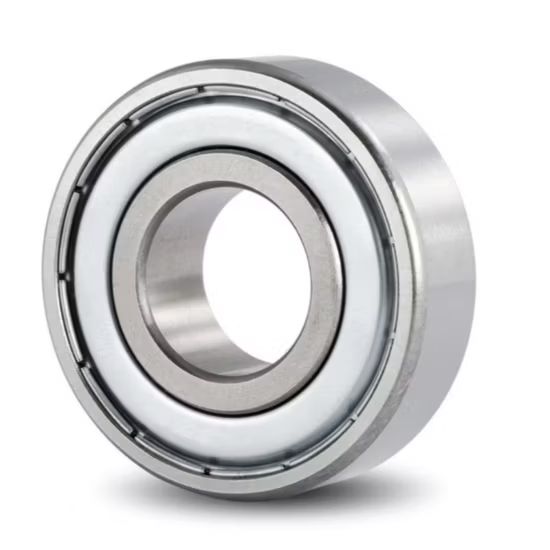
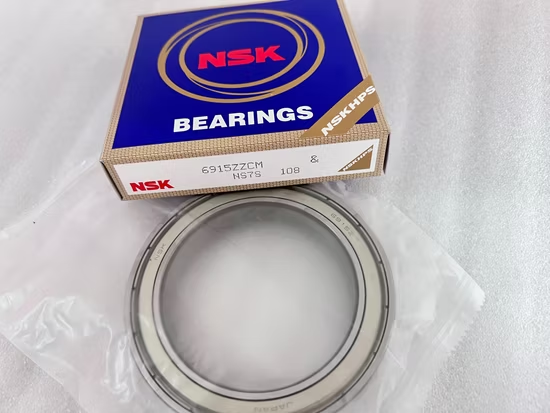
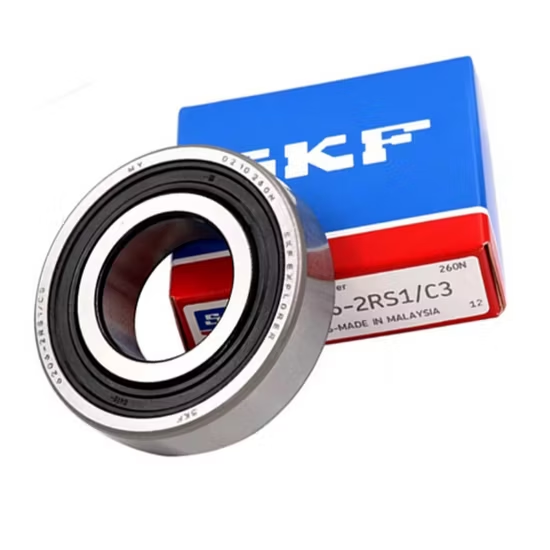


6213 Zz 2RS P4p5p6 Deep Groove Ball Bearing features chrome steel construction for reliable durability in printing press parts.
Multi-brand authorized sourcing — Consolidate mixed SKF, FAG, and NSK requirements into a single shipment without coordinating across fragmented suppliers.
| Parameter | Value |
|---|---|
| Designation | 6213 Zz 2RS P4p5p6 |
| Bearing Type | Deep Groove Ball Bearing |
| Material Options | Chrome steel standard, with stainless steel or ceramic variants available |
| Seal Configuration | Open, rubber contact seals (2RS), or iron non-contact shields |
| Noise and Vibration Grade | Z1V1, Z2V2, Z3V3, Z4V4 |
| Precision Class | P4p5p6* |
Note: The Zz and P4p5p6 suffixes are unverified standard notations and require exact manufacturer catalog confirmation prior to final order placement.
| Industry | Typical Applications |
|---|---|
| Printing & Packaging | Printing press impression cylinders, web tension control rollers, and high-speed paper feed mechanisms |
| General Industrial | Electric motor rotors, industrial gearbox input shafts, and material handling conveyor drive pulleys |
| Fluid & Agricultural | Centrifugal pump shafts, agricultural machinery power take-off units, and household appliance spindle drives |
A missing seal suffix or incorrect precision grade will cause thermal binding long before the steel fatigues.
Procurement engineers often source the 6213 Zz 2RS P4p5p6 deep groove ball bearing by matching the base 6213 number while overlooking critical clearance and seal suffixes. In high-speed printing press environments, installing an open bearing where a 2RS rubber seal was specified allows paper dust to infiltrate the raceway, while using a standard P0 grade instead of the required precision class introduces microscopic runout. These cross-reference errors lead to severe vibration, heat generation, and sudden cage failure during peak production runs .
Selecting the correct 6213 Zz 2RS P4p5p6 deep groove ball bearing requires balancing environmental protection against rotational friction. Our technical team reviews your specific printing press zone to determine whether the non-contact iron shields or the double contact rubber seals provide the optimal threshold between dust exclusion and heat generation, ensuring the bearing survives the press environment without overheating.
Printing press impression cylinders subject bearings to continuous radial loads combined with high rotational speeds, generating significant internal heat. This thermal expansion dictates the necessary internal clearance class to prevent the bearing from tightening and seizing during operation. Furthermore, the choice between oil mist lubrication and sealed grease depends entirely on the press maintenance schedule and the ambient temperature of the printing hall .
The Z1V1 through Z4V4 quality levels directly correlate to the acoustic and vibration output of the bearing at high speeds. For precision printing applications where roller runout translates directly into print defects, achieving the specified precision class ensures the inner and outer rings maintain strict dimensional tolerances. The chrome steel construction provides the necessary raceway hardness to support these tight tolerances, while alternative stainless steel or ceramic material options are available for specialized washdown or non-magnetic press zones.
Substituting a bearing based solely on the 6213 base number without verifying the exact seal and precision suffixes leads to catastrophic unplanned downtime. When internal clearances are mismatched, the rolling elements skid rather than roll, rapidly destroying the cage and scoring the raceways. This premature failure not only halts the printing press but often causes secondary damage to the expensive impression cylinders and adjacent gearbox components, voiding equipment warranties and triggering massive financial losses .
We prevent these failures by treating every order as an engineering review rather than a simple catalog match. Because we hold authorized distribution across all major international brands, we verify that the internal design, cage material, and precision suffixes of your requested 6213 Zz 2RS P4p5p6 deep groove ball bearing align perfectly with your OEM equipment requirements. If a specific brand is unavailable, our cross-brand interchange expertise ensures the replacement matches the exact thermal and mechanical characteristics of the original specification.
To ensure precise selection and L10 life calculation, please provide the exact radial and axial loads, operating speeds, and ambient temperatures of your printing press application. If you are replacing an existing component, sharing the OEM equipment number allows our engineering team to perform a comprehensive cross-reference check. Supplying these parameters guarantees that the final configuration perfectly matches your operational demands.
Q: How do we verify the authenticity of the 6213 Zz 2RS P4p5p6 deep groove ball bearing upon delivery?
A: Every shipment includes batch traceability documentation and QR codes that can be scanned using the manufacturer's official mobile application. This digital verification confirms the bearing's origin, material grade, and production date, protecting your printing press from the severe risks associated with counterfeit components featuring soft inner rings and cloned packaging.
Q: Why is it critical to match the exact seal and precision suffixes during cross-referencing?
A: Matching only the base 6213 number ignores vital operational parameters. Installing an open bearing instead of a 2RS sealed variant in a dusty press environment causes rapid contamination, while ignoring precision suffixes introduces unacceptable runout. Our technical review ensures the replacement matches the exact internal design, clearance, and sealing friction required by your specific machinery.
Q: What are the operational differences between the rubber seals and iron shields for this bearing type?
A: The 2RS double contact rubber seals provide superior exclusion of fine paper dust and moisture but generate slightly higher rotational friction. Conversely, iron shields offer non-contact protection with lower friction and higher speed capabilities but allow fine particulate ingress. Selection depends on the specific contamination level and speed requirements of your printing press zone.
Q: How should we select the appropriate noise and vibration grade for high-speed printing applications?
A: The Z1V1 through Z4V4 grades indicate the acoustic and vibration limits of the bearing. High-speed printing press rollers demand the lowest vibration grades to prevent microscopic runout from transferring into the printed web. We review your specific speed and load parameters to recommend the exact quality level necessary to maintain print registration and operational silence.
Our 5-step process ensures every order is engineered, validated, and supported for optimal performance.
Technical needs assessment
Custom specifications
Free samples for $50k+
Pre-shipment inspection
On-site & predictive
Our certified engineers respond within 24 hours with detailed technical specifications, pricing, and lead time information.