01
Consultation
Technical needs assessment

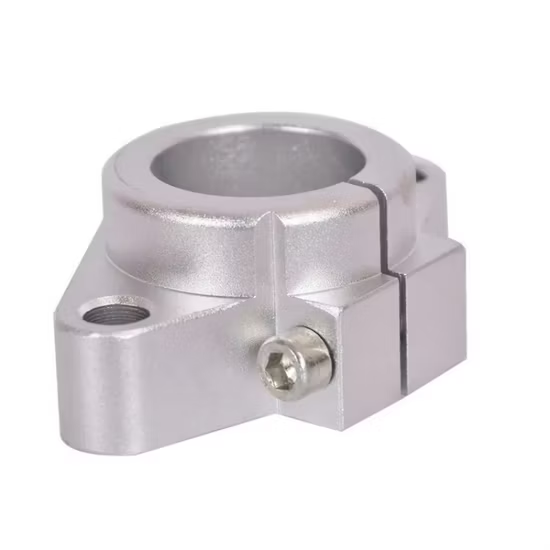
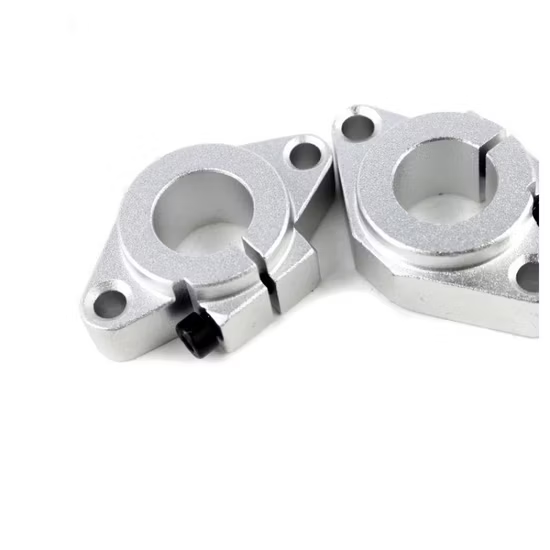
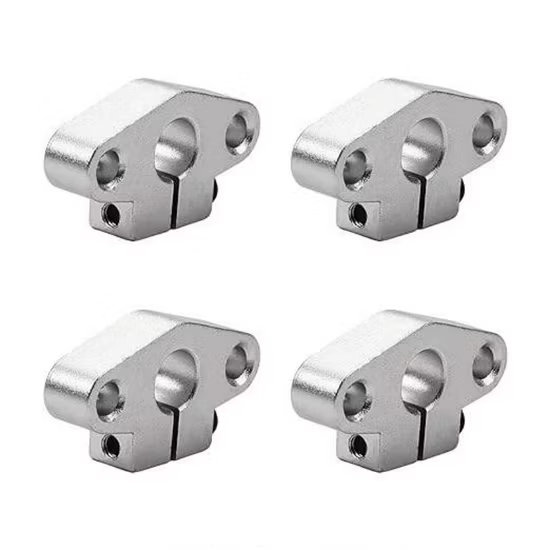
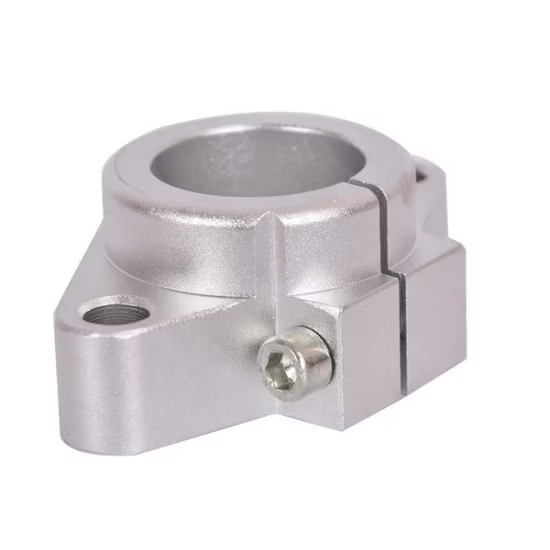
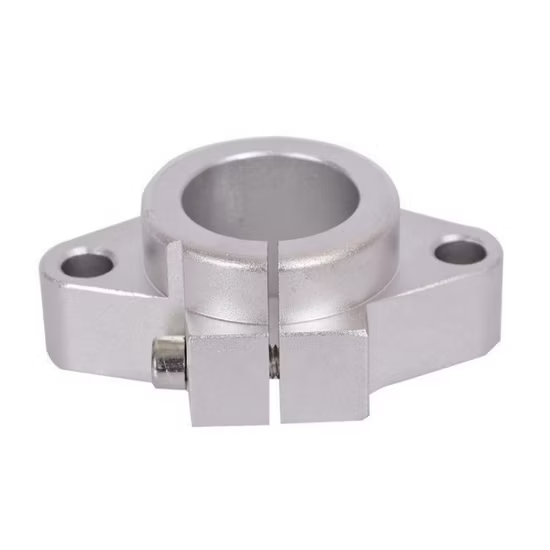
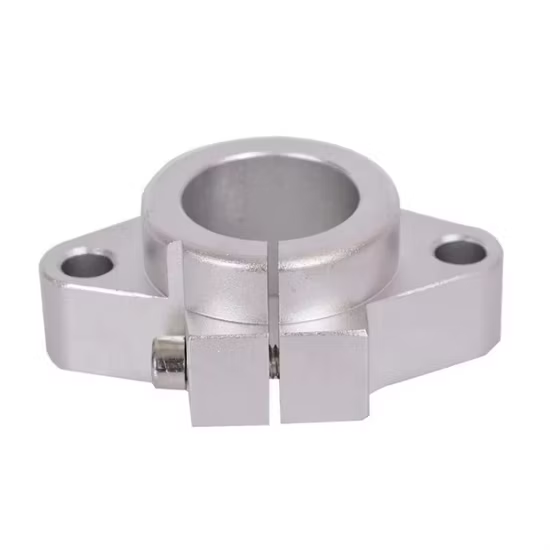
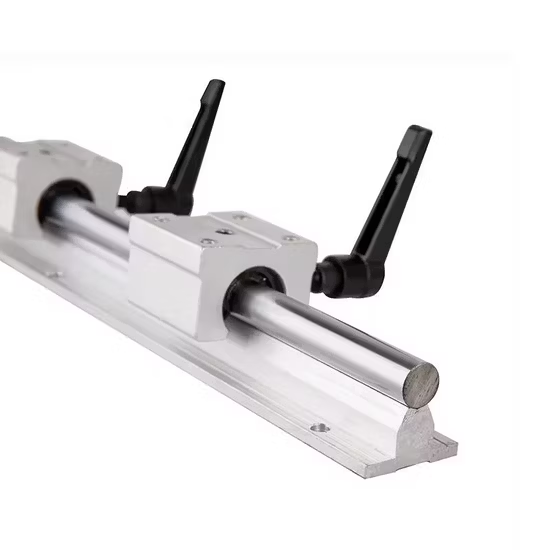
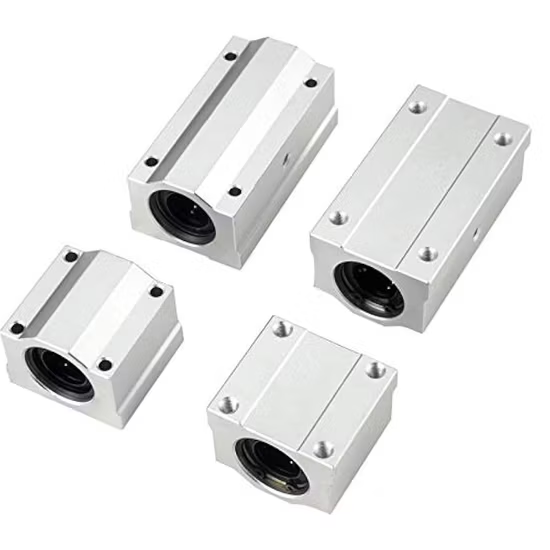
Shf6a Shf8a Shf10A Linear Motion Ball Slide Units — featuring stainless steel construction with a polished surface and hollow profile design.
Verified Via Official Apps — Every Shf6a Shf8a Shf10A linear motion ball slide unit ships with traceable batch codes scannable through manufacturer authentication tools.
| Parameter | Value |
|---|---|
| Designation | Shf6a Shf8a Shf10A |
| Product Type | Linear Motion Ball Slide Unit |
| Material | Stainless steel or standard bearing steel variants available |
| Surface Treatment | Polished |
| Profile Type | Hollow Profile |
| Corrosion Resistance | High Corrosion Resistance |
| Precision Rating | P0, P6, P5, P4, P2 options |
| Feature | High Speed, Low Voice |
| Length | Custom Length |
| Customization | Available |
| Certification | CE, ISO 9001:2000, ISO 9001:2008, RoHS |
| Industry | Typical Applications |
|---|---|
| Food Processing | Washdown conveyor guides, bottling line actuators, packaging sealing jaws |
| Medical Equipment | MRI bed positioning tracks, automated laboratory sample handlers, surgical table lifts |
| Industrial Automation | Pick-and-place robot arms, cleanroom wafer transfer mechanisms, precision assembly jigs |
| Electronics Manufacturing | SMT component placement axes, PCB inspection stages, automated optical inspection rails |
Ignoring housing bore tolerances turns precision components into friction generators.
Field experience across Middle Eastern automation facilities reveals that matching only the base designation while overlooking housing rigidity and bore tolerances leads to rapid binding. When a Shf6a Shf8a Shf10A linear motion ball slide unit is pressed into an out-of-round or thermally unstable housing, the internal clearance vanishes. This causes the recirculating balls to skid rather than roll, generating excessive heat and premature cage failure . Procurement teams often focus solely on the rail profile, missing the fact that the surrounding structural integrity dictates the actual service life.
Selecting the right Shf6a Shf8a Shf10A linear motion ball slide unit requires looking beyond the catalog rating to evaluate the entire mounting assembly. Our technical review process cross-references the specified precision class against your housing material and machining tolerances. By verifying these parameters before shipment, we prevent the all-too-common scenario where a high-precision slide unit is choked by a poorly machined aluminum extrusion or a warped steel plate.
In food processing and medical automation, equipment faces aggressive chemical washdowns and continuous high-cycle operation. Standard carbon steel components quickly succumb to surface pitting, which contaminates the recirculation path and increases friction. Exposure to caustic cleaning agents demands high corrosion resistance and polished surfaces to prevent bacterial harboring. Furthermore, high-speed automated pick-and-place routines require low-voice operation and stable lubrication that will not wash out or degrade under rapid thermal cycling .
The hollow profile design significantly reduces the overall moving mass without sacrificing the structural rigidity required for dynamic loads. This weight reduction allows automation systems to achieve higher accelerations while minimizing inertia-induced vibration. Regarding precision, selecting between P0 and P2 classes depends entirely on the application's positional repeatability requirements. While P0 suffices for general material handling, semiconductor manufacturing demands P4 or P2 tolerances to ensure micron-level accuracy. The polished surface treatment further minimizes friction coefficients, supporting the high-speed and low-voice features essential for noise-sensitive cleanroom environments.
Substituting a slide unit based solely on basic dimensional interchangeability often results in catastrophic system binding. If the replacement lacks the necessary corrosion resistance or features an incompatible internal recirculation design, the carriage will seize under load. This leads to unplanned downtime, damaged drive motors, and voided equipment warranties. According to industry failure analysis frameworks, misapplication of linear guides in corrosive or high-speed environments accounts for a significant share of premature mechanical breakdowns .
Sourcing linear motion components requires strict verification to avoid counterfeit products with soft inner profiles that deform under load. We provide authorized coverage across major brands, ensuring your mixed-brand orders are consolidated and fully traceable. Our cross-reference matching evaluates internal geometry and surface treatments, not just the basic outline dimensions. Every shipment includes batch traceability to the manufacturer, verified through official QR authentication apps, eliminating the risk of installing cloned components that pass casual visual inspections but fail under operational stress.
To ensure optimal performance, please provide your equipment's dynamic load profiles, maximum traverse speeds, and operating environment details. Sharing the housing material and machining tolerances allows our engineering team to verify the suitability of the selected precision class and profile type. If you are replacing an existing component, providing the OEM equipment number enables a comprehensive cross-reference review to confirm internal geometry and surface treatment compatibility.
Q: How do I determine the correct precision class for my automation equipment?
A: The required precision class depends on your system's positional repeatability needs. General material handling typically utilizes standard tolerances, while semiconductor or optical inspection equipment demands higher precision grades. Provide your acceptable deviation limits and operating speeds, and our engineering team will recommend the appropriate specification to prevent binding and ensure smooth travel.
Q: Why is cross-referencing more than just matching the basic profile dimensions?
A: Matching only the outer dimensions ignores critical internal factors like recirculation geometry, material hardness, and surface treatments. A dimensionally identical unit lacking high corrosion resistance will fail rapidly in washdown environments. We verify the internal design and clearance to ensure the replacement handles your specific load and environmental conditions without premature seizure.
Q: What are the advantages of a hollow profile design in high-speed applications?
A: A hollow profile significantly reduces the moving mass of the carriage, which lowers inertia during rapid acceleration and deceleration. This weight reduction minimizes vibration and allows the drive motors to operate more efficiently. It is particularly beneficial in high-speed pick-and-place robots where cycle times are critical and structural rigidity must be maintained.
Q: How does surface treatment impact performance in food processing environments?
A: Polished surfaces prevent the accumulation of organic debris and bacterial growth, which is mandatory for food safety compliance. Furthermore, a smooth finish reduces the friction coefficient within the guide system, supporting low-voice operation and preventing the abrasive wear that occurs when microscopic contaminants enter the recirculation path during aggressive washdown cycles.
Q: What information is needed to evaluate a custom length requirement?
A: To assess a custom length request, we need the total stroke requirement, the number of carriages per rail, and the specific load distribution across the span. This data allows us to calculate the deflection limits and determine if the standard hollow profile rigidity is sufficient or if additional support and specific mounting hole patterns are necessary for your application.
Our 5-step process ensures every order is engineered, validated, and supported for optimal performance.
Technical needs assessment
Custom specifications
Free samples for $50k+
Pre-shipment inspection
On-site & predictive
Our certified engineers respond within 24 hours with detailed technical specifications, pricing, and lead time information.