01
Consultation
Technical needs assessment


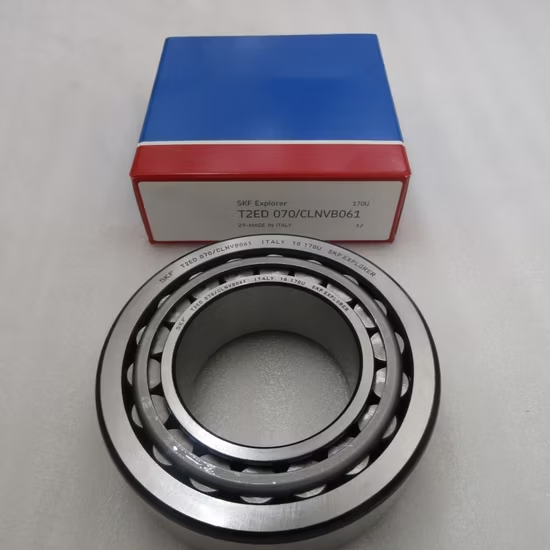
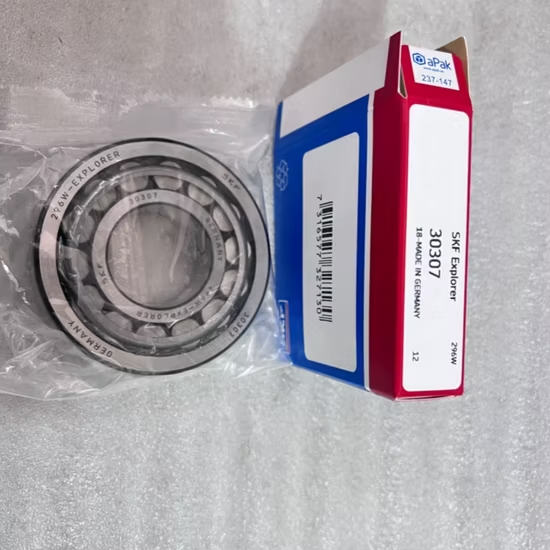
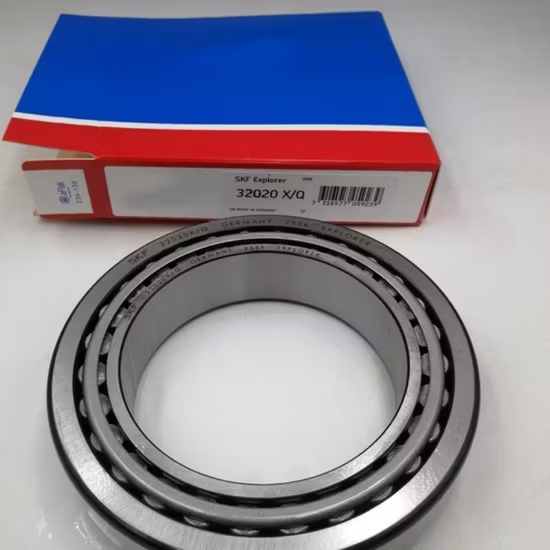
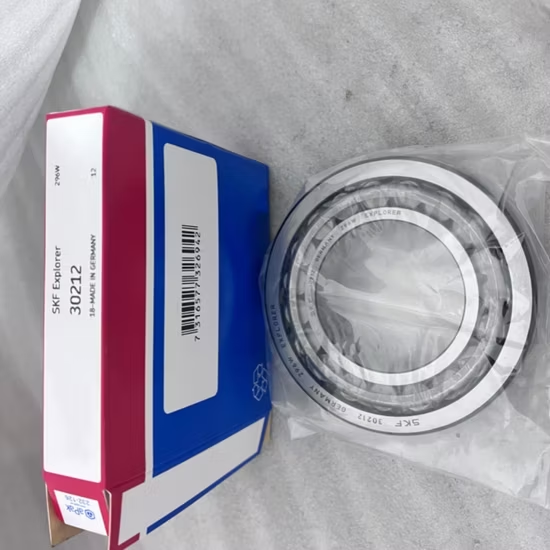
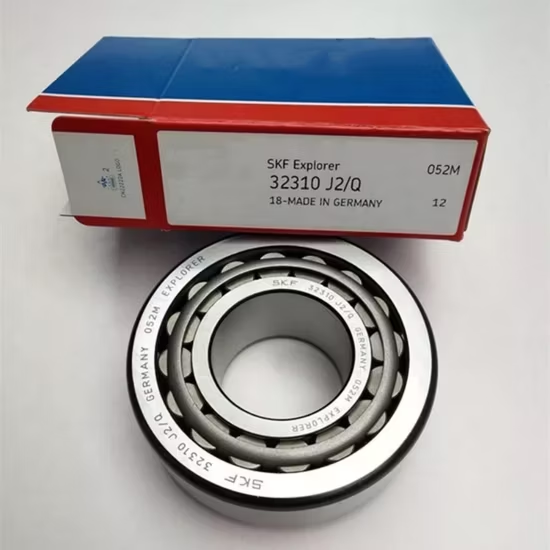
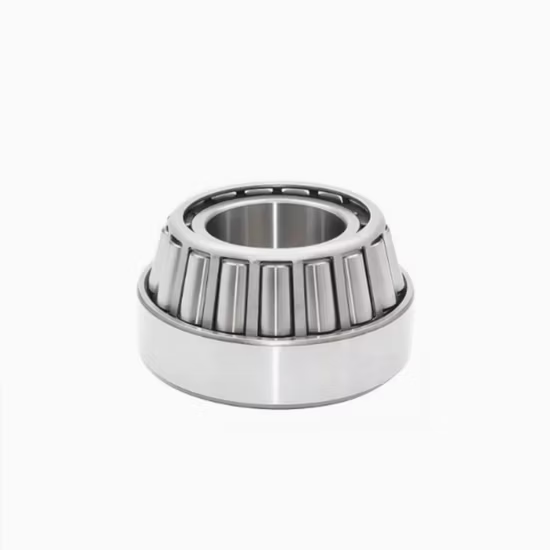
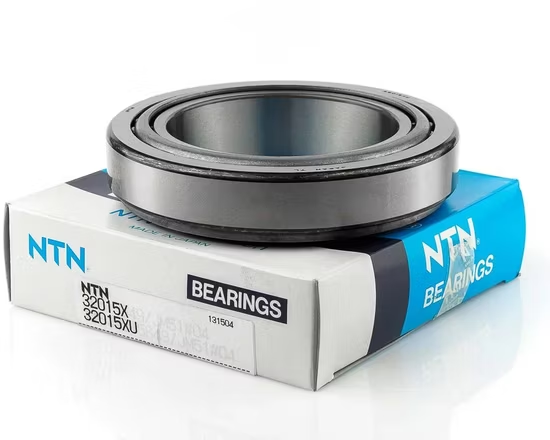
32205 32206 32206J2/Q 32207 Tapered Roller Bearing — Manufactured from GCr15 bearing steel with P4 precision class for tight dimensional accuracy under heavy radial and axial loads.
Traceable Batch Origins — Every 32205 32206 32206J2/Q 32207 tapered roller bearing ships with manufacturer lot documentation linking directly to the production facility.
| Parameter | Value |
|---|---|
| Designation | 32205 32206 32206J2/Q 32207 |
| Bearing Type | Tapered Roller Bearing |
| Precision Class | P4 |
| Material | GCr15 bearing steel |
| Cage Material | Nylon / Brass / Iron |
| Origin | Germany / Japan / Sweden / Malaysia / China |
| Industry | Typical Applications |
|---|---|
| Automotive & Heavy Vehicles | Wheel hub assemblies, truck drive axles, differential pinion shafts |
| Industrial Power Transmission | Heavy-duty gearbox intermediate shafts, reducer output stages |
| Marine Propulsion | Stern tube support arrangements, marine drive reduction gears |
| Material Processing | Conveyor drive pulleys, crusher eccentric shaft mechanisms |
Internal geometry dictates survival, not just the outer dimensions.
I have seen too many 32206 units fail catastrophically in Latin American mining fleets simply because procurement matched the base number while ignoring the cage design and internal contact angles. When a standard tapered roller bearing is forced into a high-shock environment without the correct internal profiling, the rollers skew under load, generating localized heat that welds the cage to the rollers. Selecting the right 32205 32206 32206J2/Q 32207 tapered roller bearing requires looking past the basic designation to verify that the internal clearance and cage material actually match the thermal and mechanical realities of the equipment .
The cage is the weakest link if misapplied. For the 32205 32206 32206J2/Q 32207 tapered roller bearing series, we offer nylon, brass, and iron cage options. Nylon cages reduce weight and operate quietly at higher speeds but degrade in high-temperature gearboxes. Brass cages handle severe vibration and shock loads typical in truck axles, while pressed steel or iron cages offer a balanced cost-to-performance ratio for standard industrial reducers. Matching the cage to the specific vibration and thermal profile prevents premature structural fatigue.
Tapered roller bearings manage combined radial and axial loads, but thermal expansion complicates the assembly. In heavy-duty gearboxes, operating temperatures rise significantly, demanding adequate internal clearance to prevent the rollers from binding against the raceways. If the mounting configuration does not account for shaft expansion, or if the lubrication film breaks down under heavy axial thrust, the bearing will overheat and seize. Proper lubrication selection and precise axial play adjustment during installation are critical to maintaining the hydrodynamic wedge .
The P4 precision class ensures tighter dimensional tolerances and running accuracy than standard grades, which is vital for minimizing vibration in high-speed pinion shafts. The GCr15 bearing steel provides the necessary core toughness and surface hardness to resist spalling under heavy contact stress. While 32205, 32206, and 32207 represent standard metric dimension series, the 32206J2/Q variant includes specific suffixes. Note: The J2/Q suffix combination requires verification against the specific manufacturer's current catalog to confirm the exact internal geometry and cage modifications intended for this variant.
Substituting a standard bearing for one requiring specific internal modifications often results in unplanned downtime and catastrophic damage to adjacent gearbox components. When the internal contact angle or roller profile does not match the axial thrust requirements, the load concentrates on the roller ends, leading to rapid flange wear and eventual cage disintegration. According to ISO 15243 frameworks, these failures are frequently misdiagnosed as lubrication issues when the root cause is an incorrect internal design selection .
We supply authorized multi-brand coverage, meaning a single order can fulfill mixed-brand requirements for complex gearbox rebuilds without coordinating multiple vendors. Our cross-reference process aligns the base designation, cage material, and precision suffixes simultaneously, preventing the common error of ordering a standard 32206 when a modified internal design is required. Every batch is traceable to the manufacturer, and we provide application-based selection reviews to ensure the chosen 32205 32206 32206J2/Q 32207 tapered roller bearing matches your specific load and speed parameters.
To ensure optimal service life, share your operational parameters including radial and axial loads, operating speeds, and steady-state temperatures so we can verify the L10 life calculation. If you are replacing an existing unit, provide the exact OEM equipment number or the full designation stamped on the original bearing ring. This allows our engineering team to perform a precise cross-reference check and confirm that the internal geometry and cage design perfectly match your application requirements.
Q: Why is cross-referencing more than just the base number critical for tapered rollers?
A: Base numbers only define outer dimensions. Internal modifications, cage materials, and contact angles dictate how the bearing handles combined loads and thermal expansion. Ignoring these suffixes often leads to roller skewing, cage failure, and premature downtime in heavy-duty applications.
Q: How do I verify the authenticity of the supplied bearings?
A: Every unit ships with batch traceability documentation. You can scan the QR codes on the packaging using the manufacturer's official mobile application to verify the production lot, origin, and authenticity directly against the factory database.
Q: What is the difference between nylon, brass, and iron cages in these applications?
A: Nylon cages offer lower weight and quieter operation at higher speeds but have strict temperature limits. Brass cages excel in high-vibration and high-shock environments like truck axles, while pressed iron or steel cages provide a reliable balance for standard industrial gearboxes.
Q: How should I handle the unverified J2/Q suffix on the 32206 variant?
A: Proprietary or specialized suffixes indicate specific internal geometry or cage modifications. We always consult the specific manufacturer's current engineering catalog to decode these suffixes, ensuring the supplied unit matches the exact load and speed requirements of your machinery.
Our 5-step process ensures every order is engineered, validated, and supported for optimal performance.
Technical needs assessment
Custom specifications
Free samples for $50k+
Pre-shipment inspection
On-site & predictive
Our certified engineers respond within 24 hours with detailed technical specifications, pricing, and lead time information.