01
Consultation
Technical needs assessment

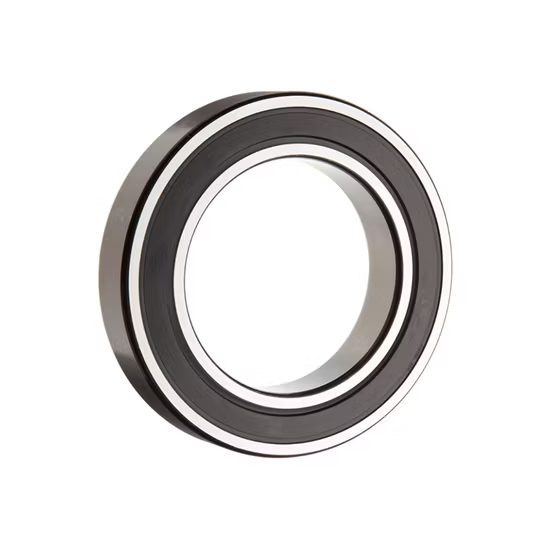


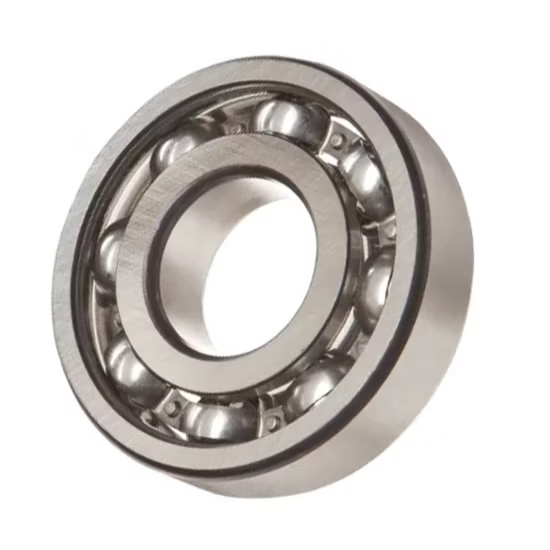
6816 6817 6818 6819 6820 Deep Groove Ball Bearing
Full Brand Authorization — Procuring the 6816 6817 6818 6819 6820 deep groove ball bearing series from a single authorized channel eliminates multi-vendor coordination while guaranteeing mixed-brand traceability.
| Parameter | Value |
|---|---|
| Designation | 6816 6817 6818 6819 6820 |
| Bearing Type | Deep Groove Ball Bearing |
| Seal or Shield Type | Open, Rubber Seals, Iron Seals |
| Vibration and Noise Level | Z1V1, Z2V2, Z3V3, Z4V4 |
| Precision Class | P0 (Normal) |
| Clearance Class | CN (Normal) |
| Standards | Z/V Vibration and Noise Standards |
| Industry | Typical Applications |
|---|---|
| Electric Motors | High-speed rotor shafts requiring low-vibration Z3V3 or Z4V4 grades |
| Industrial Gearboxes | Compact intermediate shafts utilizing thin-section 68-series profiles |
| Pumps and Conveyors | Drive pulleys and impeller shafts exposed to moisture or dust |
Matching the base designation is only the first step; ignoring internal design variations causes immediate field failures.
When purchasing thin-wall bearings, procurement teams often focus solely on the outer dimensions. I have personally investigated motors where a standard CN clearance bearing was installed in a high-temperature housing, resulting in thermal expansion that locked the rotor and left a distinct burnt smell upon teardown . A cross-reference that aligns the basic number but overlooks the required C3 clearance or specific cage material will inevitably lead to premature seizure.
Selecting the correct variant from the 6816 6817 6818 6819 6820 deep groove ball bearing range requires matching the seal type and vibration grade to the specific equipment environment. Our technical review process ensures that the chosen configuration handles the exact radial loads and rotational speeds of your application without compromising the thin-wall structural integrity.
The reduced cross-section of these bearings leaves minimal room for heat dissipation, making the choice between rubber seals and iron shields critical for managing internal friction. In dusty conveyor environments, contact rubber seals prevent particle ingress but generate additional heat, whereas non-contact iron shields offer lower friction for high-speed electric motors . Proper lubrication intervals must also be adjusted based on the selected seal type to prevent grease degradation.
The availability of open, rubber-sealed, and iron-shielded variants allows engineers to balance contamination protection against rotational friction. For sensitive household appliances and precision instruments, specifying Z3V3 or Z4V4 vibration levels ensures the rolling elements and raceways meet stringent surface finish requirements, drastically reducing acoustic noise. Conversely, standard Z1V1 grades are perfectly adequate for general industrial gearboxes where extreme acoustic performance is not a primary design constraint.
Installing a standard precision bearing in a high-speed spindle application leads to excessive vibration and accelerated raceway fatigue. According to ISO 15243 failure classifications, incorrect internal clearance selection frequently manifests as smearing or severe cage wear . These misapplications result in unplanned downtime and voided equipment warranties, costing significantly more than the initial price difference of a correctly specified component.
We verify every cross-reference by aligning clearance, cage material, and precision suffixes, preventing the common error of substituting a CN clearance where a C3 is required for thermal expansion. Our inventory provides full batch traceability to the manufacturer, ensuring you receive genuine products rather than counterfeits with soft inner rings that fail under load. Furthermore, our application-based selection review evaluates your specific speed and temperature parameters to recommend the optimal seal and vibration grade combination.
To ensure accurate selection and L10 life calculation, please provide your specific radial and axial loads, operating speeds, and housing temperature profiles. Supplying the original OEM equipment numbers allows our engineering team to perform a comprehensive cross-reference check, verifying that the clearance and seal configurations perfectly match your machinery's design requirements.
Q: How do we ensure clearance and precision suffixes align during cross-referencing?
A: We do not rely solely on the base designation. Our technical team cross-references the original equipment specifications to verify that critical internal parameters, such as C3 or C4 clearance for thermal expansion and specific cage materials, perfectly match the application requirements before finalizing the order.
Q: What is the functional difference between rubber and iron seals in electric motors?
A: Rubber seals provide superior protection against moisture and fine dust but generate higher friction, which can increase operating temperatures. Iron shields offer non-contact protection with lower friction, making them ideal for high-speed electric motor applications where heat generation must be minimized.
Q: Which vibration grades are suitable for noise-sensitive electrical equipment?
A: The Z3V3 and Z4V4 grades are specifically manufactured with tighter geometric tolerances and superior surface finishes to minimize acoustic emissions. These higher grades are essential for household appliances and precision instruments where operational silence is a critical performance metric.
Q: How can we verify the authenticity of the delivered thin-wall bearings?
A: Every batch is supplied with full traceability documentation. You can verify the authenticity and manufacturing origin directly by scanning the QR codes on the packaging using the respective brand's official mobile application, ensuring the products are genuine.
Q: How should we select the appropriate internal clearance for high-speed micro motors?
A: High-speed applications generate significant internal heat, which reduces the operational clearance. We typically recommend C3 or C4 clearance classes to accommodate this thermal expansion, preventing the bearing from seizing during continuous high-RPM operation.
Our 5-step process ensures every order is engineered, validated, and supported for optimal performance.
Technical needs assessment
Custom specifications
Free samples for $50k+
Pre-shipment inspection
On-site & predictive
Our certified engineers respond within 24 hours with detailed technical specifications, pricing, and lead time information.