01
Consultation
Technical needs assessment

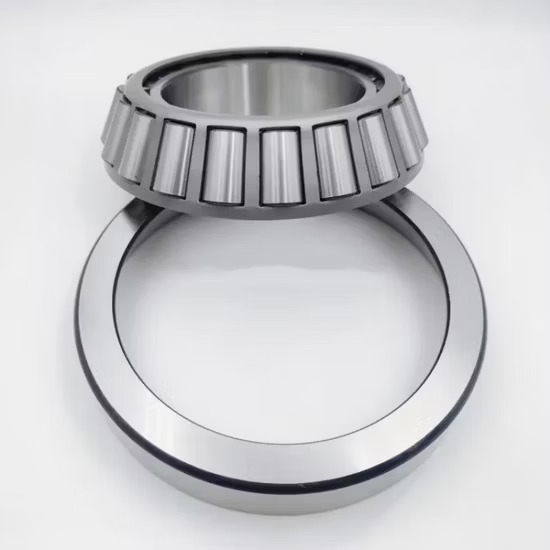
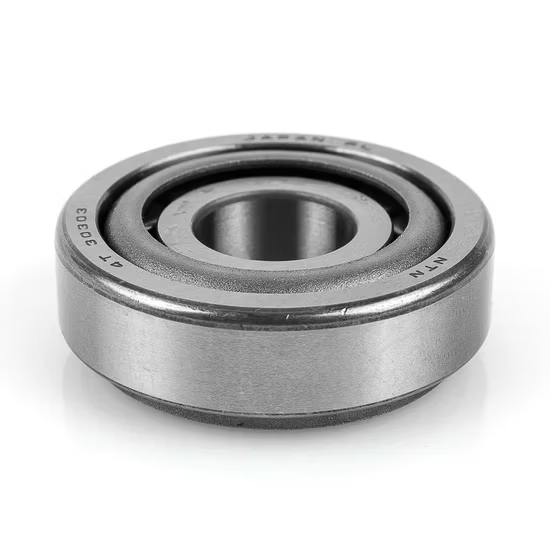
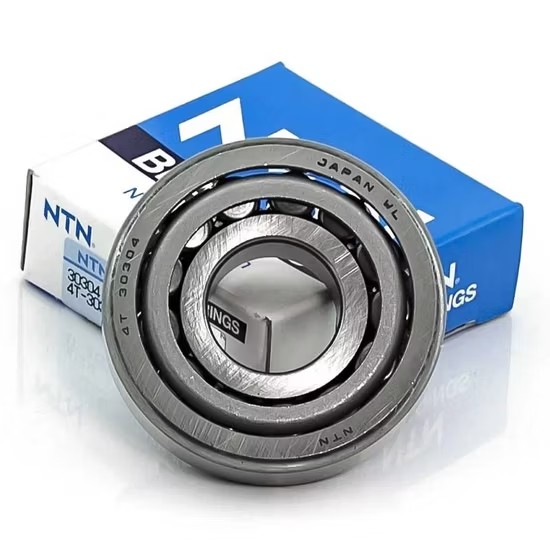
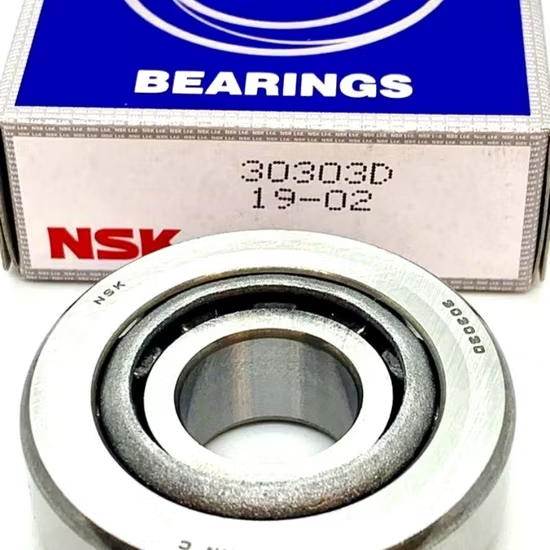
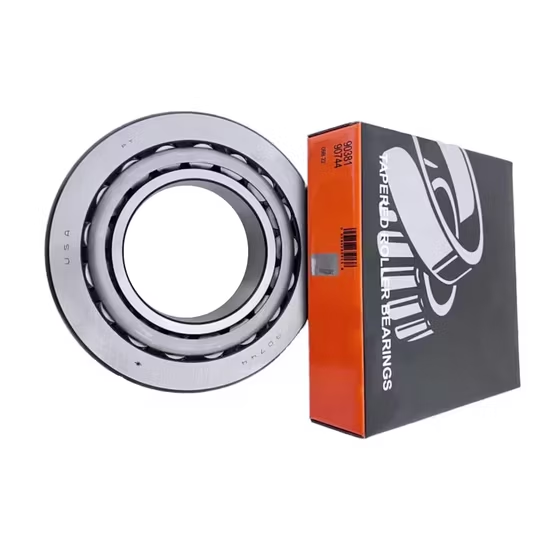

33014 Tapered Roller Bearing 70×110×31 mm P4 — Single row construction effectively manages combined radial and axial loads, while P4 precision ensures strict dimensional and running accuracy.
Traceable Batch Origins — Every 33014 tapered roller bearing ships with manufacturer lot documentation linking directly to the production facility.
| Parameter | Value |
|---|---|
| Designation | 33014 |
| Bearing Type | Tapered Roller Bearing |
| Bore Diameter (d) | 70 mm |
| Outside Diameter (D) | 110 mm |
| Width (T) | 31 mm |
| Number of Rows | Single Row |
| Precision Class | P4 |
| Material | GCr15 bearing steel |
| Cage Material | Available in nylon, brass, or stamped iron variants |
| Origin | Sourced from Germany, Japan, Sweden, Malaysia, or China |
| Industry | Typical Applications |
|---|---|
| Manufacturing plants | Industrial gearboxes, heavy machinery drive shafts |
| Automotive and heavy vehicle | Truck axles, commercial wheel hub assemblies |
| Building materials | Crusher drive mechanisms, conveyor rollers |
Dimensional equivalence never guarantees internal geometry compatibility under heavy combined loads.
I have seen this exact scenario unfold on mining sites across Latin America, where a 33014 tapered roller bearing seized completely due to thermal binding. The procurement team matched the base 70x110x31mm dimensions perfectly but ignored the internal clearance requirements for the operating temperature. When standard clearance is installed in an application demanding C3 or C4 to accommodate thermal expansion, the internal preload spikes as the shaft heats up, leading to catastrophic cage failure . Relying solely on the basic designation without verifying the internal design specifics is a primary cause of unplanned downtime in heavy drive systems.
The single row configuration of the 33014 tapered roller bearing is engineered to manage high radial loads coupled with significant axial thrust in one direction. In industrial gearboxes and truck axles, this combined load distribution requires precise roller-to-raceway contact to prevent edge loading. Our technical review process ensures that the cross-brand interchange matches not just the outer dimensions, but the specific contact angle and internal load distribution required by your equipment's operational profile.
Heavy machinery drive shafts generate substantial friction heat, which directly impacts the internal operating clearance of the bearing. If the lubrication regime cannot dissipate this heat or if the initial clearance is too tight, the rollers will skid rather than roll, accelerating wear on the GCr15 raceways. Proper grease selection and fill volume are critical to maintain a stable elastohydrodynamic film under varying speeds . Furthermore, effective sealing arrangements must be implemented externally to prevent abrasive dust from contaminating the lubricant in harsh building material processing environments.
Achieving P4 precision in a 70mm bore tapered roller bearing ensures tighter dimensional tolerances and superior running accuracy compared to standard P0 grades, which is vital for minimizing vibration in high-speed gearboxes. The GCr15 bearing steel provides the necessary core toughness and surface hardness to withstand shock loads typical in crusher applications. Depending on the specific speed and vibration characteristics of your machinery, the cage material can be selected from nylon for low-friction operation, brass for high-vibration resilience, or stamped iron for cost-effective standard duty. Because the base designation lacks specific suffixes, buyers must explicitly define the required clearance class and cage type during the inquiry phase to avoid receiving a standard configuration that fails under extreme thermal or dynamic conditions.
Installing a standard clearance bearing in a high-temperature axle assembly inevitably leads to thermal binding, causing the rollers to skew and aggressively wear the cage pockets. This premature failure mode not only destroys the bearing but often scores the shaft and housing, resulting in catastrophic damage that extends far beyond a simple component replacement. According to ISO 281 standards, operating a bearing outside its designed internal geometry parameters drastically reduces the calculated L10 life, turning a predictable maintenance interval into an emergency breakdown . The resulting unplanned downtime and voided equipment warranties represent a massive financial drain on operational budgets.
We provide authorized distribution coverage across all major international brands, allowing you to consolidate mixed-brand requirements into a single, fully traceable order. Our cross-reference process strictly aligns the clearance class, cage material, and precision grade, ensuring the replacement 33014 matches the exact internal design your equipment demands. We supply comprehensive batch traceability and authenticity verification, eliminating the risk of counterfeit components with soft inner rings that plague the secondary market. By reviewing your specific application parameters, we prevent the costly mistake of installing a dimensionally correct but internally incompatible bearing.
To ensure the selected configuration meets your operational demands, please provide the specific radial and axial load profiles, operating speeds, and expected temperature ranges for your application. Supplying the OEM equipment number allows our engineering team to perform a precise cross-reference review, verifying that the internal clearance and cage material align with the original design intent. This technical validation guarantees that the supplied components will deliver reliable performance under your specific working conditions.
Q: Why is it critical to specify clearance and cage material when ordering this designation?
A: The base number only defines the 70x110x31mm outer dimensions. Without specifying the required internal clearance and cage material, you risk receiving a standard configuration that may thermally bind or fail under high vibration. Explicitly defining these parameters ensures the internal geometry matches your specific operational environment and load profile.
Q: How does P4 precision benefit industrial gearboxes compared to standard grades?
A: P4 precision provides significantly tighter dimensional and running accuracy tolerances. In industrial gearboxes, this reduces operational vibration, minimizes noise, and ensures uniform load distribution across the rollers, ultimately extending the service life of both the bearing and the surrounding gear teeth under continuous operation.
Q: What are the selection boundaries for the different cage materials available?
A: Nylon cages offer low friction and are ideal for moderate speeds and temperatures. Brass cages provide superior strength and vibration resistance for heavy, shock-loaded applications. Stamped iron cages offer a reliable, cost-effective solution for standard operating conditions where extreme thermal or dynamic stresses are not present.
Q: How can I verify the authenticity and origin of the supplied components?
A: Every shipment includes a Certificate of Conformity and batch traceability documents. You can verify the authenticity directly by scanning the QR code using the manufacturer's official mobile application, ensuring the product is genuine and sourced from authorized production facilities.
Our 5-step process ensures every order is engineered, validated, and supported for optimal performance.
Technical needs assessment
Custom specifications
Free samples for $50k+
Pre-shipment inspection
On-site & predictive
Our certified engineers respond within 24 hours with detailed technical specifications, pricing, and lead time information.

