01
Consultation
Technical needs assessment

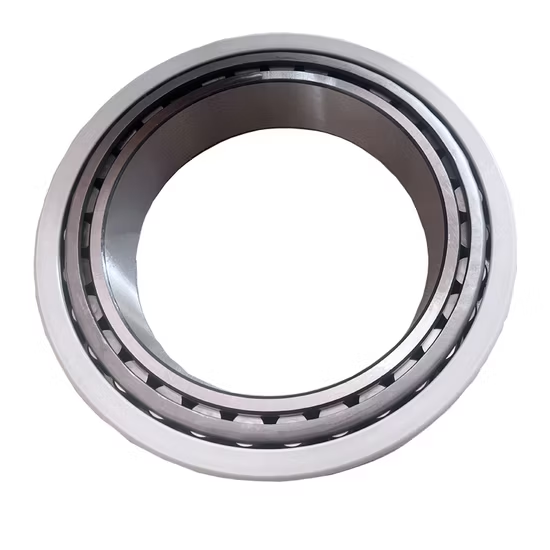
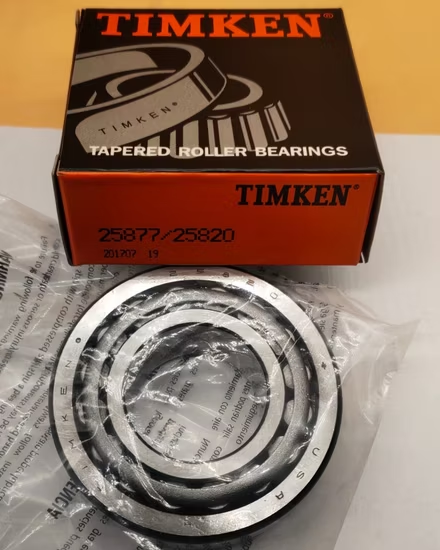


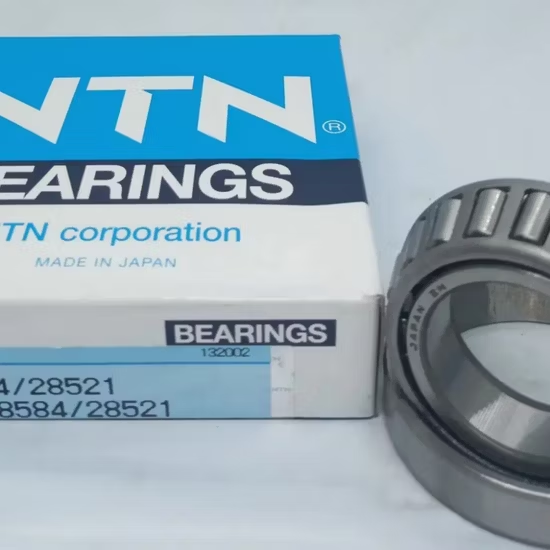

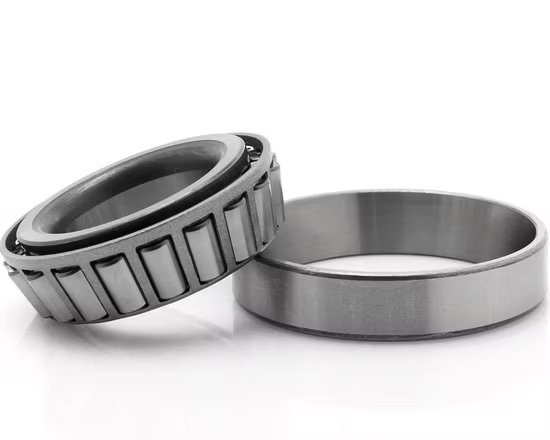
25877/25820 Inch Tapered Roller Bearing P4 — single row inch design optimized for combined radial and axial loads in automobile wheel hubs.
Full Brand Authorization — Consolidate mixed-brand requirements for the 25877/25820 inch tapered roller bearing into a single, fully traceable shipment without coordinating multiple vendors.
| Parameter | Value |
|---|---|
| Designation | 25877/25820 |
| Bearing Type | Inch Tapered Roller Bearing |
| Product Type | Tapered Roller Bearing |
| Number of Rows | Single Row |
| Precision Class | P4 |
| Material | GCr15 Bearing Steel |
| Origin | Germany / Japan / Sweden / Malaysia / China |
| Industry | Typical Applications |
|---|---|
| Automotive & Heavy Vehicles | Wheel hub assemblies, drive axles, differential pinion shafts |
| Building Material Machinery | Conveyor drive rollers, mixer drum trunnions, crusher eccentric shafts |
| Manufacturing Plants | Heavy-duty gearboxes, material handling drive units, press feed mechanisms |
Matching the basic cone and cup numbers is only the first step; ignoring the precision suffix is where catastrophic field failures begin.
In my years servicing the Latin American supply chain, I have seen entire fleets of heavy transport vehicles grounded because a procurement team focused solely on the base designation. They sourced bearings that looked identical on the outside, but the internal geometry and precision tolerances were completely wrong for the application. When a component like the 25877/25820 inch tapered roller bearing is installed in a high-load wheel hub without the correct precision class, the microscopic deviations in roller alignment generate excessive friction. This friction rapidly escalates into thermal binding, ultimately causing the bearing to seize on the highway .
Automotive wheel hubs and heavy axle assemblies demand components that can handle complex, multi-directional forces without losing geometric stability. The 25877/25820 inch tapered roller bearing is engineered specifically for these combined radial and axial loads. By supplying this exact designation with verified P4 precision, we ensure that the rolling elements maintain optimal contact lines under severe cornering and braking stresses, directly supporting the durability required in commercial vehicle repair and heavy machinery operation.
Wheel hubs and heavy gearboxes operate in highly unforgiving thermal and mechanical environments. The continuous radial load from the vehicle weight is compounded by severe axial thrust during cornering or when navigating uneven terrain. These dynamic forces generate significant internal heat, which alters the lubrication film thickness and demands precise internal clearances. If the precision tolerances are too loose, the rollers skew and slide rather than roll, accelerating wear . Conversely, if the components are too tight, thermal expansion under heavy loads eliminates the necessary operational clearance, leading to rapid temperature spikes and cage failure.
The defining characteristic of this specific configuration is the P4 precision class. In the realm of inch-series tapered roller bearings, achieving P4 dimensional and running accuracy requires stringent manufacturing controls. This tighter tolerance ensures that the load is distributed evenly across the full length of every roller, rather than concentrating stress at the edges. For high-speed axle applications, this edge-stress reduction is critical to preventing premature spalling and micro-pitting on the raceways. The use of high-purity GCr15 bearing steel further supports this precision by providing the necessary structural rigidity and wear resistance to maintain the P4 geometry throughout the component's operational lifespan.
When procurement decisions are driven purely by upfront cost rather than technical alignment, the downstream consequences are severe. Installing a standard-precision alternative in an application demanding P4 tolerances inevitably leads to unplanned downtime and premature failure. According to failure analysis frameworks like ISO 15243, improper internal geometry accelerates surface fatigue and adhesive wear . In a commercial fleet, a single seized wheel hub does not just mean a replacement part; it results in tow fees, missed delivery schedules, voided equipment warranties, and potential catastrophic damage to the entire axle assembly.
We approach the 25877/25820 inch tapered roller bearing not just as a part number, but as a critical system component. Our cross-reference process strictly verifies the P4 precision requirement, ensuring you never receive a standard-precision substitute that merely shares the same base dimensions. Because we hold authorized distribution across all major international brands, we provide full batch traceability for every unit shipped, eliminating the risk of counterfeit products with soft inner rings. Our technical team reviews your specific application parameters to confirm that the internal design matches your operational demands, backed by comprehensive documentation that proves the authenticity and exact specifications of your order.
To ensure the 25877/25820 inch tapered roller bearing perfectly matches your specific application, please provide your operational parameters. Share the expected radial and axial loads, operating speeds, and typical temperature ranges so our engineering team can verify the L10 life calculation. If you are replacing an existing component, providing the OEM equipment number or the exact dimensions of the housing and shaft allows us to perform a precise cross-reference check, ensuring the internal geometry and precision class align perfectly with your machinery.
Q: How do I verify the P4 precision class before installation?
A: Every 25877/25820 inch tapered roller bearing we supply includes a dimensional and running accuracy inspection report confirming P4 tolerances. Additionally, you can scan the QR code on the packaging using the manufacturer's official app to verify the batch traceability and precision specifications directly from the factory database, ensuring complete authenticity before mounting.
Q: Why is cross-referencing more than just the base number critical here?
A: Base numbers like 25877 and 25820 only define the basic envelope dimensions. Ignoring the P4 precision suffix means you might receive a standard-precision bearing that fits the housing but fails under high-speed axle loads. Our cross-reference process verifies the precision class and internal geometry to prevent thermal binding and premature cage failure in demanding applications.
Q: What information is needed to confirm this bearing fits my wheel hub?
A: To confirm suitability, provide the OEM equipment number, shaft and housing dimensions, and the specific axial and radial loads your hub experiences. This allows our technical team to verify that the single-row inch tapered structure and P4 precision of the 25877/25820 inch tapered roller bearing align with your operational requirements and mounting tolerances.
Q: How does the GCr15 material benefit heavy-duty axle applications?
A: GCr15 bearing steel provides the high structural integrity and wear resistance required for wheel hubs. When machined to P4 precision, this material maintains its geometric stability under heavy combined loads, resisting surface fatigue and micro-pitting, which ensures a noticeably extended service life in commercial vehicle and heavy machinery environments.
Our 5-step process ensures every order is engineered, validated, and supported for optimal performance.
Technical needs assessment
Custom specifications
Free samples for $50k+
Pre-shipment inspection
On-site & predictive
Our certified engineers respond within 24 hours with detailed technical specifications, pricing, and lead time information.