01
Consultation
Technical needs assessment


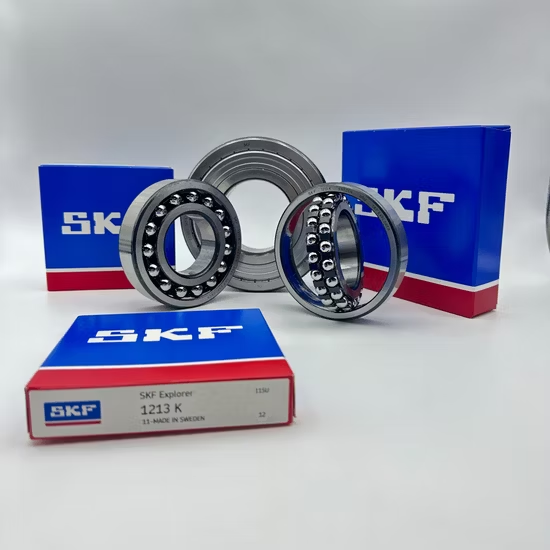
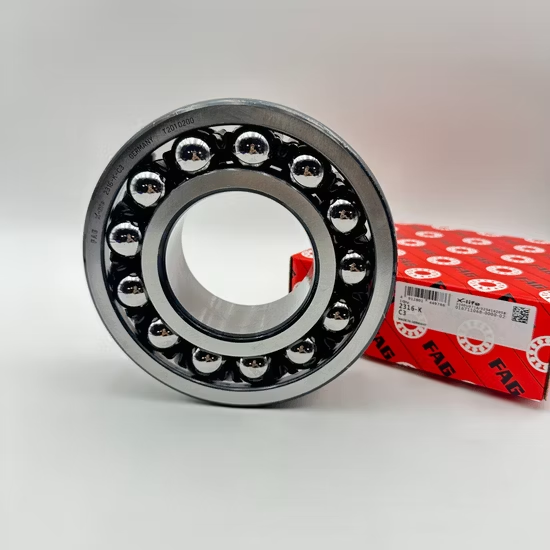
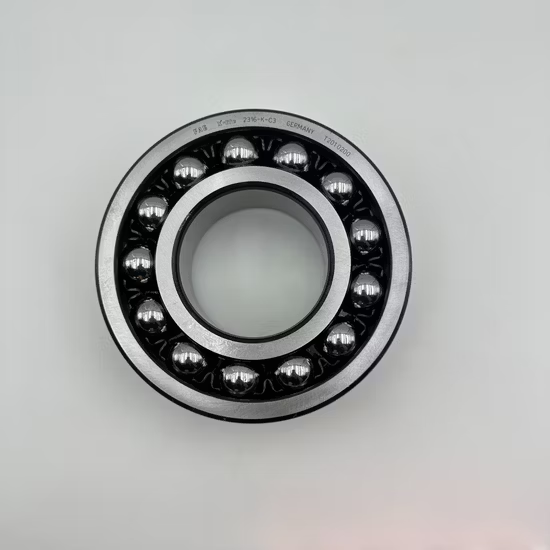
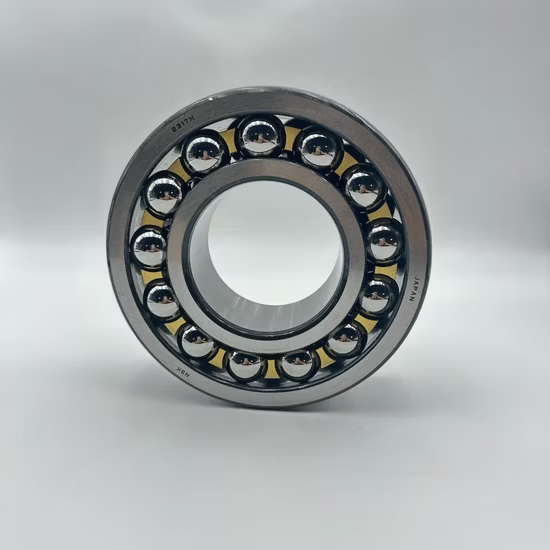

2313 Self-Aligning Ball Bearing — accommodates shaft misalignment in wind turbine gearboxes and electric motors.
Multi-brand authorized distribution — Consolidate your 2313 self-aligning ball bearing requirements alongside other international brands into a single, fully traceable shipment without coordinating multiple suppliers.
| Parameter | Value |
|---|---|
| Designation | 2313 |
| Product Type | Self-Aligning Ball Bearing |
| Bearing Style | Open, Rubber Seals, Iron Seals |
| Feature | Low Noise, High Speed, Long Service Life |
| Bore Type | Cylindrical or 1:12 Taper Bore (K suffix) |
| Customization | Available |
| Origin | Germany, Japan, Sweden, Malaysia, China |
| HS Code | 848210 |
| Industry | Typical Applications |
|---|---|
| Wind Power | Wind turbine gearbox auxiliary shafts and yaw mechanisms |
| Industrial Gearboxes | Intermediate shafts requiring misalignment compensation |
| Electric Motors | Rotor support in high-speed, low-vibration motor assemblies |
| Material Handling | Conveyor pulley bearings subject to frame deflection |
| General Machinery | Pump shafts and agricultural equipment drive components |
A base number match is meaningless if the internal clearance and bore profile contradict the thermal reality of the gearbox.
I have seen too many wind turbine gearboxes locked up because a standard clearance bearing was forced into a high-temperature housing. When cross-referencing the 2313 self-aligning ball bearing, procurement teams often fixate on the outer dimensions while ignoring the C3 clearance requirement for thermal expansion or the K suffix for taper bore mounting . This oversight turns a precision component into a catastrophic friction point.
Selecting the correct variant of the 2313 self-aligning ball bearing ensures the inner ring and ball assembly can freely pivot to absorb shaft deflections common in heavy gearboxes. Our engineering review guarantees that the selected seal type and internal geometry align perfectly with your specific rotational speed and contamination exposure.
Gearbox environments subject bearings to combined radial loads and sudden axial shocks, demanding a cage design that maintains stability under vibration. As operating temperatures rise, standard clearances vanish, causing the rolling elements to skid and generate excessive heat. Proper lubrication intervals and the choice between contact rubber seals or non-contact iron shields dictate whether the bearing retains its grease or succumbs to particulate ingress .
The base 2313 designation implies a cylindrical bore, but adding the K suffix transforms it into a 1:12 taper bore designed for tight interference fits on adapter sleeves. This taper design allows precise radial clearance adjustment during mounting, which is critical when thermal expansion is anticipated. Furthermore, choosing between open, rubber-sealed, or iron-sealed variants balances the need for friction-free high-speed rotation against the necessity of excluding abrasive gearbox debris.
Installing a cylindrical bore bearing where a taper bore was specified prevents proper axial clamping, leading to inner ring creep and severe shaft fretting. Similarly, ignoring the required internal clearance class results in thermal binding, rapidly degrading the raceway and causing unplanned downtime that voids equipment warranties . These failures rarely happen gradually; they manifest as sudden, catastrophic seizures.
We do not just ship the base number; we verify the exact suffix combination, ensuring a K taper bore is never mistakenly swapped for a cylindrical alternative. Our cross-reference protocol checks internal design and clearance classes, preventing the thermal binding issues that plague generic replacements. By providing batch traceability and official QR verification, we eliminate the risk of soft inner rings from counterfeit sources. Every mixed-brand order is consolidated with full documentation, saving you from managing fragmented supply chains.
Share your radial and axial load profiles, operating speeds, and thermal expectations so we can validate the internal clearance and cage selection. If you are replacing an existing unit, provide the OEM equipment number or the exact designation printed on the current bearing for a precise cross-reference check. Our technical team will confirm the optimal sealing arrangement and bore type to ensure long-term reliability in your specific application.
Q: What is the functional difference between the cylindrical bore and the K taper bore?
A: The standard cylindrical bore is pressed directly onto a machined shaft seat. The K suffix indicates a 1:12 taper bore, which is mounted on an adapter sleeve. This tapered design allows technicians to precisely adjust the radial internal clearance during installation by controlling the drive-in distance, making it ideal for applications requiring tight fit and thermal expansion compensation.
Q: Why must seal types be strictly matched during cross-referencing?
A: Rubber seals provide excellent contamination exclusion but generate higher friction, limiting maximum speed. Iron seals offer lower friction for high-speed applications but provide less protection against heavy moisture or fine dust. Substituting one for the other without considering the gearbox environment leads to either premature grease washout or thermal overheating.
Q: How do you verify the authenticity of the supplied bearings?
A: Every bearing we supply features batch traceability and can be verified using the manufacturer's official mobile app via QR code scanning. This process confirms the production origin and specifications, effectively filtering out counterfeit products that utilize soft inner rings or cloned packaging to deceive visual inspections.
Q: What clearance class is typically required for wind turbine gearboxes?
A: Gearbox applications generally require C3 or greater internal clearance to accommodate the thermal expansion of the shaft and housing during operation. Installing a standard CN clearance bearing in these high-temperature environments eliminates the necessary operational gap, resulting in excessive preload, extreme heat generation, and rapid cage failure.
Q: Can you supply mixed brands in a single order?
A: Yes, as an authorized distributor covering all major international brands, we consolidate mixed-brand requirements into a single shipment. We ensure that every cross-referenced equivalent matches the original equipment manufacturer's specifications for load, speed, and suffix details, simplifying your procurement process while maintaining strict quality control.
Our 5-step process ensures every order is engineered, validated, and supported for optimal performance.
Technical needs assessment
Custom specifications
Free samples for $50k+
Pre-shipment inspection
On-site & predictive
Our certified engineers respond within 24 hours with detailed technical specifications, pricing, and lead time information.