01
Consultation
Technical needs assessment

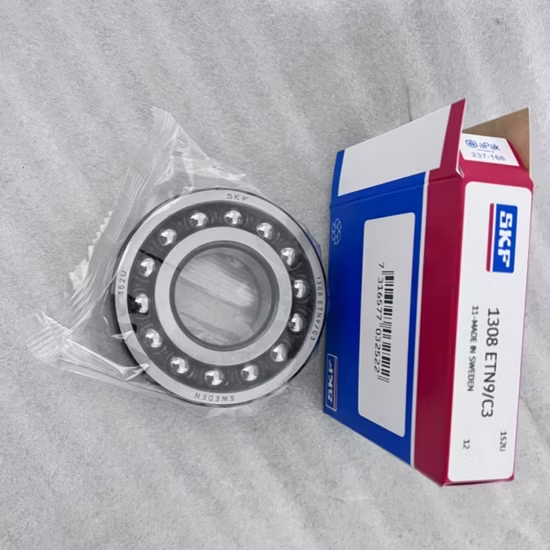
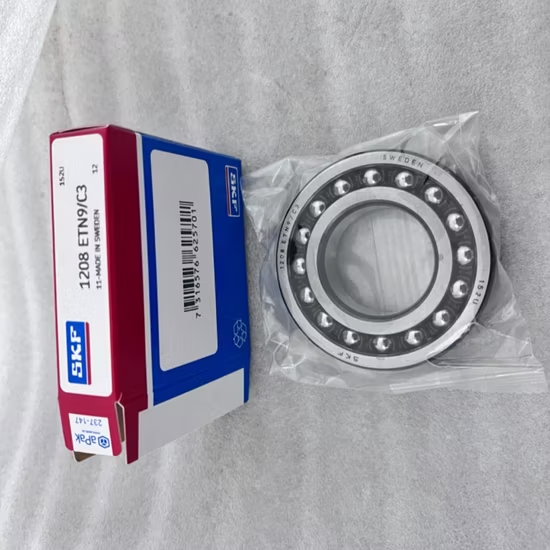
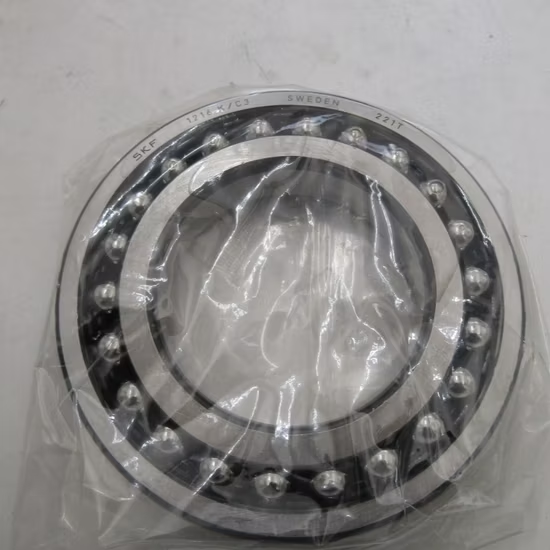
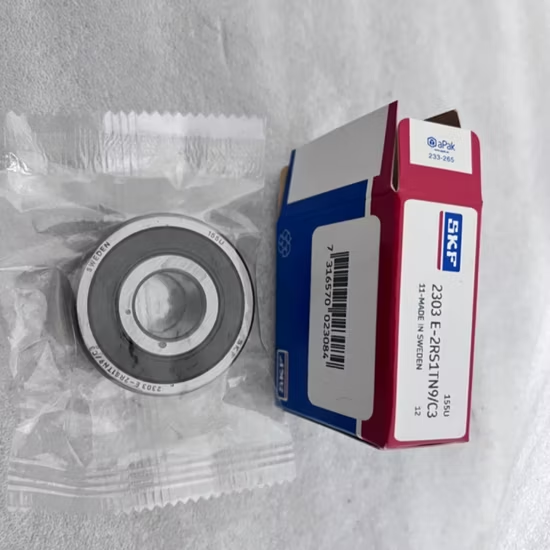
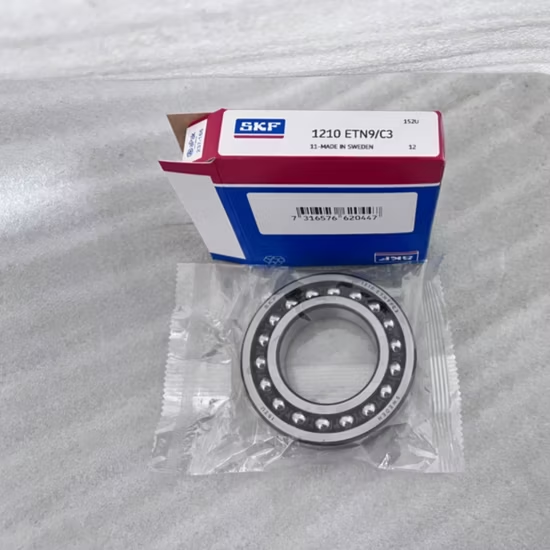
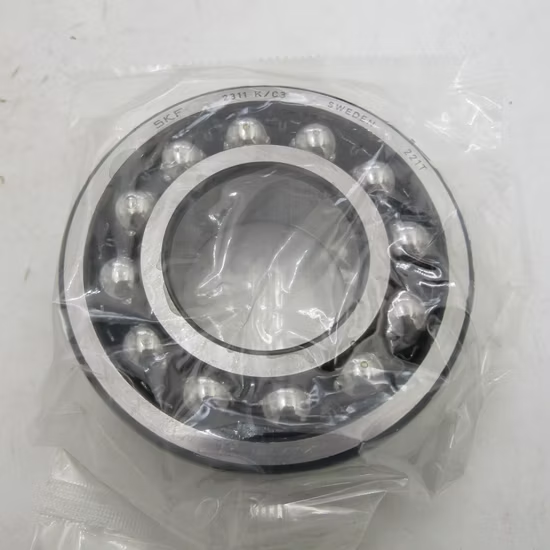
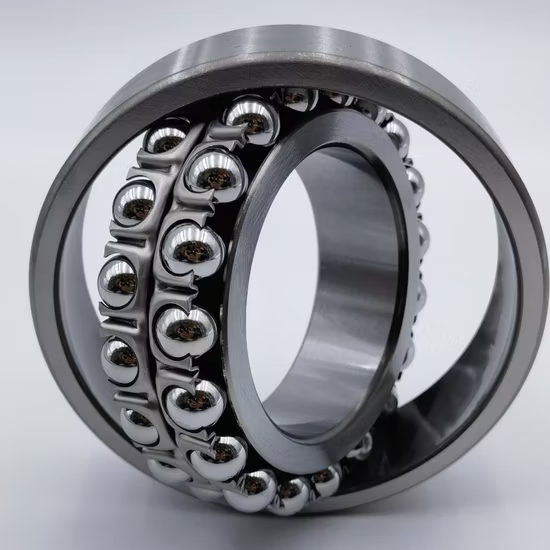
1209 1209K Self-Aligning Ball Bearing — featuring a 1:12 tapered bore for secure lock sleeve mounting.
Multi-brand authorized coverage — Source SKF, FAG, and NSK variants for your 1209 and 1209K requirements in a single consolidated shipment without juggling multiple suppliers.
| Parameter | Value |
|---|---|
| Designation | 1209 1209K |
| Product Type | Self-Aligning Ball Bearing |
| Bore Type | Cylindrical (1209) / Tapered 1:12 (1209K) |
| Seal or Shield Type | Open, Rubber Seals, Iron Seals |
| Feature | Low Noise, High Speed, Long Service Life |
| Customization | Available with H209 lock sleeve assembly |
Note: The designation He209 occasionally appears in legacy cross-references but requires manufacturer catalog confirmation; the standard lock sleeve for this bore size is H209.
| Industry | Typical Applications |
|---|---|
| Electric Motors | Cooling fan assemblies, rotor shaft supports |
| Material Handling | Conveyor belt idler rollers, transfer station pivots |
| Agricultural Machinery | Harrow disc gangs, seed drill metering shafts |
| Textile Machines | Loom shedding mechanisms, yarn guide rollers |
Matching the bore taper to the correct adapter sleeve prevents catastrophic shaft scoring during installation.
I have reviewed countless procurement requests where the base number was correct, but the suffix detailing the bore geometry was completely ignored. Ordering a cylindrical bore unit when the shaft requires a 1:12 tapered interface leads to immediate installation failure. Even worse, pairing a 1209K with an incorrectly sized adapter sleeve causes uneven clamping pressure, resulting in inner ring distortion and premature raceway spalling. A genuine 1209 1209K self aligning ball bearing with lock sleeve must be cross-referenced across three dimensions: base designation, taper suffix, and exact sleeve profile .
The primary advantage of this bearing type lies in its spherical outer ring raceway, which allows the inner ring and ball assembly to pivot freely. This self-aligning capability is critical for applications like long conveyor shafts or agricultural equipment where structural flexing is unavoidable. When specifying a 1209 1209K self aligning ball bearing with lock sleeve, we verify that the application's angular misalignment falls within the permissible limits of the spherical raceway, ensuring the balls do not skew and generate excessive internal heat.
Selecting the correct internal clearance is where many standard replacements fail in the field. I once saw a client install a standard CN clearance unit on a high-temperature exhaust fan; the thermal expansion of the shaft eliminated the internal clearance entirely, causing the bearing to seize within hours. For elevated temperature environments, a C3 or C4 clearance is mandatory to accommodate the differential expansion between the shaft and the housing. Furthermore, the locking mechanism of the H209 sleeve must be tightened to the precise drive-up distance to maintain the required residual clearance after mounting .
The "K" suffix designates a 1:12 tapered bore, which is specifically engineered to mate with the H209 lock sleeve. This tapered interface allows the bearing to be positioned anywhere along an unthreaded shaft, providing immense flexibility in mechanical design. The lock sleeve utilizes a slotted design and a locknut to draw the tapered inner ring tightly onto the shaft, creating a secure, vibration-resistant friction fit. Choosing between open, rubber-sealed, or iron-shielded variants depends entirely on the contamination level of the operating environment, balancing the need for particle exclusion against the friction limits of the sealing lips.
Ignoring the specific taper ratio or substituting an incompatible lock sleeve inevitably leads to unplanned downtime. If the sleeve does not match the 1:12 taper perfectly, the clamping force will be concentrated on a narrow band, causing the inner ring to crack under operational loads. According to failure analysis frameworks like ISO 15243, improper mounting and incorrect fit are leading causes of premature bearing degradation . Such errors not only destroy the bearing but often score the shaft journal, turning a simple component swap into a major mechanical overhaul.
We do not just pick parts from a shelf; we audit the entire assembly requirement. When you order a tapered bore unit, we automatically verify the H209 sleeve compatibility rather than assuming the OEM part number is still accurate for your current shaft condition. Our authorized distribution network across SKF, FAG, and NSK means we can fulfill mixed-brand MRO lists in one shipment while maintaining strict batch traceability. We actively flag discrepancies when a buyer requests a standard clearance for a known high-heat application, preventing the thermal binding issues I have witnessed too many times in the trade.
To ensure the selected unit perfectly matches your mechanical requirements, please provide the radial and axial load profiles, operating speeds, and expected thermal gradients. If you are replacing an existing component, sharing the OEM equipment number allows our engineering team to perform a comprehensive cross-reference check, verifying not just the base designation but the exact seal type and clearance class required for your specific housing.
Q: What is the functional difference between the 1209 and 1209K designs?
A: The 1209 features a standard cylindrical bore for press-fitting into a housing or onto a shaft, while the 1209K has a 1:12 tapered bore designed to be mounted using an H209 lock sleeve. The tapered version allows for precise axial positioning on the shaft and easier installation without requiring tight machining tolerances on the shaft journal.
Q: How do I ensure the lock sleeve matches the 1209K bearing?
A: The H209 lock sleeve is the standard matching component for the 1209K taper. When cross-referencing, always verify the sleeve's thread dimensions and slot width against the manufacturer's current catalog, as legacy designations like He209 may cause confusion. We automatically supply the correct, verified sleeve assembly with your tapered bearing order.
Q: Why would a 1209K bearing seize in a high-temperature application?
A: Seizure in high-heat environments usually stems from selecting a standard CN internal clearance instead of a C3 or C4. As the shaft expands thermally, it compresses the bearing internals, eliminating the clearance needed for the balls to roll freely. Always specify expanded clearance when operating beyond standard ambient temperatures.
Q: How can I verify the authenticity of the bearings I receive?
A: Every unit we supply includes batch and lot traceability documentation. You can verify the authenticity directly by scanning the QR codes on the packaging using the official mobile applications provided by brands like SKF or FAG, ensuring the physical product matches the manufacturer's digital records.
Q: Which seal type is best for a dusty agricultural environment?
A: For heavy dust and particulate exposure, rubber-sealed variants are highly recommended as they maintain physical contact with the inner ring, preventing contaminant ingress. However, if the shaft operates at very high speeds where seal friction could generate excessive heat, iron shields or an open bearing with external housing seals might be a more suitable compromise.
Our 5-step process ensures every order is engineered, validated, and supported for optimal performance.
Technical needs assessment
Custom specifications
Free samples for $50k+
Pre-shipment inspection
On-site & predictive
Our certified engineers respond within 24 hours with detailed technical specifications, pricing, and lead time information.