01
Consultation
Technical needs assessment



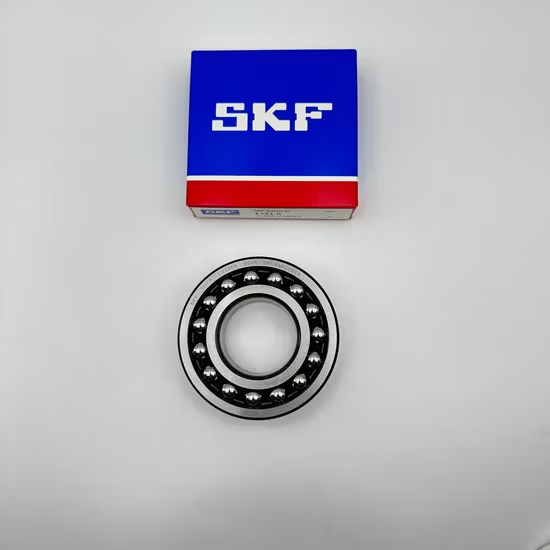
2310/C3 Self-Aligning Ball Bearing with C3 Clearance —
Multi-brand authorized sourcing — Fulfill mixed-brand requirements for heavy mixing equipment through a single, fully traceable procurement channel.
| Parameter | Value |
|---|---|
| Designation | 2310/C3 |
| Bearing Type | Self-Aligning Ball Bearing |
| Clearance Class | C3 (Greater than standard CN) |
| Seal or Shield Type | Open, Rubber Seals, Iron Seals |
| Material Options | Available in stainless steel or standard bearing steel variants |
| Bore Type | Cylindrical |
| Precision Class | Standard (P0) |
| Industry | Typical Applications |
|---|---|
| Construction & Mixing | Heavy-duty mixer machine drum drives and agitator shafts |
| Material Handling | Conveyor belt idlers and transfer chute vibratory mechanisms |
| Agriculture | Feed processing mixers and fertilizer blending augers |
Thermal expansion demands C3 internal clearance to prevent catastrophic seizure.
When replacing bearings in continuous-duty mixers, technicians often overlook the clearance suffix, installing standard CN variants where C3 is strictly required. I witnessed this exact failure in Dubai when a 2310/C3 self-aligning ball bearing was swapped with a CN equivalent; the resulting thermal expansion caused complete shaft lockup within hours. Such cross-reference errors ignore the reality of high-friction mixing environments, leading to severe cage deformation and unplanned downtime .
Mixing vessels subject drive shafts to unpredictable radial loads and constant misalignment caused by uneven material density. The 2310/C3 self-aligning ball bearing compensates for these shaft deflections automatically, protecting the housing from excessive stress. By specifying the correct C3 clearance alongside appropriate sealing options, procurement engineers ensure the component survives the aggressive thermal and mechanical cycles typical in industrial blending operations.
Agitator shafts operate under combined loading where heavy radial forces intersect with minor axial thrusts from material displacement. The continuous friction generates significant heat, making internal clearance a critical factor for maintaining the lubricant film. Furthermore, abrasive dust from dry mixing processes demands robust sealing solutions, while the inevitable shaft deflection requires the outer ring raceway to pivot freely without binding the rolling elements .
The /C3 suffix indicates radial internal clearance greater than the standard CN class, specifically engineered to accommodate thermal expansion and tight interference fits on the shaft. Without this extra clearance, the rolling elements would skid and overheat as the inner ring expands during operation. For sealing, rubber seals provide superior exclusion of fine mixer dust, while iron shields offer lower friction for higher-speed applications. Open variants allow for custom relubrication intervals using high-temperature greases suited for the specific mixing medium.
Installing a standard clearance bearing in a high-heat mixer application inevitably leads to thermal binding and premature fatigue. According to failure analysis frameworks like ISO 15243, such operational stress manifests as severe raceway smearing and eventual cage fracture. These catastrophic failures not only destroy the bearing but often score the shaft and damage the housing, resulting in extended production halts and costly secondary machining repairs .
Our cross-brand interchange protocol strictly aligns the C3 clearance, cage material, and sealing suffixes, preventing the dangerous assumption that base numbers alone guarantee compatibility. We source exclusively through authorized channels, eliminating the risk of counterfeit units with soft inner rings that fail under heavy mixing loads. Every shipment includes batch traceability to the manufacturer, ensuring that the metallurgical integrity matches the demanding requirements of your agitator machinery.
To ensure optimal performance, please provide the specific radial and axial loads, operational RPM, and expected temperature range of your mixer drive. Sharing the OEM equipment designation allows our engineering team to perform a precise cross-reference review, confirming that the sealing and clearance configuration perfectly matches your operational environment.
Q: Why must the C3 clearance suffix be strictly maintained during cross-referencing?
A: The C3 clearance provides essential room for thermal expansion in high-friction mixer applications. Substituting it with standard CN clearance causes the internal components to bind as temperatures rise, leading to rapid overheating, cage failure, and catastrophic shaft seizure under continuous operational loads.
Q: How do rubber seals and iron shields compare in dusty mixing environments?
A: Rubber seals offer superior contact exclusion against fine, abrasive mixing dust, protecting the lubricant and raceways. Iron shields provide a non-contact barrier that reduces friction and heat generation, making them suitable for cleaner environments or higher-speed agitator shafts where dust ingress is minimal.
Q: When should stainless steel variants be selected over standard bearing steel?
A: Stainless steel options are necessary when the mixer processes corrosive chemicals, food products, or operates in high-humidity washdown environments. Standard bearing steel is sufficient for dry, non-corrosive material blending where regular maintenance and standard industrial lubricants are consistently applied.
Q: How can we verify the authenticity of the received bearings?
A: Every unit is supplied with batch traceability documentation and features a scannable QR code. Your maintenance team can verify the origin and specifications directly through the manufacturer's official mobile application, ensuring the product is genuine and not a counterfeit clone.
Our 5-step process ensures every order is engineered, validated, and supported for optimal performance.
Technical needs assessment
Custom specifications
Free samples for $50k+
Pre-shipment inspection
On-site & predictive
Our certified engineers respond within 24 hours with detailed technical specifications, pricing, and lead time information.