01
Consultation
Technical needs assessment

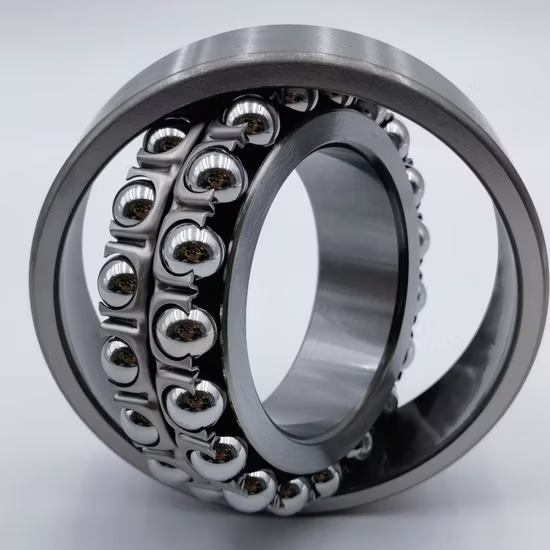
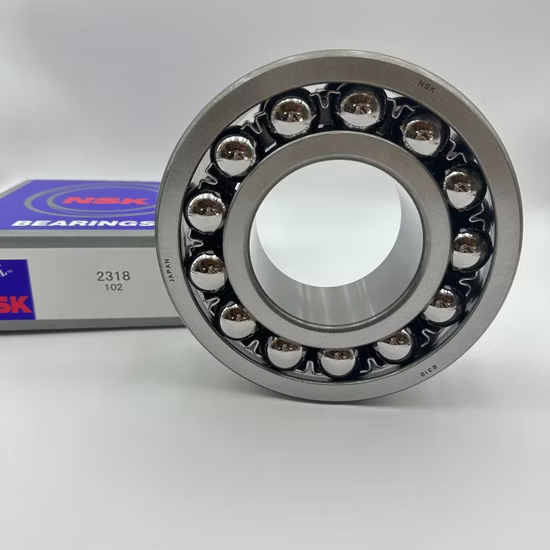


2308/EKTN9/C3 Self-Aligning Ball Bearing — equipped with a 1:12 tapered bore for adjustable shaft mounting and a TN9 polyamide cage to minimize friction. The C3 clearance effectively accommodates thermal expansion in high-vibration aggregate processing applications.
Traceable Batch Origins — Every 2308/EKTN9/C3 self-aligning ball bearing ships with manufacturer lot documentation to verify its exact production run.
| Parameter | Value |
|---|---|
| Designation | 2308/EKTN9/C3 |
| Bearing Type | Self-Aligning Ball Bearing |
| Bore Type | Tapered 1:12 |
| Cage Material | Glass fiber reinforced polyamide |
| Clearance Class | C3 |
| Seal or Shield Type | Open |
| Internal Design | Optimized (E suffix) |
| Origin | Germany / Japan / Sweden / Malaysia / China |
| Industry | Typical Applications |
|---|---|
| Aggregate Processing | Vibrating screen exciter mechanisms, primary crusher pivot shafts |
| Material Handling | Heavy-duty conveyor pulley bearings, bucket elevator tail shafts |
| Agricultural Machinery | Combine harvester rotor drives, tillage equipment pivot joints |
Missing a single suffix during cross-referencing turns a routine replacement into an unplanned plant shutdown.
Working near aggregate crushing sites in Dubai, I have seen the aftermath of ignoring suffix details on vibrating screens. A procurement team once sourced a replacement based solely on the base number, inadvertently installing a machined brass cage variant instead of the specified polyamide design. Under continuous high-frequency vibration and heavy particulate contamination, the heavier brass cage experienced severe inertial stress and ultimately fractured, destroying the shaft and halting production for days . Sourcing the correct 2308/EKTN9/C3 self-aligning ball bearing requires strict adherence to the complete designation, ensuring the internal geometry and cage material perfectly match the original equipment manufacturer's dynamic requirements.
The 2308/EKTN9/C3 self-aligning ball bearing utilizes a glass fiber reinforced polyamide cage (TN9) specifically engineered for the intense oscillations found in aggregate processing. This lightweight cage material significantly reduces inertial forces during rapid directional changes, minimizing friction and heat generation at the rolling element contact points. By specifying the exact TN9 suffix, maintenance teams ensure the bearing maintains structural integrity under the continuous shock loads typical of vibrating screens and conveyors, avoiding the premature fatigue seen in heavier metallic cage alternatives.
Aggregate processing environments subject equipment to extreme temperature fluctuations and heavy, uneven loading that causes shaft deflection. The C3 clearance class provides greater than normal radial internal clearance, accommodating the thermal expansion of the shaft and housing during continuous operation without inducing internal preload. Combined with the self-aligning outer ring raceway, this design compensates for static and dynamic misalignment, preventing edge loading on the rolling elements and ensuring smooth rotation even when the crusher frame flexes under peak throughput.
Understanding the suffix chain is mandatory for correct application. The E designation indicates an optimized internal design with maximized rolling element complement for higher load capacity. The K suffix defines the 1:12 tapered bore, necessitating the use of a specific adapter sleeve for secure shaft mounting and precise residual clearance adjustment. The TN9 cage offers excellent sliding properties and resistance to diluted lubricants, while the C3 clearance prevents thermal binding when the bearing reaches elevated operating temperatures. Overlooking any of these parameters during procurement fundamentally alters the bearing's operational boundaries.
Relying on incomplete cross-references often leads to catastrophic mechanical consequences that extend far beyond the cost of the bearing itself. Installing a standard clearance variant in a high-heat environment causes internal binding, rapidly accelerating raceway spalling and eventual seizure . Furthermore, substituting the tapered bore with a cylindrical alternative forces improper mounting practices, leading to severe fretting corrosion on the shaft journal. These compounding failures result in extensive unplanned downtime, secondary component damage, and voided equipment warranties.
Our procurement process eliminates the guesswork inherent in multi-brand sourcing by verifying every suffix against OEM specifications. We confirm the exact C3 clearance and TN9 cage combination to prevent the thermal and vibrational failures common in aggregate plants. Every shipment includes full batch traceability, allowing site engineers to verify the origin through official manufacturer applications. We also provide comprehensive cross-brand interchange reviews that strictly match internal design and clearance, ensuring the replacement performs identically to the original installation without compromising equipment reliability.
To ensure the selected bearing perfectly matches your aggregate processing equipment, please provide the specific radial and axial loads, operational speeds, and ambient temperature ranges. Sharing the original equipment manufacturer's part number or the exact dimensional constraints of the housing allows our engineering team to perform a comprehensive L10 life calculation. This technical review guarantees that the tapered bore, clearance, and cage material align precisely with your site's unique vibrational and thermal demands.
Q: Why is it critical to maintain the TN9 cage suffix during cross-referencing?
A: The TN9 glass fiber reinforced polyamide cage is specifically chosen for its lightweight properties, which reduce inertial forces in high-vibration aggregate applications. Substituting it with a heavier brass or steel cage alters the dynamic balance, increasing friction and accelerating fatigue under continuous oscillating loads.
Q: How does the C3 clearance benefit vibrating screen applications?
A: Vibrating screens generate significant friction heat and operate under heavy loads that cause shaft expansion. The C3 clearance provides the necessary internal space to accommodate this thermal growth, preventing the rolling elements from binding against the raceways and ensuring smooth operation at elevated temperatures.
Q: What mounting precautions are required for the K tapered bore design?
A: The 1:12 tapered bore requires an adapter sleeve for secure shaft locking. Installers must strictly follow the manufacturer's drive-up distance or hydraulic pressure specifications to achieve the correct residual internal clearance, preventing both loose fitting and excessive preload that could crush the polyamide cage.
Q: Can I use a standard clearance bearing if C3 is unavailable?
A: No, substituting a standard CN clearance in an application designed for C3 will likely result in thermal binding once the equipment reaches operating temperature. This internal preload drastically increases friction, accelerates lubricant degradation, and leads to premature bearing seizure.
Our 5-step process ensures every order is engineered, validated, and supported for optimal performance.
Technical needs assessment
Custom specifications
Free samples for $50k+
Pre-shipment inspection
On-site & predictive
Our certified engineers respond within 24 hours with detailed technical specifications, pricing, and lead time information.


