01
Consultation
Technical needs assessment



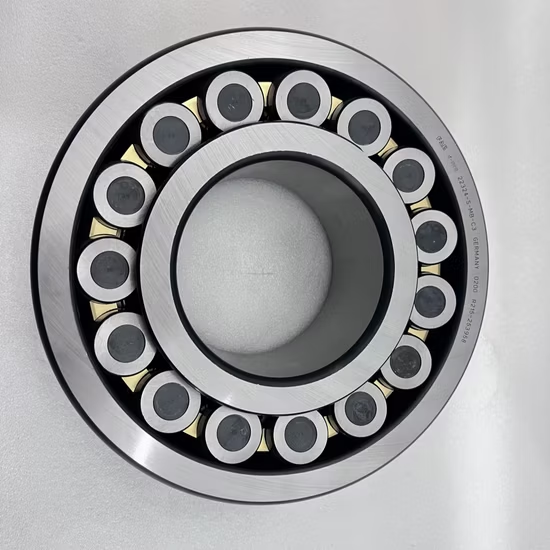
22216 Spherical Roller Bearing — Two-row spherical roller design with self-aligning capability compensates for shaft-to-housing misalignment under heavy radial and bidirectional axial loads.
Each unit supports QR batch verification through the brand's official mobile app, confirming authenticity before installation.
Full Batch Traceability — Every 22216 spherical roller bearing ships with verifiable manufacturer lot records accessible through official brand authentication applications.
| Parameter | Value |
|---|---|
| Designation | 22216 |
| Bearing Type | Spherical Roller Bearing |
| Origin | Germany / Japan / Sweden / Malaysia / China |
| HS Code | 8482500090 |
| Cage Material | Pressed steel or machined brass options |
| Clearance Class | CN, C3, C4 options available |
| Precision Class | P0, P6 options available |
| Bore Type | Cylindrical |
| Seal or Shield Type | Open |
| Industry | Typical Applications |
|---|---|
| Mining and Crushing | Jaw crusher toggle plate pivots, vibrating screen eccentric shafts |
| Steel and Metallurgy | Continuous caster roll guide bearings, hot strip mill work roll necks |
| Material Handling | Bucket elevator head pulley shafts, heavy-duty conveyor drive rollers |
Assuming standard clearance is sufficient for high-heat environments guarantees thermal binding.
When sourcing a 22216 spherical roller bearing for vibrating screens or crushers, buyers often focus solely on the base designation. I have personally inspected seized crusher shafts where a standard clearance bearing was installed in a high-temperature zone. The internal heat generation, combined with heavy radial loads, eliminated the operational clearance entirely, leading to sudden cage failure and unplanned downtime. Relying on base numbers without verifying the exact clearance class and cage material suffixes is a primary driver of premature equipment breakdown in heavy industries .
Selecting the correct internal configuration for a 22216 spherical roller bearing requires understanding the specific thermal and mechanical demands of the equipment. The spherical raceway in the outer ring provides essential self-alignment capabilities, compensating for shaft deflections and housing misalignments common in heavy-duty gearboxes and crusher assemblies. By reviewing the exact load profiles and operating temperatures, we ensure the supplied bearing features the optimal roller profile and cage design to withstand shock loads without suffering from edge stress or accelerated fatigue.
In heavy load machinery, the combination of extreme radial forces and elevated ambient temperatures drastically alters the internal operating clearance. If the initial clearance is too tight, thermal expansion of the shaft will compress the rolling elements against the raceways, generating excessive *, heavy contamination from mining dust or steel mill scale demands rigorous sealing strategies or frequent relubrication schedules to prevent abrasive wear. Ignoring these thermal and environmental factors inevitably leads to rapid surface degradation and catastrophic seizure .
The base number 22216 identifies the fundamental boundary dimensions and spherical roller geometry, but it does not dictate the internal operational state. Without explicit suffixes, the bearing defaults to standard radial internal clearance and a standard cage design, which are entirely inadequate for vibrating screens or high-heat metallurgical applications. Specifying a larger clearance class accommodates the thermal expansion of the inner ring during operation, while selecting a machined brass cage provides superior resistance to the high-frequency vibrations and shock loads typical in crushing equipment. Overlooking these internal design variables renders the base dimension match meaningless in severe service conditions.
Substituting a bearing based purely on a basic dimension match often results in severe operational consequences. Installing a standard clearance variant in a high-temperature application causes thermal binding, leading to catastrophic damage to the shaft, housing, and surrounding drivetrain components. This type of premature failure voids equipment warranties and triggers extensive unplanned downtime that far exceeds the initial component cost. Adhering strictly to failure analysis frameworks reveals that ignoring internal design suffixes is a leading cause of avoidable mechanical breakdowns in critical industrial assets .
We eliminate the risk of receiving counterfeit bearings with soft inner rings by sourcing exclusively through authorized channels and verifying every batch. Our cross-reference protocol goes beyond basic dimension matching; we align the internal clearance, cage material, and precision class to ensure exact equivalence across different manufacturers. For the 22216 spherical roller bearing, we specifically flag applications where standard clearance is dangerous and mandate the correct thermal expansion allowances. Every shipment includes comprehensive documentation, ensuring procurement managers have full traceability and technical confidence before the bearing reaches the maintenance workshop.
To ensure the supplied bearing perfectly matches your equipment requirements, please provide the specific radial and axial load values, operating speeds, and expected temperature ranges. If you are replacing an existing component, sharing the exact OEM equipment number or the full designation string from the removed bearing allows our engineering team to perform a precise cross-reference review. Supplying these operational parameters enables us to validate the L10 life calculation and confirm the optimal internal clearance and cage configuration for your specific application.
Q: Why does a base designation match fail in high-temperature applications?
A: A base number only defines boundary dimensions. Without specifying a larger internal clearance class, the thermal expansion of the shaft during operation will eliminate the internal gap, causing the rolling elements to bind against the raceways. This thermal binding generates extreme friction*re, which is why verifying the exact clearance suffix is critical for high-heat machinery.
Q: How do cage material choices affect performance in vibrating screens?
A: Vibrating screens subject bearings to high-frequency oscillations and severe shock loads. While pressed steel cages are suitable for standard applications, machined brass cages offer superior structural integrity and damping characteristics under intense vibration. Selecting the appropriate cage material prevents cage fracture and ensures the rolling elements remain correctly guided, significantly extending the operational lifespan in high-vibration environments.
Q: How can I verify the authenticity of the received batch?
A: Every bearing we supply features traceable markings that can be scanned using the manufacturer's official mobile application. This verification process confirms the production facility, batch number, and origin, effectively eliminating the risk of installing counterfeit products with substandard metallurgy. We also provide physical certificates of conformity and material test reports to support your internal quality assurance protocols.
Q: What information is required for an accurate cross-reference?
A: An accurate cross-reference requires more than just the basic dimension number. We need the complete designation string, including any suffixes indicating internal clearance, cage type, and precision class. Alternatively, providing the OEM equipment number and detailed operating parameters allows our technical team to determine the exact internal configuration required to prevent premature failure in your specific application.
Our 5-step process ensures every order is engineered, validated, and supported for optimal performance.
Technical needs assessment
Custom specifications
Free samples for $50k+
Pre-shipment inspection
On-site & predictive
Our certified engineers respond within 24 hours with detailed technical specifications, pricing, and lead time information.