01
Consultation
Technical needs assessment

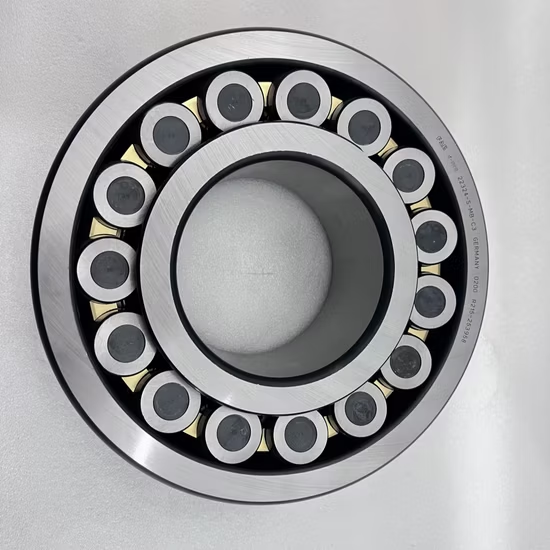
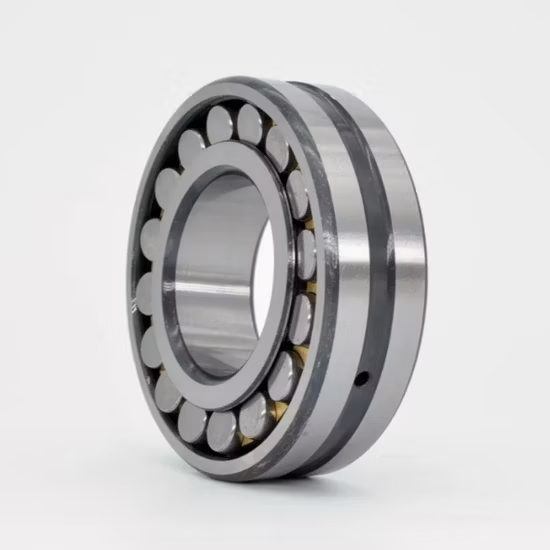
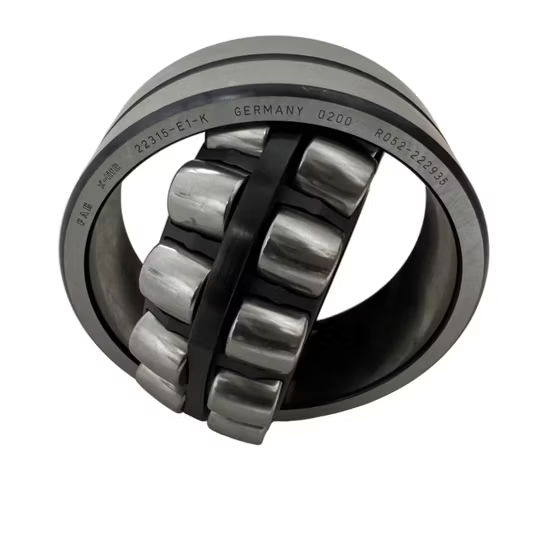
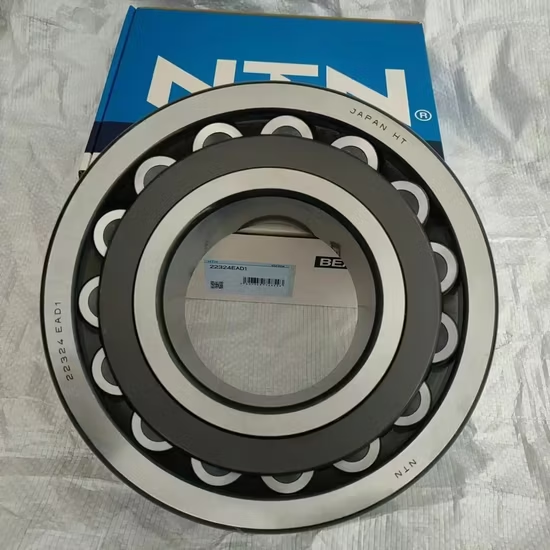
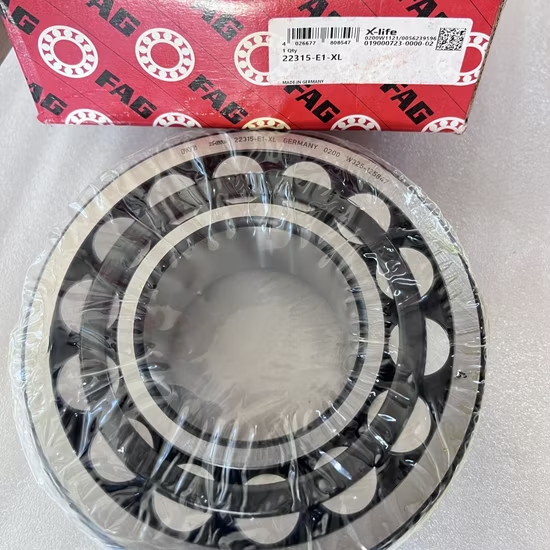

21308 Spherical Roller Bearing — Engineered for heavy-duty gearboxes and crushers to accommodate high radial loads and shaft misalignment.
Original Batch Traceability — Every 21308 spherical roller bearing ships with manufacturer lot documentation for full lifecycle verification.
| Parameter | Value |
|---|---|
| Designation | 21308 |
| Bearing Type | Spherical Roller Bearing |
| Bore Type | Cylindrical and Tapered (1:12) variants available |
| Origin | Germany / Japan / Sweden / Malaysia / China |
| Service | OEM |
| HS Code | 8482500090 |
| Industry | Typical Applications |
|---|---|
| Mining and Crushing | Jaw crushers and vibrating screen shafts |
| Steel and Metallurgy | Rolling mill gear drives and continuous casters |
| Power Transmission | Heavy-duty industrial gearbox output shafts |
| Automotive | Heavy vehicle wheel hubs and axle assemblies |
Missing the tapered bore suffix or selecting standard clearance for high-heat environments guarantees premature seizure.
I have seen this exact scenario play out at mining sites across Latin America, where a standard clearance installation on a vibrating screen shaft led to thermal binding within hours of startup. Procurement teams often focus solely on the base designation during cross-referencing, overlooking critical internal design differences like the 'K' suffix for a 1:12 tapered bore or the necessity of C3 clearance for thermal expansion . When the internal geometry or clearance class does not match the operational reality, the resulting friction generates excessive heat, ultimately destroying the cage and locking the shaft.
Selecting the correct 21308 spherical roller bearing requires aligning the bore configuration with the specific shaft design and adapter sleeve requirements. Our technical review process verifies whether your application demands the standard cylindrical bore or the 'K' variant for tapered shaft mounting, ensuring the cross-brand interchange matches the exact internal geometry rather than just the base number.
Heavy-duty environments subject these components to intense radial loads combined with significant temperature fluctuations that directly impact internal clearance. Proper lubrication intervals and the correct clearance class are vital to accommodate thermal expansion without causing the rolling elements to skid or bind . When operating in high-vibration machinery like crushers, the chosen cage material must also withstand continuous shock loading without fracturing.
The availability of both cylindrical and 'K' suffix tapered bore variants allows for precise matching to your shaft preparation and adapter sleeve setup. Selecting the appropriate clearance class—moving from standard CN to C3 or C4—is dictated by the operational temperature gradient and the interference fit required for the inner ring. Furthermore, the multi-origin sourcing capability ensures we can secure the correct cage material and clearance combination from major manufacturing hubs without compromising authenticity or extending lead times unnecessarily.
Overlooking a simple suffix discrepancy transforms a routine maintenance replacement into an unplanned downtime event that halts entire production lines. Installing a cylindrical bore component on a tapered shaft, or ignoring the required clearance expansion, leads to catastrophic damage that voids warranties and destroys adjacent housing structures . These failures are rarely covered under standard guarantees because the root cause traces back to improper application matching rather than manufacturing defects.
We eliminate the risk of receiving counterfeits with soft inner rings by providing authorized distribution coverage that guarantees authentic metallurgy. Our cross-reference alignment goes beyond the base number to verify the bore type, clearance class, and cage design, preventing the field failures caused by mismatched suffixes. Every shipment includes batch traceability to the manufacturer, allowing your maintenance team to scan QR codes via official brand apps for instant verification. We also provide application-based selection reviews that account for your specific load, speed, and temperature conditions to ensure optimal performance.
To ensure the selected configuration perfectly matches your operational demands, please provide your specific radial and axial load profiles, operating speeds, and ambient temperature ranges. Sharing the exact OEM equipment number or existing shaft dimensions allows our engineering team to perform a comprehensive cross-reference check and L10 life calculation. This technical review guarantees that the bore type, clearance class, and cage material are fully optimized for your specific application before procurement is finalized.
Q: How do I verify the authenticity of the 21308 using official brand apps?
A: Every genuine unit we supply features a unique traceability code on its packaging. By scanning this QR code with the manufacturer's official mobile application, you can instantly verify the production batch, origin, and authenticity, effectively eliminating the risk of installing counterfeits with compromised metallurgy.
Q: What is the critical difference between the standard and 'K' suffix variants?
A: The 'K' suffix designates a 1:12 tapered bore, which requires an adapter sleeve for mounting on a cylindrical shaft, whereas the standard designation indicates a cylindrical bore pressed directly onto a machined shaft seat. Confusing these two during cross-referencing will result in immediate installation failure.
Q: How do I select the correct clearance class for vibrating screen applications?
A: Vibrating screens generate significant friction and heat, necessitating C3 or greater clearance to accommodate thermal expansion and prevent internal binding. Installing standard CN clearance in these high-temperature environments will cause the rolling elements to seize, leading to rapid cage destruction and shaft damage.
Q: What cross-reference checks are performed beyond the base designation?
A: We verify the bore type, internal clearance class, cage material, and seal configuration to ensure the replacement perfectly matches the original equipment requirements. This comprehensive alignment prevents the premature failures caused by substituting a base number that lacks the necessary suffixes for your specific operating conditions.
Our 5-step process ensures every order is engineered, validated, and supported for optimal performance.
Technical needs assessment
Custom specifications
Free samples for $50k+
Pre-shipment inspection
On-site & predictive
Our certified engineers respond within 24 hours with detailed technical specifications, pricing, and lead time information.


