01
Consultation
Technical needs assessment


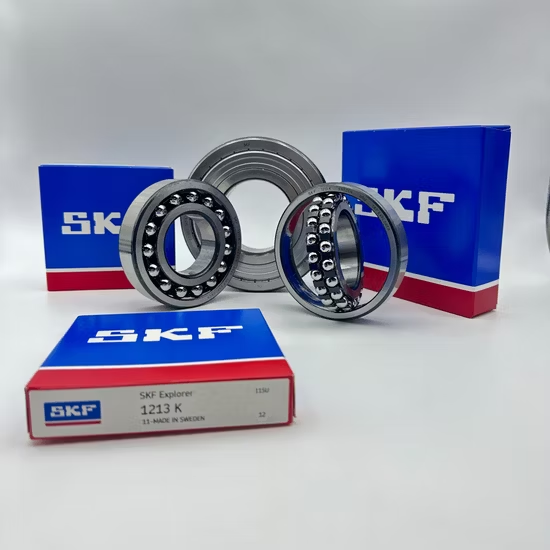
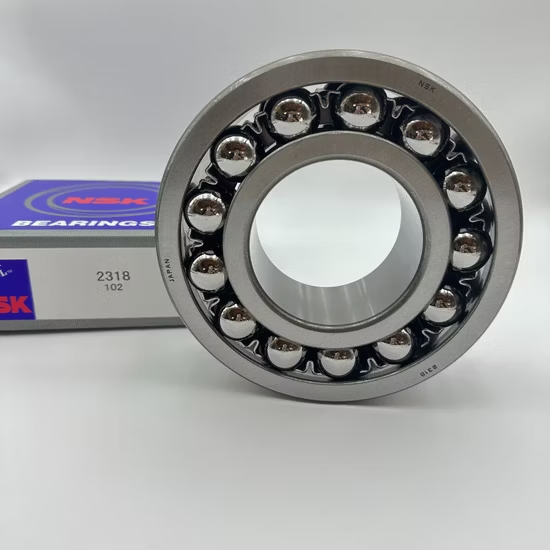


1301etn9 Self-Aligning Ball Bearing — self-aligning outer ring raceway accommodates static and dynamic shaft misalignment while minimizing heat generation.
Multi-brand authorized coverage — A single procurement order secures traceable 1301etn9 self-aligning ball bearing units alongside mixed-brand gearbox spares without coordinating multiple vendors.
| Parameter | Value |
|---|---|
| Designation | 1301etn9 |
| Product Type | Self-Aligning Ball Bearing |
| Seal or Shield Type | Open, Rubber Seals, Iron Seals |
| Origin | Germany, Japan, Sweden, Malaysia, China |
| HS Code | 848210 |
| Customization | Available |
Note: The 'etn9' suffix combination is unverified and requires manufacturer catalog confirmation, though 'TN9' typically denotes a glass fibre reinforced polyamide cage.
| Industry | Typical Applications |
|---|---|
| Electric Motors | Rotor shaft support accommodating minor housing misalignment |
| Industrial Gearboxes | Intermediate shaft mounting where thermal expansion occurs |
| Material Handling | Conveyor pulley bearings subjected to continuous radial loads |
Matching the exact polyamide cage specification prevents catastrophic thermal binding under continuous operation.
I have witnessed the aftermath of cross-reference errors that match the base designation but overlook critical cage material suffixes. In one cement plant incident, a substitute stamped steel cage deformed rapidly under high-temperature continuous load, whereas the original equipment required a reinforced polyamide design. Such oversights cause a significant share of premature failures in the field . When sourcing this specific designation, verifying the exact cage construction is non-negotiable to avoid unplanned downtime.
The 1301etn9 self-aligning ball bearing excels in applications where shaft deflection or housing misalignment is inevitable. Its self-aligning outer ring raceway accommodates both static and dynamic angular errors without inducing excessive edge stresses on the rolling elements. We review your specific load profiles and speed requirements to ensure the selected variant matches the operational reality of your electric motors and gearboxes.
Continuous operation in material handling environments generates substantial internal heat, making the correct internal clearance essential to compensate for thermal expansion. If the clearance class is too tight, the bearing will bind as temperatures rise; if too loose, vibration and noise will escalate. Furthermore, choosing between open, rubber-sealed, and iron-sealed configurations dictates how well the unit resists abrasive dust ingress while managing contact friction . Proper lubrication intervals must also align with the chosen seal type to maintain optimal performance.
The base number indicates a double-row self-aligning geometry, but the suffix dictates the operational boundaries. The polyamide cage variant offers lower weight and reduced friction compared to brass or stamped steel alternatives, allowing for higher speed capabilities and quieter operation. However, polyamide cages have strict thermal limits and cannot be used in environments exceeding their material threshold. The availability of different seal types allows engineers to balance contamination protection against the frictional heat generated by contact seals. Selecting the right combination ensures the internal geometry performs exactly as the equipment designer intended.
Substituting a bearing with an incorrect internal design or cage material often leads to catastrophic damage to the surrounding shaft and housing. When a cage fails at high speeds, the rolling elements skew and destroy the raceways, resulting in complete assembly seizure. This extends far beyond a simple component replacement, causing extensive unplanned downtime and voiding equipment warranties . The financial impact of a misapplied suffix always dwarfs the initial procurement savings.
We provide authorized coverage across all major brands, meaning your mixed-brand requirements are fulfilled with consistent documentation. Every batch features full traceability to the manufacturer, verified through official brand apps via QR codes. Our cross-reference alignment checks the base number, clearance, cage material, and precision suffixes simultaneously, preventing the exact cage misapplication errors that destroy gearboxes. We conduct application-based selection reviews covering your specific load, speed, and temperature conditions before finalizing the order.
To ensure optimal performance, please share your specific radial and axial load profiles, operating speeds, and ambient temperature ranges. Providing the original OEM equipment number allows our engineering team to perform a precise cross-reference check and verify the exact suffix requirements. This technical review guarantees the selected configuration aligns perfectly with your operational parameters.
Q: How do I verify the authenticity of the received bearings?
A: Every unit is supplied with batch traceability documentation and a unique QR code. You can scan this code using the manufacturer's official mobile application to instantly verify the production origin, ensuring you receive genuine components rather than counterfeits with cloned markings and substandard internal metallurgy.
Q: Why is it critical to match the exact cage material suffix?
A: Different cage materials have distinct speed, load, and temperature boundaries. Substituting a stamped steel cage where a reinforced polyamide design is required can lead to rapid deformation and thermal binding under continuous high-speed operation, ultimately causing catastrophic equipment failure and extensive unplanned downtime.
Q: How do I choose between open, rubber, and iron seal variants?
A: Open designs require external lubrication systems and clean environments. Rubber seals provide excellent contamination exclusion but generate higher contact friction, limiting maximum speeds. Iron shields offer a non-contact compromise, keeping out larger debris while minimizing frictional heat, making them ideal for high-speed electric motor applications.
Q: What parameters dictate the final selection for my application?
A: The final selection depends on the specific combination of radial and axial loads, operating speeds, ambient temperatures, and the degree of expected shaft misalignment. Sharing these operational parameters allows us to calculate the required internal clearance and confirm the most suitable seal and cage configuration for your machinery.
Our 5-step process ensures every order is engineered, validated, and supported for optimal performance.
Technical needs assessment
Custom specifications
Free samples for $50k+
Pre-shipment inspection
On-site & predictive
Our certified engineers respond within 24 hours with detailed technical specifications, pricing, and lead time information.