01
Consultation
Technical needs assessment


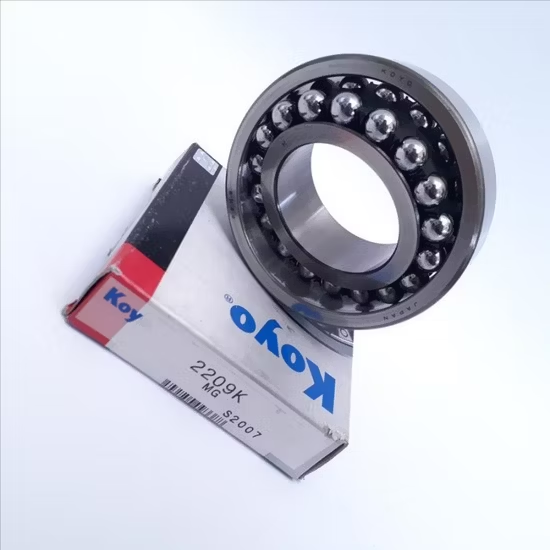
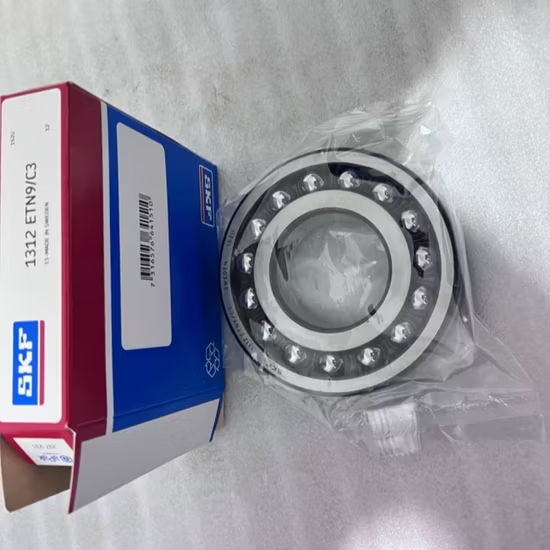


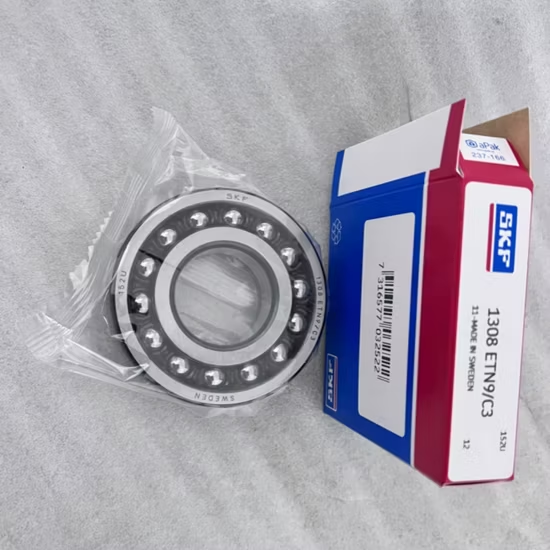
1216 K C3 Self-Aligning Ball Bearing — 1:12 tapered bore for adapter sleeve mounting in printing machines and conveyors.
Every unit ships with scannable QR codes linking directly to the manufacturer's official authentication app for real-time batch verification.
Traceable Batch Origins — Every 1216 K C3 self-aligning ball bearing ships with manufacturer lot documentation for complete supply chain visibility.
| Parameter | Value |
|---|---|
| Designation | 1216 K C3 |
| Product Type | Self-Aligning Ball Bearing |
| Bore Type | Tapered bore (1:12 taper) |
| Clearance Class | C3 |
| Bearing Style Options | Open, Rubber Seals, Iron Seals |
| Material Options | Available in stainless steel or standard bearing steel variants |
| Certification | Certificate of Conformity supported |
| Industry | Typical Applications |
|---|---|
| Printing & Packaging | Printing machine roller shafts, web tension control mechanisms |
| Textile Manufacturing | Loom drive shafts, continuous yarn guide assemblies |
| Material Handling | Conveyor pulley shafts, belt tracking idler rolls |
| Agricultural Equipment | Harvester drive shafts, crop conveyor auger supports |
Thermal expansion destroys standard clearance bearings in continuous web-fed machinery.
Sourcing a replacement based solely on the base 1216 number is a frequent trap in print shop maintenance. I have seen printing machine roller shafts lock up completely mid-run because a standard CN clearance bearing was installed instead of the specified C3 variant. The friction heat generated during continuous operation eliminates the internal gap, leading to catastrophic cage failure . When procuring a 1216 K C3 self-aligning ball bearing, verifying the exact internal clearance and bore geometry is just as critical as the outer dimensions.
Printing machinery demands components that handle continuous radial loads while compensating for slight shaft deflections under heavy paper web tension. The self-aligning capability of this design accommodates housing misalignment without inducing edge stresses on the raceways. By strictly matching the K and C3 suffixes during cross-referencing, we ensure the bearing accommodates both the mechanical mounting requirements and the thermal dynamics of the pressroom.
Roller shafts in printing presses operate at sustained speeds, generating significant friction heat that transfers directly into the bearing housing. This thermal buildup severely impacts internal clearance, making standard gaps inadequate for continuous duty. Furthermore, the pressroom environment is saturated with paper dust and aerosolized ink mist, which readily infiltrates open bearing cavities. Selecting the appropriate sealing configuration—whether rubber seals for high contamination or iron shields for lower friction—is essential to prevent abrasive wear .
The K suffix designates a 1:12 tapered bore, which is engineered specifically for mounting on adapter sleeves. This setup allows for precise axial positioning and secure clamping on the shaft without requiring a machined shoulder. The C3 internal clearance provides a larger-than-normal gap between the rolling elements and raceways. This extra space is mandatory in printing applications to absorb the thermal expansion of the shaft and housing during high-speed operation, preventing the rolling elements from binding when the machinery reaches its operating temperature.
Installing a bearing with an incorrect bore taper or insufficient internal clearance leads to rapid, unplanned downtime. A mismatched bore prevents proper clamping force on the adapter sleeve,*rface. Meanwhile, insufficient clearance results in excessive preload under thermal expansion, accelerating lubricant degradation and causing premature spalling on the raceways . These failures void equipment warranties and force expensive emergency press shutdowns.
Mixed-brand orders are consolidated through our authorized distribution network, eliminating the need to coordinate with multiple suppliers for a single press rebuild. We prevent cross-reference errors by verifying that the replacement matches the 1:12 taper and C3 clearance, not just the base 1216 designation. Our application-based selection review evaluates your specific roller speeds and operating temperatures to confirm the suffix combination is correct. Every shipment includes batch traceability, ensuring you receive genuine components that meet the exact specifications of your OEM equipment.
To ensure precise fitment, share your roller shaft radial loads, operating speeds, and steady-state temperatures for an L10 life calculation. Provide the OEM equipment number or the exact dimensions of your existing adapter sleeve so we can verify the 1:12 taper compatibility. Detailing the level of paper dust or ink mist exposure allows our engineering team to recommend the optimal sealing configuration for your specific press.
Q: Why must the K and C3 suffixes be matched exactly during cross-referencing?
A: The K suffix ensures the 1:12 tapered bore fits your specific adapter sleeve, preventing inner ring creep. The C3 clearance provides the necessary internal gap to accommodate thermal expansion during continuous printing operations. Matching only the base number risks installing a cylindrical bore or standard clearance bearing, leading to mounting failure or thermal seizure.
Q: How do I choose between Open, Rubber Seals, and Iron Seals for printing machines?
A: Open bearings require a clean, externally lubricated housing. Rubber seals offer superior protection against paper dust and ink mist but generate slightly more friction. Iron shields provide a non-contact barrier that limits large particle ingress while minimizing friction heat, making them ideal for high-speed roller shafts where contamination is moderate.
Q: What are the mounting requirements for the 1:12 tapered bore?
A: The tapered bore requires a matching adapter sleeve and lock nut for secure shaft clamping. During installation, the lock nut must be tightened to drive the bearing up the taper, reducing the internal C3 clearance to the precise residual value specified by the manufacturer. This ensures rigid shaft locking without over-pressurizing the raceways.
Q: When is C3 clearance required over standard CN clearance in continuous-duty machinery?
A: C3 clearance is mandatory when the inner ring operates at a noticeably higher temperature than the outer housing, causing the shaft to expand more than the bearing block. In printing machines, continuous friction and web tension generate significant heat. Standard CN clearance would disappear under this thermal expansion, causing the rolling elements to bind and fail prematurely.
Our 5-step process ensures every order is engineered, validated, and supported for optimal performance.
Technical needs assessment
Custom specifications
Free samples for $50k+
Pre-shipment inspection
On-site & predictive
Our certified engineers respond within 24 hours with detailed technical specifications, pricing, and lead time information.