01
Consultation
Technical needs assessment



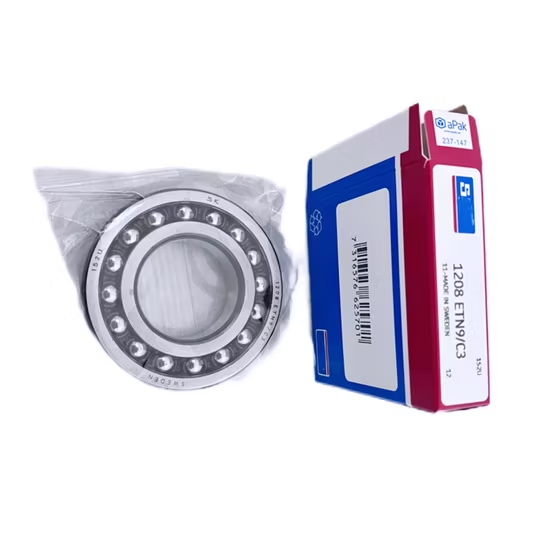


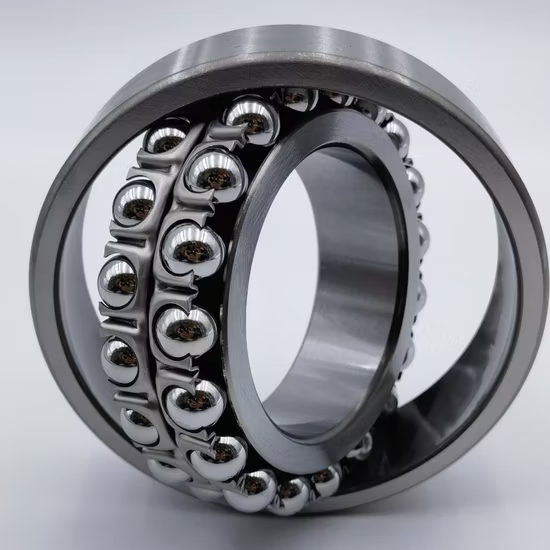
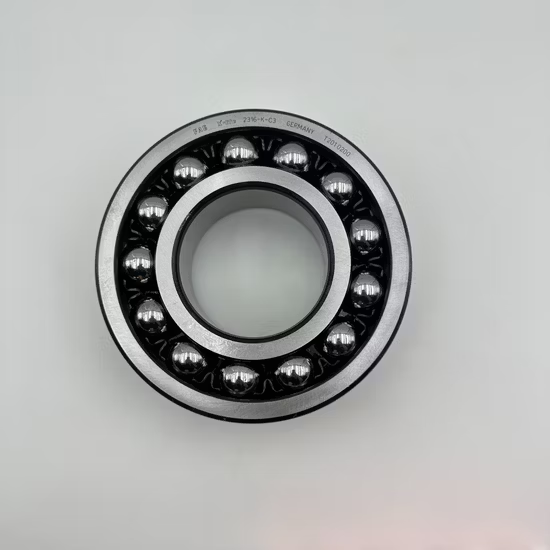
2308-2RS Self-Aligning Ball Bearing — double rubber contact seals provide reliable protection against dust and moisture ingress, ensuring maintenance-free operation in applications with expected shaft misalignment.
Multi-brand authorized coverage — Procure the 2308-2RS self-aligning ball bearing alongside SKF, FAG, and NSK equivalents in a single consolidated shipment without juggling multiple vendors.
| Parameter | Value |
|---|---|
| Designation | 2308-2RS |
| Bearing Type | Self-Aligning Ball Bearing |
| Seal or Shield Type | Double rubber contact seals |
| Clearance Class | C3 radial internal clearance |
| Origin | Germany, Japan, Sweden, Malaysia, China |
| Industry | Typical Applications |
|---|---|
| Electric Motors | Rotor shafts subject to minor misalignment and thermal growth |
| Agricultural Machinery | Conveyor drive pulleys and seed metering shafts exposed to dust |
| Pumps & Gearboxes | Input and output shafts experiencing housing bore machining errors |
Matching the base designation without verifying the seal type and internal clearance guarantees premature thermal binding.
I have seen entire mineral processing lines halt because a standard CN clearance was forced into a high-heat environment where C3 was mandatory. When procurement teams focus solely on the numeric prefix, they ignore the critical suffixes that dictate thermal expansion limits and contamination defense . This oversight turns a simple replacement into a catastrophic downtime event, especially when cross-referencing mixed-series alternatives like the 2207-2RS or 1212 without checking the internal geometry.
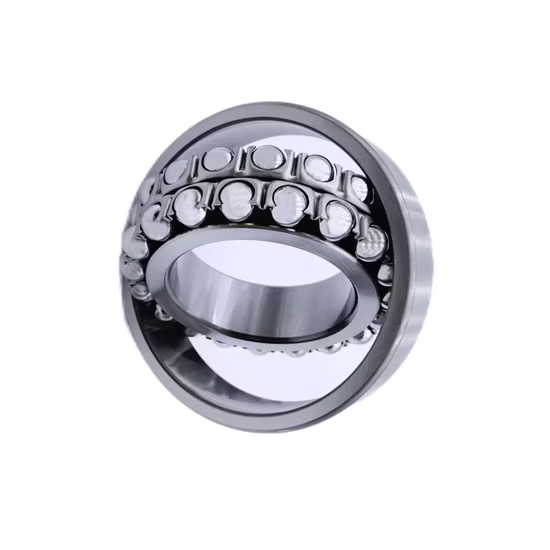
The 2308-2RS self-aligning ball bearing features a spherical outer ring raceway, allowing the inner ring and ball assembly to swivel freely. This design directly compensates for static shaft deflections and housing bore machining errors common in heavy-duty agricultural and conveyor applications. By absorbing these angular discrepancies, the bearing prevents localized edge loading that typically destroys rigid ball bearings.
In dusty environments like agricultural processing or mining conveyors, the double rubber contact seals retain factory grease while blocking abrasive particulates. However, these contact seals generate friction heat, which must be accommodated by the C3 radial internal clearance to prevent the rolling elements from skidding. If the operating temperature rises significantly, the internal clearance shrinks, making the initial C3 selection critical for maintaining the correct operational geometry .
The 2RS suffix confirms the presence of double rubber contact seals, providing robust contamination defense but imposing strict speed limits due to lip friction. The C3 clearance indicates a radial internal gap larger than the standard CN class, specifically engineered to absorb the thermal expansion of the shaft and inner ring during continuous operation. While cross-referencing to alternatives like the 2313m or 1314m, buyers must ensure the replacement matches both the sealing friction profile and the thermal expansion allowance. Note: Suffixes such as m, ca, and E4 occasionally appear in cross-reference lists but remain unverified for this specific self-aligning series and require manufacturer catalog confirmation.
Installing a standard clearance bearing in a high-temperature application eliminates the operational gap, leading to excessive preload and catastrophic cage failure. According to ISO 281 guidelines, ignoring the thermal dynamics of the application drastically reduces the calculated L10 life . Such failures void equipment warranties and trigger unplanned downtime that far exceeds the initial procurement savings.
We execute cross-referencing that aligns the base number, clearance class, and seal type simultaneously, preventing the common trap of swapping a sealed unit for an open variant. Our inventory provides batch traceability to the manufacturer, ensuring every 2308-2RS self-aligning ball bearing can be verified via official brand applications. Whether you need a mixed-brand consolidation or a specific C3 sealed configuration, our technical review covers the exact load, speed, and temperature parameters of your machinery.
Provide your exact radial and axial loads, operating speeds, and ambient temperatures so our engineers can validate the C3 clearance selection. Supply the OEM equipment number or the exact housing dimensions to ensure the 2RS seal configuration matches your contamination environment. Sharing these parameters allows us to perform a precise L10 life calculation and confirm the optimal cross-reference.
Q: How do I verify the authenticity of the 2308-2RS self-aligning ball bearing?
A: Authenticity is confirmed by scanning the QR code on the packaging using the official mobile application of the manufacturing brand. This digital verification links the specific batch and lot number to the factory's production records, confirming the exact seal type and internal clearance class before the unit is mounted in your equipment.
Q: Why is C3 clearance critical for this sealed self-aligning bearing?
A: The rubber contact seals generate friction heat during operation, which transfers to the inner ring and causes thermal expansion. The C3 radial internal clearance provides the necessary geometric gap to accommodate this expansion, preventing the rolling elements from binding and ensuring the bearing maintains its designed operational lifespan under continuous thermal loads.
Q: Can I cross-reference the 2308-2RS with the 2207-2RS or 1212?
A: While these designations may share similar dimensional envelopes or load capacities, cross-referencing requires strict alignment of the internal geometry, seal friction profile, and clearance class. Substituting a 1212 deep groove ball bearing removes the self-aligning capability, and swapping seal types will alter the thermal dynamics and speed limits of the application.
Q: What is the difference between 2RS rubber seals and iron shields?
A: Rubber contact seals provide superior protection against fine dust and moisture ingress by physically touching the inner ring, making them ideal for harsh agricultural or mining environments. Iron shields offer non-contact protection that generates less friction and allows for higher rotational speeds, but they cannot prevent liquid or fine particulate contamination as effectively.
Our 5-step process ensures every order is engineered, validated, and supported for optimal performance.
Technical needs assessment
Custom specifications
Free samples for $50k+
Pre-shipment inspection
On-site & predictive
Our certified engineers respond within 24 hours with detailed technical specifications, pricing, and lead time information.