01
Consultation
Technical needs assessment

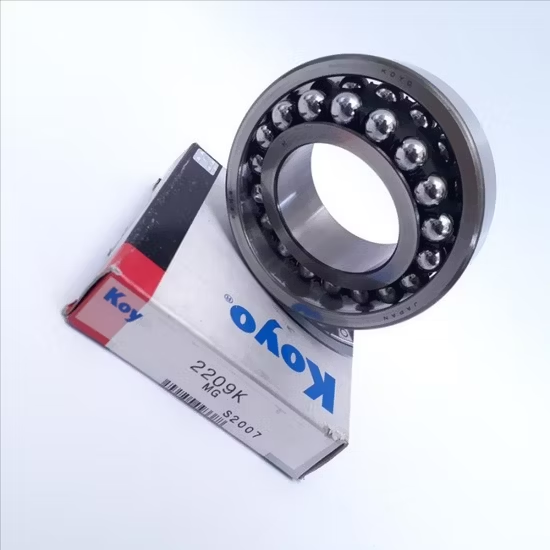

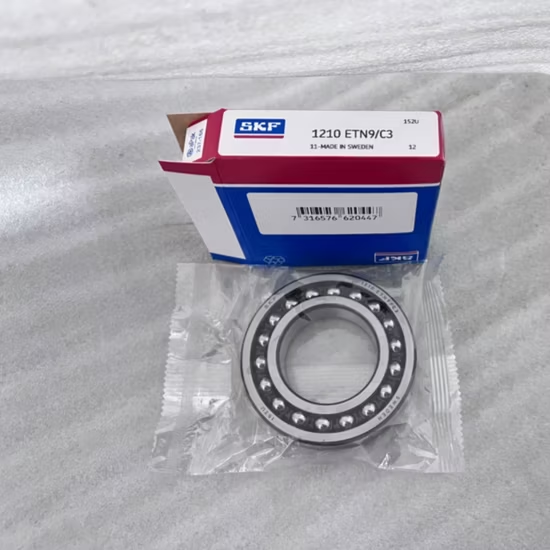
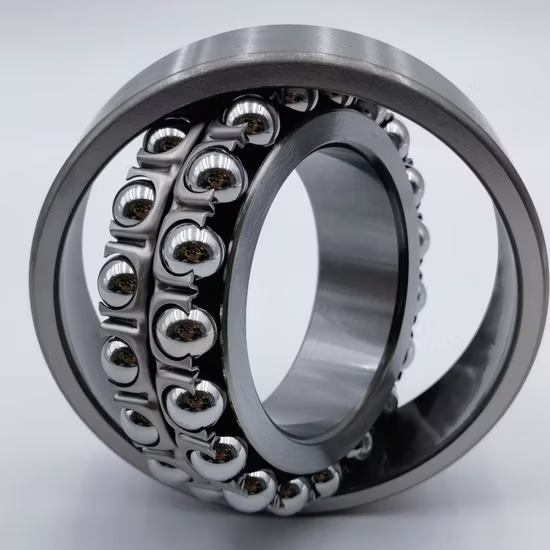


1207 Self-Aligning Ball Bearing — features a spherical outer ring raceway to effectively compensate for shaft deflection and mounting misalignment in dynamic operations.
Multi-brand authorized supply — Source SKF, FAG, and NSK 1207 variants in a single consolidated shipment without juggling multiple vendors.
| Parameter | Value |
|---|---|
| Designation | 1207 |
| Bearing Type | Self-Aligning Ball Bearing |
| Seal or Shield Type | Open, Rubber Seals, Iron Seals |
| Origin | Germany, Japan, Sweden, Malaysia, China |
| HS Code | 848210 |
| Industry | Typical Applications |
|---|---|
| Electric Motors | Rotor support shafts experiencing slight misalignment |
| Agricultural Machinery | Conveyor drive rollers in harvesting equipment |
| Material Handling | Belt pulley shafts in bulk transport systems |
| Textile Machines | Spindle drive shafts requiring vibration tolerance |
| Machine Tools | Feed mechanism shafts with minor deflection |
Selecting standard clearance for high-heat environments guarantees rapid seizure.
I once inspected a high-temperature exhaust fan in Shenzhen where the rotor locked up completely after just a few weeks. The maintenance team had installed a standard clearance bearing, ignoring the intense heat radiating from the fan casing. As the shaft expanded, the internal clearance vanished, leading to extreme friction and catastrophic failure . When procuring a 1207 self-aligning ball bearing for elevated temperature applications, verifying the exact clearance suffix is not optional; it is the primary defense against unplanned downtime.
The outer ring raceway of this series features a spherical profile, allowing the inner ring and ball assembly to align freely. This self-aligning capability is crucial for long shafts in agricultural and material handling equipment where structural deflection is unavoidable. By accommodating minor coaxial errors during installation, the bearing prevents edge loading that typically destroys rigid alternatives. We verify these application parameters to ensure the self-aligning geometry matches your specific shaft deflection limits.
Operating conditions dictate the exact configuration required for reliable performance. In dusty agricultural environments, rubber seals prevent abrasive particles from contaminating the grease, though they introduce slight friction. For high-speed electric motors, iron shields offer non-contact protection while minimizing thermal generation. When ambient temperatures rise, standard lubricants degrade and internal clearances shrink. Evaluating the combined effects of radial loads, operating speeds, and thermal expansion ensures the selected variant survives the actual working environment rather than just the theoretical design .
The base number alone never tells the full story. A unit supplied with standard CN clearance will bind if the shaft operates at elevated temperatures, making a C3 or C4 suffix mandatory for thermal compensation. Similarly, the cage material drastically alters performance boundaries; pressed steel cages handle standard speeds efficiently, while machined brass cages provide superior stability under heavy vibration and shock loads. Open variants require strict external lubrication schedules, whereas sealed units are lubricated for life but cannot be relubricated in the field. Understanding these internal design choices prevents catastrophic mismatches.
Installing a component that matches the base number but ignores internal design flaws leads to rapid degradation. According to ISO 281 frameworks, inadequate clearance or improper cage selection drastically reduces the calculated fatigue life. Premature failures result in severe secondary damage to housings and shafts, triggering extended production halts. The financial impact of unplanned downtime and emergency freight far exceeds the initial procurement savings, often voiding equipment warranties in the process .
We supply authorized inventory across all major international brands, meaning your mixed-brand requirements are fulfilled in one order. Our cross-reference process strictly aligns clearance, cage material, and precision suffixes, eliminating the dangerous habit of matching only the base designation. Every shipment includes batch traceability to the manufacturer, verified through official brand applications. When your application involves unusual thermal or load conditions, our engineering team reviews the selection to prevent the exact clearance failures I have witnessed on factory floors.
To ensure the selected configuration survives your specific operating environment, please share the exact radial and axial loads, operating speeds, and ambient temperature ranges. If you are replacing an existing unit, providing the OEM equipment number allows us to perform a precise cross-reference check. This data enables our engineering team to validate the clearance class and sealing arrangement, preventing costly thermal or contamination failures.
Q: How does clearance selection affect high-temperature performance?
A: Standard CN clearance is designed for normal operating temperatures. When the shaft expands due to heat, the internal clearance decreases. If a C3 or C4 suffix is not specified for high-heat environments, the rolling elements will bind against the raceway, generating excessive friction and causing rapid thermal seizure. Always match the clearance to your maximum operating temperature.
Q: Why must cross-references include suffixes and not just the base number?
A: Matching only the base number ignores critical internal differences. Two bearings might share the same dimensions but feature entirely different cage materials, internal curvatures, or sealing arrangements. Installing a standard cage in a high-vibration application or an open bearing in a dusty environment leads to premature failure. We verify every suffix to ensure exact functional equivalence.
Q: How can I verify the authenticity of the delivered units?
A: Every unit we supply features batch traceability linked to the manufacturer's production records. You can scan the QR code on the packaging or the bearing itself using the official brand application on your smartphone. This instantly confirms the origin, production date, and authenticity, protecting your equipment from counterfeit components with soft inner rings.
Q: What is the sealing difference between rubber and iron options?
A: Rubber seals provide excellent exclusion of fine dust and moisture but generate slight friction, which limits maximum rotational speed. Iron shields offer non-contact protection against larger debris while allowing higher speed capabilities, though they cannot prevent liquid ingress. The choice depends entirely on the contamination level and the rotational speed of your specific application.
Our 5-step process ensures every order is engineered, validated, and supported for optimal performance.
Technical needs assessment
Custom specifications
Free samples for $50k+
Pre-shipment inspection
On-site & predictive
Our certified engineers respond within 24 hours with detailed technical specifications, pricing, and lead time information.


