01
Consultation
Technical needs assessment



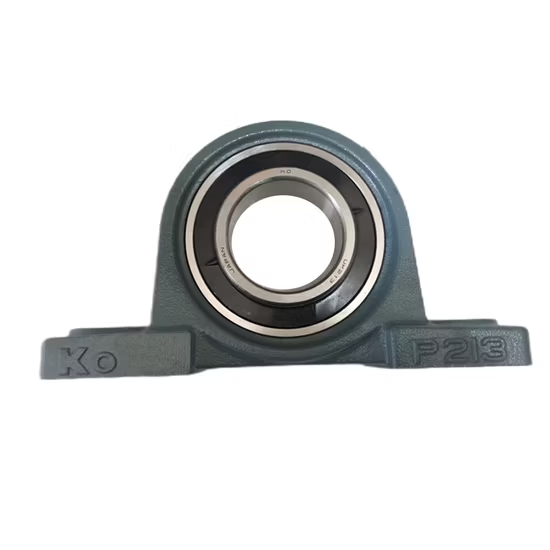
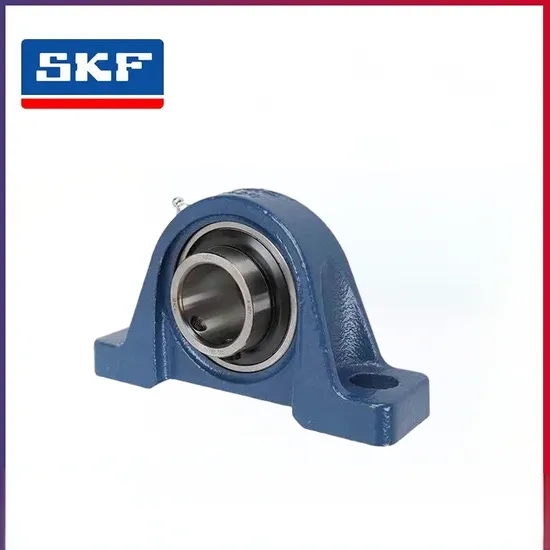
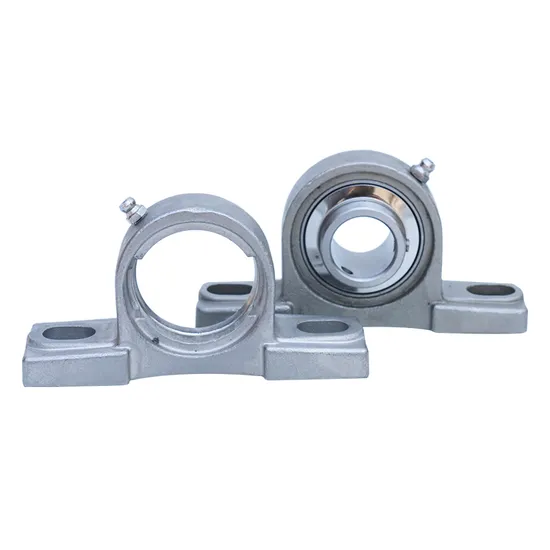
UCFL207-20 Two-Bolt Flanged Bearing Unit features a cast iron housing and deep groove raceway for high-speed, high-temperature applications.
Official App QR Verification — Every UCFL207-20 insert bearing pillow block unit ships with scannable authenticity tags linked directly to the manufacturer's database, eliminating the risk of cloned codes on counterfeit agricultural parts.
| Parameter | Value |
|---|---|
| Designation | UCFL207-20 |
| Product Type | Insert Bearing / Pillow Block Unit |
| Housing Style | Two-Bolt Oval Flange (UCFL) |
| Dimension Series | 02 |
| Bore Diameter (d) | 35 mm |
| Rows Number | Single |
| Raceway Type | Deep Groove Raceway |
| Housing Material | Cast Iron |
| Feature Options | Corrosion Resistant, High Temperature, High Speed variants |
| Origin Options | Germany, Japan, Sweden, Malaysia, China |
Note: The "-20" suffix designation requires manufacturer catalog confirmation prior to bulk ordering, as it may denote a specific 1-1/4 inch bore variant or specialized internal clearance arrangement not universally standardized across all brands.
| Industry | Typical Applications |
|---|---|
| Agricultural Machinery | Combine harvester header drives, tractor PTO shaft supports, rotary tiller gearboxes |
| Conveyor Systems | Bulk material transfer belt idlers, packaging line roller end-supports |
| Textile Machines | Yarn tensioning roller mounts, industrial loom drive shafts |
| Material Handling | Bucket elevator tail pulleys, automated sorting diverter arms |
Matching the base designation while ignoring internal design variations is the primary cause of premature seizure in flanged housing applications.
Procurement teams often source replacements based solely on the UCFL207 prefix, assuming the remaining suffix dictates a universal standard. In reality, substituting a standard clearance unit into a high-temperature harvesting application causes thermal binding once the equipment reaches operating temperature. Similarly, ignoring the specific seal type required for dusty environments allows abrasive particulates to bypass the shielding, rapidly destroying the deep groove raceway. We see this constantly when replacing failed units in the field; the base number matched perfectly, but the internal geometry and sealing arrangement were entirely wrong for the actual operating environment.
Sourcing the correct UCFL207-20 insert bearing pillow block unit requires looking past the cast iron housing to evaluate the internal insert's suitability for the specific agricultural or conveyor workload. Our technical review process cross-references the exact OEM equipment number to verify whether the original design utilized a specialized cage material or a specific sealing lip profile. This ensures the replacement unit handles the exact radial loads and misalignment tolerances present in your machinery, rather than just fitting the bolt holes.
Agricultural and material handling environments subject flanged bearings to severe misalignment and heavy particulate contamination. When shaft deflection occurs, the spherical outer ring of the insert must rotate smoothly within the cast iron housing to prevent edge loading on the rolling elements. Simultaneously, the sealing system faces a critical trade-off: heavy contact seals keep out abrasive crop dust but generate friction heat, while non-contact shields reduce friction but allow fine particulates to infiltrate the grease cavity. Selecting the correct balance prevents the lubricant from breaking down or leaking out, which is a frequent failure point we observe in poorly specified replacements.
The UCFL prefix explicitly defines a two-bolt oval flanged housing, which provides a compact mounting footprint compared to standard four-bolt square flanges. The 207 dimension series indicates a robust 02 series insert capable of handling moderate to heavy radial loads typical in conveyor and harvester drives. The deep groove raceway design accommodates the slight axial loads generated during belt tensioning or shaft misalignment. Because the housing is cast iron, it offers excellent vibration dampening, but the internal insert's clearance class must be carefully matched to the operating temperature to prevent the internal components*g continuous operation.
Installing a standard pillow block where an oval flange is required, or ignoring the specific internal clearance of the insert, leads directly to unplanned downtime. When thermal expansion is not accommodated by the correct internal clearance, the bearing experiences catastrophic internal preload, resulting in cage failure and shaft scoring. Furthermore, utilizing counterfeit units with soft inner rings causes the set screws to strip during installation or the locking collar to slip under vibration, destroying the driven component. These failures void equipment warranties and halt entire processing lines, turning a minor component replacement into a major financial loss.
Mixed-brand orders are consolidated seamlessly, ensuring your agricultural and conveyor maintenance kits arrive from a single authorized source with unified documentation. We perform rigorous cross-reference checks that verify not just the base UCFL207 number, but also the exact seal profile and internal clearance required for your specific OEM application. Every batch is traced back to the manufacturer's production facilities, eliminating the risk of receiving cloned units with compromised metallurgy. Our application-based selection review evaluates your specific load, speed, and temperature parameters to recommend the optimal variant, preventing the costly field failures caused by generic catalog substitutions.
To ensure precise selection and cross-reference validation, please provide the specific OEM equipment number and the original manufacturer's part number from the failed unit. Share the operational parameters, including typical radial loads, shaft speed, and ambient temperature, so our engineering team can verify the required internal clearance and sealing arrangement. Detailing the specific environmental exposure, such as heavy crop dust or washdown conditions, allows us to confirm the optimal material and seal variant for your application.
Q: What is the primary difference between the UCFL oval flange and a standard P-type pillow block?
A: The UCFL series utilizes a two-bolt oval housing designed for compact spaces and lighter structural support, mounting flush against the machine frame. In contrast, the P-type pillow block features a solid base with perpendicular mounting bolts, providing higher load capacity and stability for heavy-duty shaft supports. Selecting the wrong housing style compromises the structural integrity of the mounting surface.
Q: How do we ensure exact alignment when cross-referencing this flanged unit to other brands?
A: Accurate cross-referencing requires matching three critical parameters: the base dimension series, the internal radial clearance class, and the specific seal type. Simply matching the UCFL207 prefix is insufficient, as different brands utilize varying suffix conventions for sealing profiles and locking mechanisms. We verify these details against the OEM specifications to guarantee functional equivalence.
Q: How should we select the correct internal clearance for high-temperature conveyor applications?
A: Standard clearance is suitable for ambient temperatures, but conveyor drives operating in elevated heat require increased internal clearance to accommodate shaft thermal expansion. If standard clearance is used in high-heat environments, the internal components will bind as the shaft expands, leading to rapid overheating and catastrophic cage failure. We review your operating temperatures to specify the correct clearance class.
Q: What physical checks confirm the authenticity of the received flanged bearing units?
A: Upon receipt, scan the QR code on the packaging using the manufacturer's official mobile application to verify the batch number and origin. Physically inspect the inner ring hardness and the casting quality of the housing; counterfeit units often feature soft inner rings that deform under set screw pressure and porous cast iron housings that crack under operational vibration.
Our 5-step process ensures every order is engineered, validated, and supported for optimal performance.
Technical needs assessment
Custom specifications
Free samples for $50k+
Pre-shipment inspection
On-site & predictive
Our certified engineers respond within 24 hours with detailed technical specifications, pricing, and lead time information.