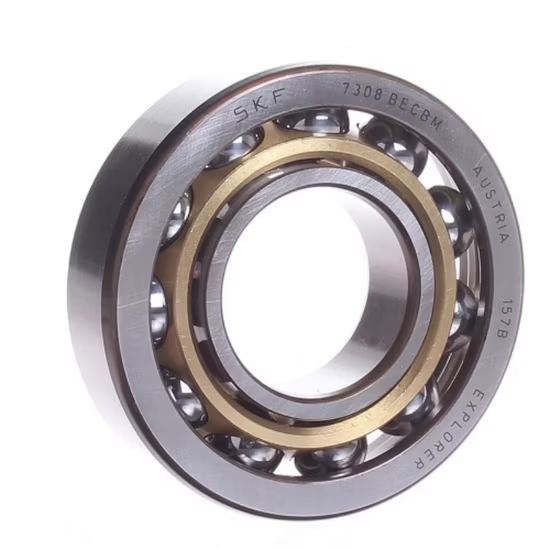
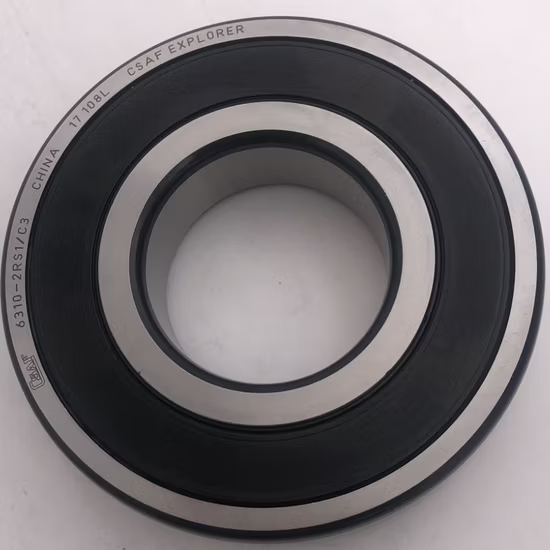
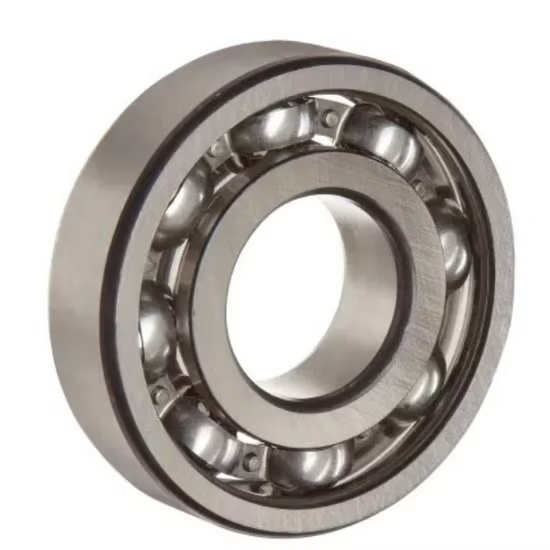
01
Consultation
Technical needs assessment



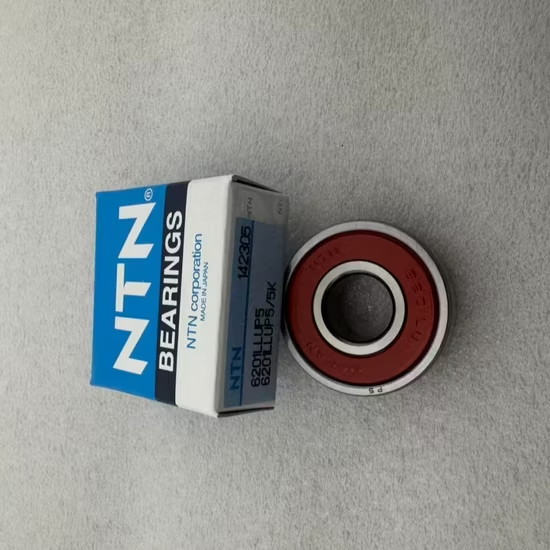


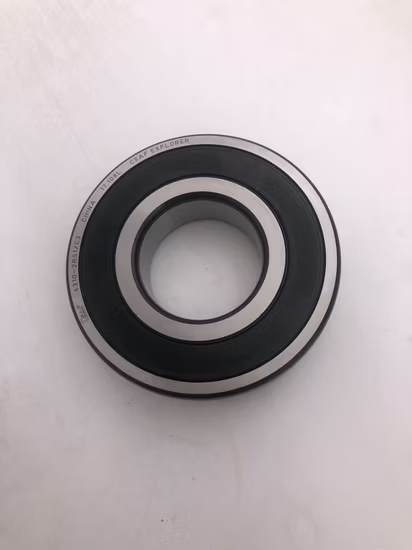
NTN NACHI NSK Koyo 6013 6014 6015 6016 6017 6018 Deep Groove Ball Bearings P4 P5 P6 — ZZ steel shields protect against dust at medium speeds, while 2RS rubber seals prevent contamination in harsh environments. P4, P5, and P6 precision grades ensure stable rotation for printing presses and electric motors.
Official App Verification — Every NTN NACHI NSK Koyo 6013 6014 6015 6016 6017 6018 deep groove ball bearing we dispatch carries a scannable QR code linked directly to the manufacturer's official authentication application, instantly exposing cloned labels or soft inner rings that deceive visual checks.
| Parameter | Value |
|---|---|
| Designation | NTN NACHI NSK Koyo 6013 6014 6015 6016 6017 6018 |
| Product Type | Deep Groove Ball Bearing |
| Bearing Style | Open, ZZ (Double Shielded), 2RS (Double Contact Sealed) |
| Quality Level | Z1V1, Z2V2, Z3V3, Z4V4 |
| Material | Chrome Steel |
| Precision Class | P4, P5, P6 |
| Origin | Germany / Japan / Sweden / Malaysia / China |
| Industry | Typical Applications |
|---|---|
| Printing & Packaging | Printing press impression cylinders, web tension control rollers |
| Power Transmission | Industrial gearbox intermediate shafts, electric motor rotor supports |
| Fluid Handling | Centrifugal pump impeller shafts, conveyor drive pulleys |
A missing precision suffix turns a high-speed press component into a source of catastrophic vibration.
In the Pearl River Delta manufacturing hub, I have repeatedly seen printing press impression cylinders suffer from severe misregistration simply because a procurement team matched the base 6015 number but ignored the P4 or P5 requirement. When a standard P0 grade is forced into a high-speed printing application, the microscopic runout translates directly into roller bounce and blurred套印 . Selecting the correct NTN NACHI NSK Koyo 6013 6014 6015 6016 6017 6018 deep groove ball bearing requires looking far beyond the basic numeric designation to ensure the internal geometry aligns with the operational demands of precision machinery.
Printing facilities operate in a unique environment where paper dust, ink mist, and cleaning solvents constantly threaten bearing internals. Choosing between ZZ iron shields and 2RS rubber contact seals for your NTN NACHI NSK Koyo 6013 6014 6015 6016 6017 6018 deep groove ball bearing depends entirely on the specific roller location. Iron shields offer lower friction for high-speed impression cylinders, while rubber seals provide the necessary contact barrier for areas heavily exposed to ink splatter and washdown chemicals.
The operational reality of a printing press involves rapid temperature fluctuations as friction builds within the roller assemblies. If a standard CN clearance is installed where a C3 was required to accommodate thermal expansion, the bearing will thermally bind, leading to premature cage failure . Furthermore, the radial loads on web tension rollers demand chrome steel construction with Z3V3 or Z4V4 noise and vibration grading to maintain the ultra-smooth rotation necessary for flawless print registration.
The distinction between P6, P5, and P4 precision classes defines the allowable dimensional and running accuracy deviations. For main drive motors, P6 might suffice, but the critical impression cylinders demand P4 or P5 tolerances to eliminate radial runout. Coupled with the Z1V1 through Z4V4 quality levels—which dictate the strict limits on vibration velocity and noise output—these suffixes ensure the bearing operates silently and smoothly, preventing the harmonic vibrations that ruin print quality at high web speeds.
Ignoring the exact seal or precision suffix during cross-referencing inevitably leads to unplanned downtime and scrapped print runs. A bearing that physically fits the housing but lacks the correct P4 running accuracy will cause immediate registration errors, voiding equipment warranties and wasting expensive substrates. According to ISO 281 life calculation principles, operating a bearing outside its intended precision and clearance parameters drastically accelerates fatigue, turning a minor procurement saving into a massive production loss .
Sourcing these specific multi-brand designations requires strict adherence to authorized distribution networks. We ensure that every cross-reference aligns not just on the base number, but on the exact seal type and precision class required by your OEM equipment. Our inventory management guarantees that the specific ZZ or 2RS variants you need are traced back to the original manufacturer's production facilities, eliminating the risk of receiving counterfeit products with cloned packaging and substandard metallurgy.
To guarantee the correct replacement for your specific machinery, provide our engineering team with the exact OEM equipment number and the original bearing's full designation, including all suffixes. Sharing operational parameters such as continuous web speed, radial load estimates, and ambient pressroom temperatures allows us to verify the L10 life and confirm whether a P5 or P4 precision class is strictly necessary for your application.
Q: Why does matching only the base 6015 number cause failures in printing presses?
A: The base number only defines the physical envelope dimensions. Ignoring suffixes like P4 for precision or 2RS for sealing means the bearing might physically fit but will fail operationally. A standard precision bearing will cause roller bounce and misregistration, while an open bearing in an ink-rich environment will suffer rapid contamination and seizure.
Q: How do P4, P5, and P6 precision levels affect print registration?
A: Higher precision classes like P4 and P5 strictly limit radial runout and dimensional deviations. In high-speed printing presses, even microscopic runout from a P6 bearing translates into visible vibration at the impression cylinder, causing blurred prints and套印错位. P4 ensures the ultra-smooth rotation required for flawless color alignment.
Q: What is the operational difference between ZZ and 2RS seals in this series?
A: ZZ iron shields provide non-contact protection ideal for high-speed applications where minimizing friction heat is critical. 2RS rubber seals offer contact sealing, providing superior defense against liquid ink and heavy paper dust, though they introduce slightly higher friction and have lower maximum speed limits compared to shielded variants.
Q: How can I verify the authenticity of a mixed-brand order?
A: Every genuine bearing we supply features a unique traceability code. You can verify authenticity by scanning the packaging QR code using the official smartphone application provided by the specific manufacturer. This digital check confirms the batch origin and instantly exposes counterfeit products with cloned labels or substandard internal components.
Our 5-step process ensures every order is engineered, validated, and supported for optimal performance.
Technical needs assessment
Custom specifications
Free samples for $50k+
Pre-shipment inspection
On-site & predictive
Our certified engineers respond within 24 hours with detailed technical specifications, pricing, and lead time information.